

Ácaros
Bulb Mite
Rhizoglyphus Echinopus
Pathogen:
Insect
Type:
Risk to the plant:
HIGH


DESCRIPTION
WHO CAUSES IT?
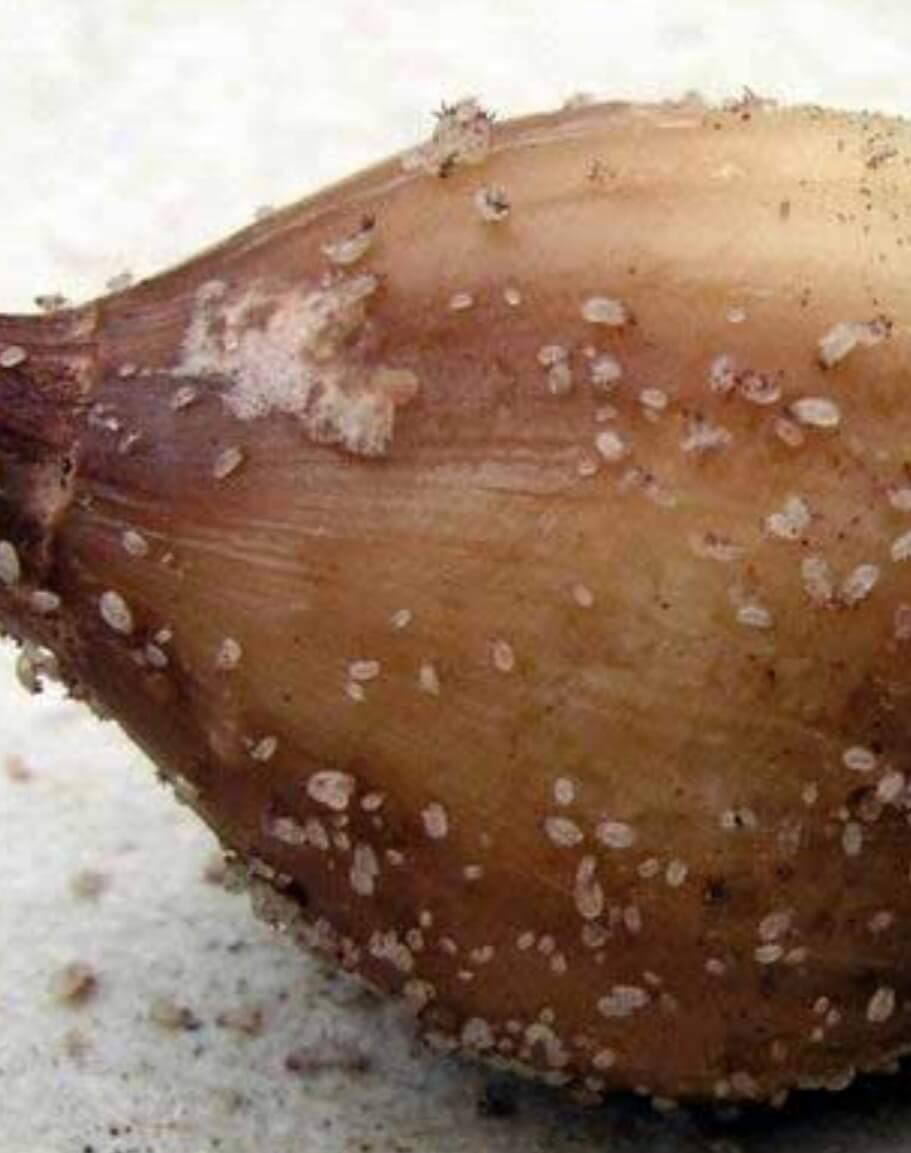
Rhizoglyphus echinopus is a mite that belongs to the Acaridae family and is known to infest bulbs and roots of various plants, including garlic. This mite goes through several stages of development: egg, larva, protonymph, deutonymph and adult. Females lay eggs in plant tissues, from which larvae emerge after a few days. The larvae feed on the tissues and transform into protonymphs and later into deutonymphs. Deutonymphs can enter a state of rest known as hypopus, during which they are more resistant to adverse conditions. Finally, the deutonymphs develop into adult mites, which continue feeding and reproducing. This cycle can be completed in a few weeks, depending on environmental conditions, allowing for multiple generations in one season.
SYMPTOMS
Rhizoglyphus echinopus infestation in garlic causes a disease known as bulb mite, which can cause significant damage to crops and affect the quality of stored bulbs. Mites feed on the internal tissues of bulbs and roots, causing a series of symptoms that affect the growth and health of the plant.
- Decomposition and disintegration of the bulb tissues.
- Appearance of brown or blackish Taches on the surface of the bulb.
- Bulbs soft and watery to the touch.
- Reduction in the size and weight of the bulbs.
- Appearance of an unpleasant odor due to decomposition.
- Withering and weakness of young plants.


TEMPERATURE AND HUMIDITY
15°C - 25°C
70% - 90%

HOW IS IT SPREAD?
Infected planting material, contaminated soil, agricultural tools, improper storage, crop residues, wind

HOW TO REMOVE IT?
Home remedies
There are no home treatments
Chemical treatments
• ORANGE OIL 60g/L [ME] P/S
• PARAFFIN OIL (CAS [8042-47-5]) 54.6% [EW] P/V
• SULFUR 80% [WG] P/P
• LAMBDA CYHALOTHRIN 10% [CS] P/V
• MALTODEXTRIN 47.6% [SL] P/V
• POTASSIUM SALTS OF FATTY ACIDS C14-C20 48% [EW] P/V
• POTASSIUM SALTS OF VEGETABLE FATTY ACIDS 13.04% [SL] P/V
• SPIROTETRAMAT 10% [SC] P/V
Authorized treatments in organic farming
• ORANGE OIL 60g/L [ME] P/S
• PARAFFIN OIL (CAS [8042-47-5]) 54.6% [EW] P/V
• SULFUR 80% [WG] P/P
• LAMBDA CYHALOTHRIN 10% [CS] P/V
• MALTODEXTRIN 47.6% [SL] P/V
• POTASSIUM SALTS OF FATTY ACIDS C14-C20 48% [EW] P/V
• POTASSIUM SALTS OF VEGETABLE FATTY ACIDS 13.04% [SL] P/V
Insect allies
PREDATORY MITES
LADYBUGS
LACEWINGS
PARASITIC WASPS
HOVERFLIES OR PARASITIC FLIES
PREDATORY BUGS
There are no natural allies
Mycodiplosis oidii (predatory mosquito)
EFFECTIVE PRODUCTS TO ELIMINATE THIS DISEASE
Sponsored link
Sponsored link


Sponsored link
Sponsored link
Sponsored link


Sponsored link
Sponsored link
Effective against all types of fungi

Sponsored link


Sponsored link
Sponsored link

Sponsored link


Sponsored link
- Carry out regular and thorough inspections of bulbs and plants to detect early signs of infestation.
- Store garlic bulbs in conditions of low humidity and controlled temperature to inhibit the development of mites.
- Use certified, pest-free planting material to avoid the introduction of mites into crops.
- Implement a crop rotation with plants that are not hosts of mites to reduce pest pressure.
- Apply treatments with specific acaricides following the technical recommendations and respecting the withdrawal periods.
- Maintain good hygiene of the field and storage facilities, eliminating remains of infested plants and bulbs.
- Encourage adequate ventilation in storage areas to reduce moisture buildup.
- Use sticky traps and regular monitoring to control and reduce the mite population in storage facilities.
Recommendations

Enjoy idMicrobe TOTALLY FREE, with no trial periods.


