

Mosca blanca
Cottony whitefly
Aleurodicus dispersus / Lecanoideus floccissimus
Pathogen:
Insect
Type:
Risk to the plant:
HIGH
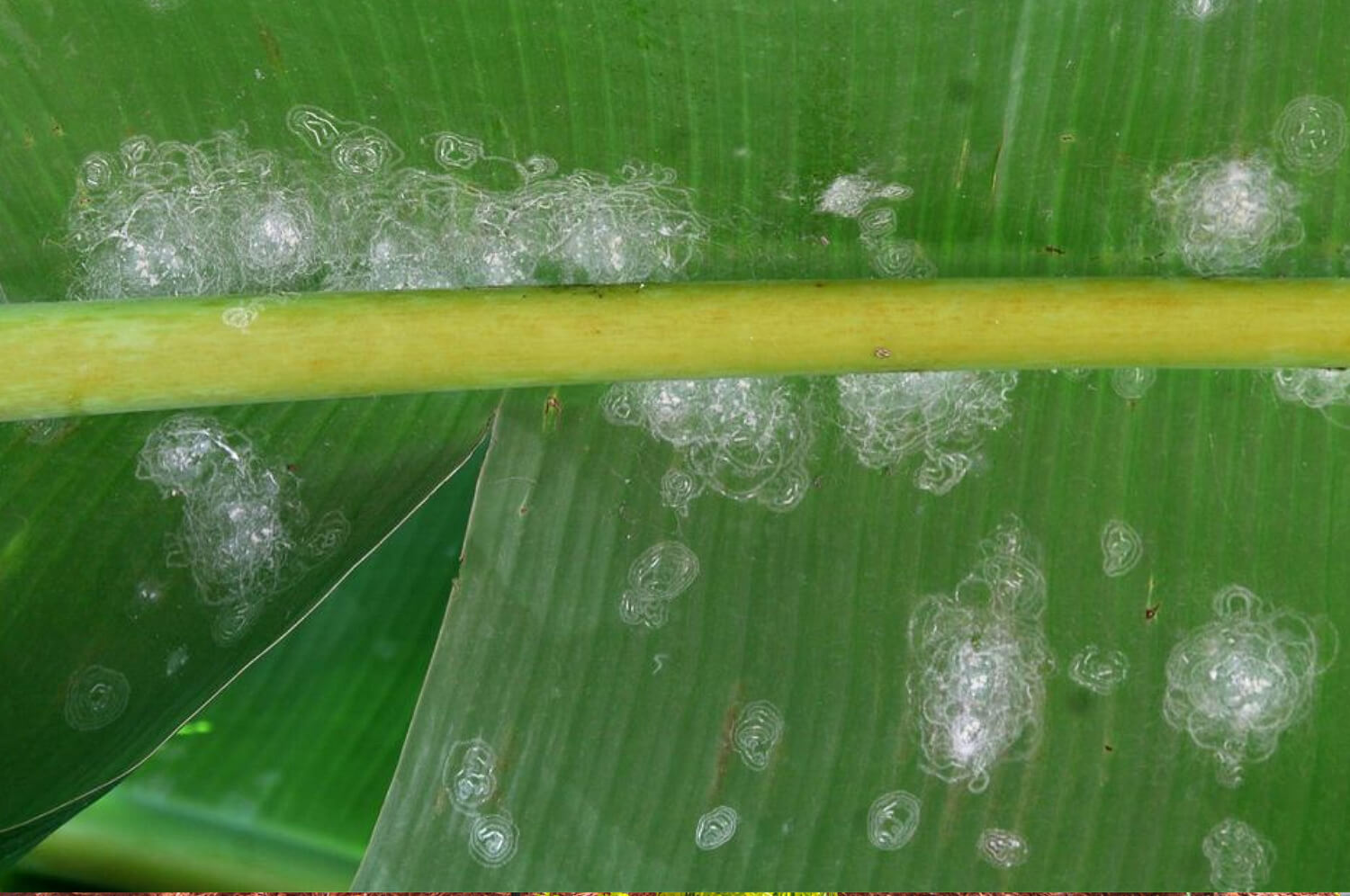
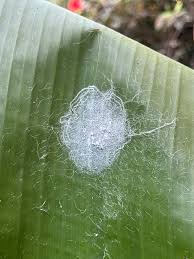

DESCRIPTION
WHO CAUSES IT?
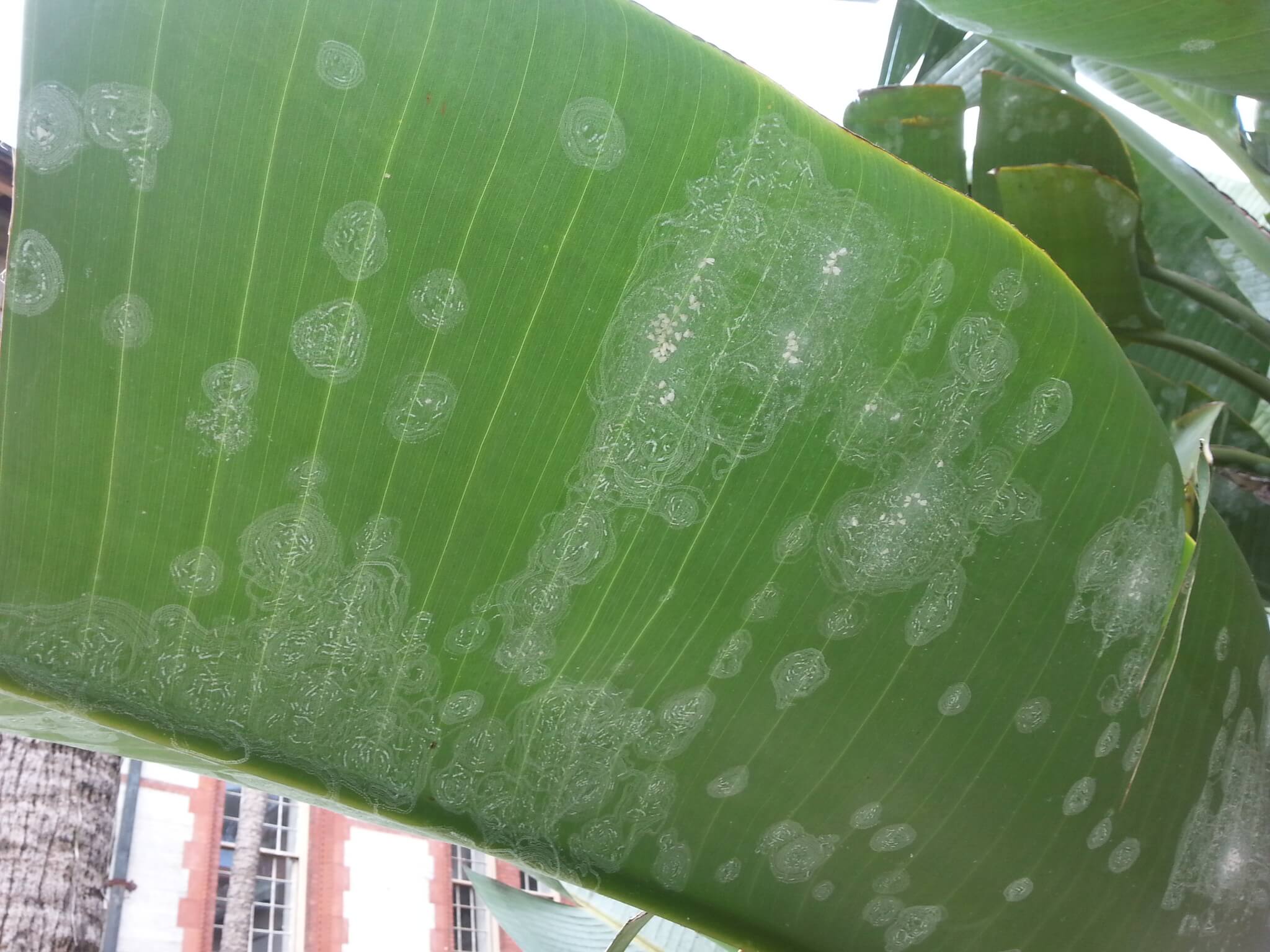
Aleurodicus dispersus and Lecanoideus floccissimus are hemipteran insects belonging to the family Aleyrodidae, commonly known as cottony whitefly. They are highly invasive and polyphagous pests, feeding on a wide variety of plants, including banana trees. Its body is small, with white wings covered in a waxy substance. Females lay eggs on the underside of leaves in groups, and upon hatching, the nymphs go through several stages of development before becoming adults. During these phases, individuals secrete a cottony substance that provides protection and makes it difficult to control. Adults have great dispersal capacity and can quickly colonize new areas. These insects feed on plant sap using their piercing-sucking mouthparts, progressively weakening it. In addition, they secrete a sugary molasses that favors the development of fungi such as sooty mold, further affecting the health of the crop.
SYMPTOMS
The banana tree affected by the cottony whitefly shows progressive weakening due to the continuous extraction of sap. The presence of these insects also interferes with photosynthesis and promotes the proliferation of secondary diseases. In severe infestations, the production and quality of the fruits are affected.
- Presence of white cottony masses on the underside of the leaves.
- Discoloration and yellowing of foliage.
- Delayed growth and general weakening of the plant.
- Exudation of honeydew, which attracts the proliferation of sooty mold (black fungus).
- Premature leaf fall in severe cases.
- Reduction in crop quality and yield.
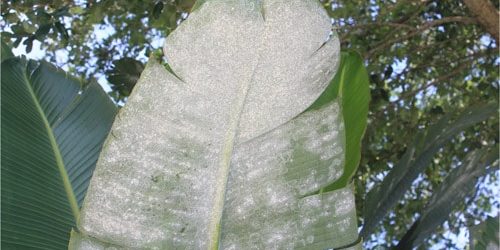
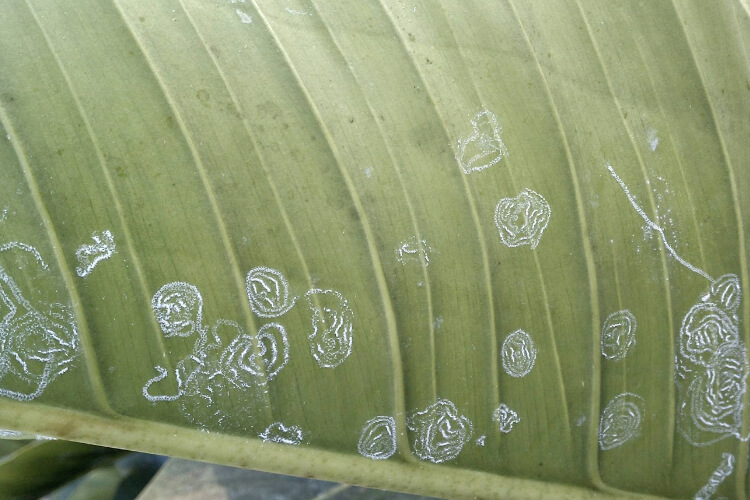

TEMPERATURE AND HUMIDITY
22°C - 30°C
60% - 85%

HOW IS IT SPREAD?
Wind, contaminated plant material, agricultural tools, movement of infested leaves, insect vectors, transport of host plants

HOW TO REMOVE IT?
Home remedies
There are no home treatments
Chemical treatments
• HUILE D'ORANGE 6% [SL] P/V
• HUILE D'ORANGE 60g/L [ME] P/S
• HUILE DE PARAFFINE (CAS [64742-46-7]) 79 % [EC] P/V
• HUILE DE PARAFFINE (CAS [8042-47-5]) 54,6 % [EW] P/V
• HUILE DE PARAFFINE (CAS [8042-47-5]) 79 % [EC] P/V
• Huile de paraffine 65,4 % [EW] P/V
• HUILE DE PARAFFINE 81,7 % [CE] P/V
• HUILE DE PARAFFINE 83 % [EC] P/V
• ACÉTAMIPRID 20 % [SG] P/P
• LAMBDA CYHALOTHRINE 10 % [CS] P/V
• LAMBDA CYHALOTHRINE 2,5 % [WG] P/P
• MALTODEXTRINE 47,6% [SL] P/V
• SELS DE POTASSIUM D'ACIDES GRAS C14-C20 48% [EW] P/V
• SPIROTETRAMAT 10 % [SC] P/V
Authorized treatments in organic farming
• HUILE D'ORANGE 6% [SL] P/V
• HUILE D'ORANGE 60g/L [ME] P/S
• HUILE DE PARAFFINE (CAS [64742-46-7]) 79 % [EC] P/V
• HUILE DE PARAFFINE (CAS [8042-47-5]) 54,6 % [EW] P/V
• HUILE DE PARAFFINE (CAS [8042-47-5]) 79 % [EC] P/V
• Huile de paraffine 65,4 % [EW] P/V
• HUILE DE PARAFFINE 81,7 % [CE] P/V
• HUILE DE PARAFFINE 83 % [EC] P/V
• LAMBDA CYHALOTHRINE 10 % [CS] P/V
• LAMBDA CYHALOTHRINE 2,5 % [WG] P/P
• MALTODEXTRINE 47,6% [SL] P/V
• SELS DE POTASSIUM D'ACIDES GRAS C14-C20 48% [EW] P/V
Insect allies
PREDATORY MITES
LADYBUGS
LACEWINGS
PARASITIC WASPS
HOVERFLIES OR PARASITIC FLIES
PREDATORY BUGS
There are no natural allies
Mycodiplosis oidii (predatory mosquito)
EFFECTIVE PRODUCTS TO ELIMINATE THIS DISEASE
Sponsored link

Sponsored link


Sponsored link
Sponsored link
Sponsored link


Sponsored link
Sponsored link
Effective against all types of fungi

Sponsored link


Sponsored link
Sponsored link

Sponsored link


Sponsored link
- Carry out frequent monitoring to detect the presence of adults and nymphs on the leaves.
- Place yellow chromatic traps to attract and capture adults in flight.
- Apply biological control by introducing natural enemies such as Encarsia sp. and Cryptolaemus montrouzieri.
- Prune and eliminate infested leaves to reduce the insect population.
- Avoid excess nitrogen fertilization, which favors the proliferation of the pest.
- Keep the crop free of weeds that serve as a refuge for whiteflies.
- Apply treatments with mineral oils and potassium soaps to reduce the adhesion of insects to the leaves.
- Rotate insecticides with different modes of action to avoid the development of resistance.
- Improve crop ventilation to reduce humidity, avoiding favorable conditions for the pest.
- Implement physical barriers and anti-insect meshes to prevent the dispersal of adults.
Recommendations

Enjoy idMicrobe TOTALLY FREE, with no trial periods.


