

Royas
Onion Blight Or Charcoal
Urocystis Cepulae
Pathogen:
Fungus
Type:
Risk to the plant:
INTERMEDIATE

DESCRIPTION
WHO CAUSES IT?
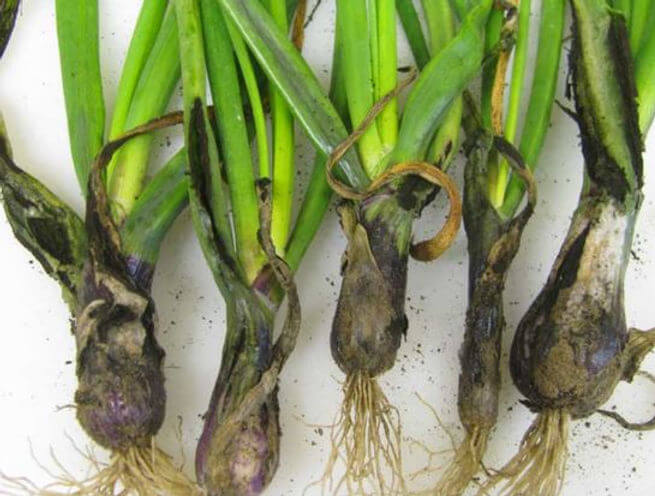
Urocystis cepulae is a phytopathogenic fungus that causes the disease known as onion blight. The fungus produces spores that form into large structures called sporangia. These spores are released when the structures break down and can infect new plants. The fungus can survive in the soil and in the remains of infected plants for several years, waiting for favorable conditions to reinfect plants.
SYMPTOMS
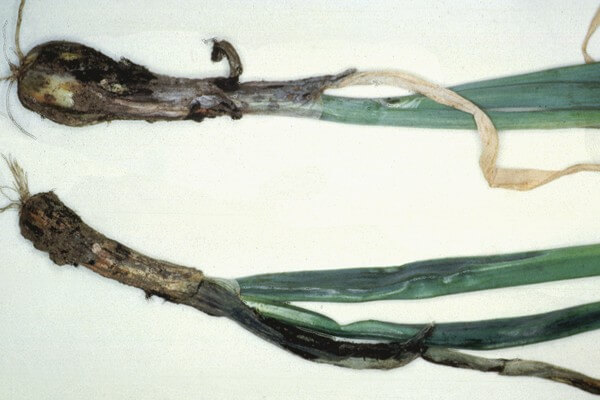
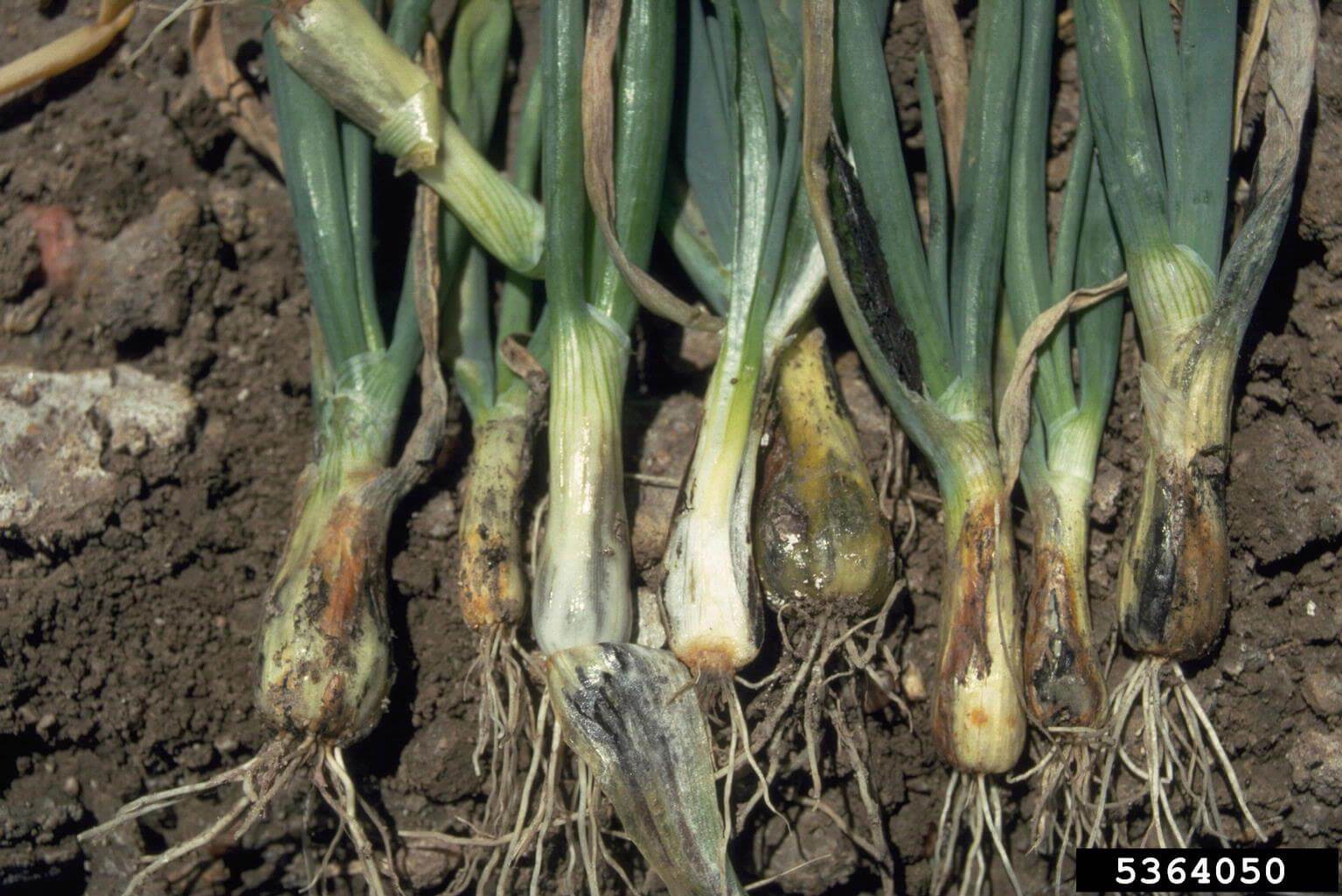
Onion blight or smut manifests itself with the appearance of dark Taches on the leaves and flowers of onions. The Taches turn black and can form sporulated structures on the leaves, stems and bulbs, which can weaken the plant and reduce the quality of the crop.
• Appearance of dark Taches on leaves and flowers.
• The Taches turn black and may form sporulated structures.
• Weakening of the plant and reduction in the quality of the harvest.
• Onion bulbs that may develop black Taches.


TEMPERATURE AND HUMIDITY
15 ºC - 25ºC
60% - 90%

HOW IS IT SPREAD?
Soil, water, remains of infected plants.

HOW TO REMOVE IT?
Home remedies
There are no home treatments
Chemical treatments
• CUPROCALCIC SULFATE 20% [WP] P/P
• CUPROCALCIC SULFATE 20% (EXPR. IN CU) [WP] P/P
Authorized treatments in organic farming
• CUPROCALCIC SULFATE 20% [WP] P/P
• CUPROCALCIC SULFATE 20% (EXPR. IN CU) [WP] P/P
Insect allies
PREDATORY MITES
LADYBUGS
LACEWINGS
PARASITIC WASPS
HOVERFLIES OR PARASITIC FLIES
PREDATORY BUGS
There are no natural allies
Mycodiplosis oidii (predatory mosquito)
EFFECTIVE PRODUCTS TO ELIMINATE THIS DISEASE
Sponsored link
Sponsored link


Sponsored link
Sponsored link
Sponsored link


Sponsored link
Sponsored link
Effective against all types of fungi

Sponsored link


Sponsored link
Sponsored link

Sponsored link


Sponsored link
• Use onion varieties resistant or tolerant to Urocystis cepulae.
• Practice crop rotation to reduce pathogen pressure in the soil.
• Disinfect cultivation tools and equipment to avoid the transmission of the fungus.
• Improve soil drainage to reduce humidity and avoid favorable conditions for the fungus.
• Remove and destroy infected plants and plant remains.
• Apply specific fungicides following local recommendations.
Recommendations

Enjoy idMicrobe TOTALLY FREE, with no trial periods.


