

Cochinillas
Mealybugs
Mealybugs
Pathogen:
Insect
Type:
Risk to the plant:
HIGH

DESCRIPTION
WHO CAUSES IT?
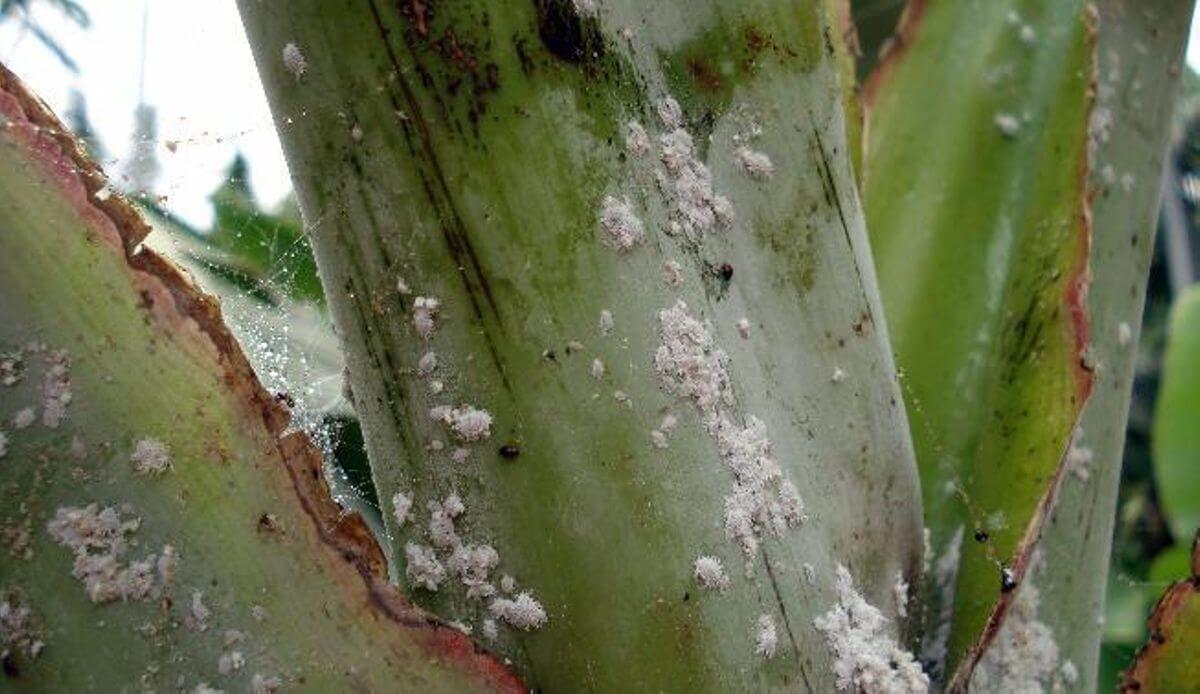
Mealybugs are hemipteran insects of the Coccoidea superfamily, characterized by their body covered with a protective waxy layer that allows them to resist adverse conditions and chemical treatments. These insects reproduce by both parthenogenesis and sexual reproduction, depending on the species. The females, which cause damage to the plants, lay eggs in crevices of the pseudostem and at the base of the leaves, where the nymphs emerge and begin to feed on the sap. During their development, the nymphs go through several stages until they reach maturity, attaching themselves to the plant and secreting more protective wax. Mealybugs gather in dense colonies and protect themselves with their waxy excretion, making them difficult to remove. Their constant feeding weakens the plant and their excretion of honeydew favors the proliferation of fungi such as sooty mold, which aggravates the damage.
SYMPTOMS
The banana tree infested by scale insects suffers weakening due to the continuous extraction of sap, which causes reduced growth and a decrease in fruit production. Furthermore, the presence of molasses and sooty mold affects the photosynthetic process, generating progressive deterioration of the plant.
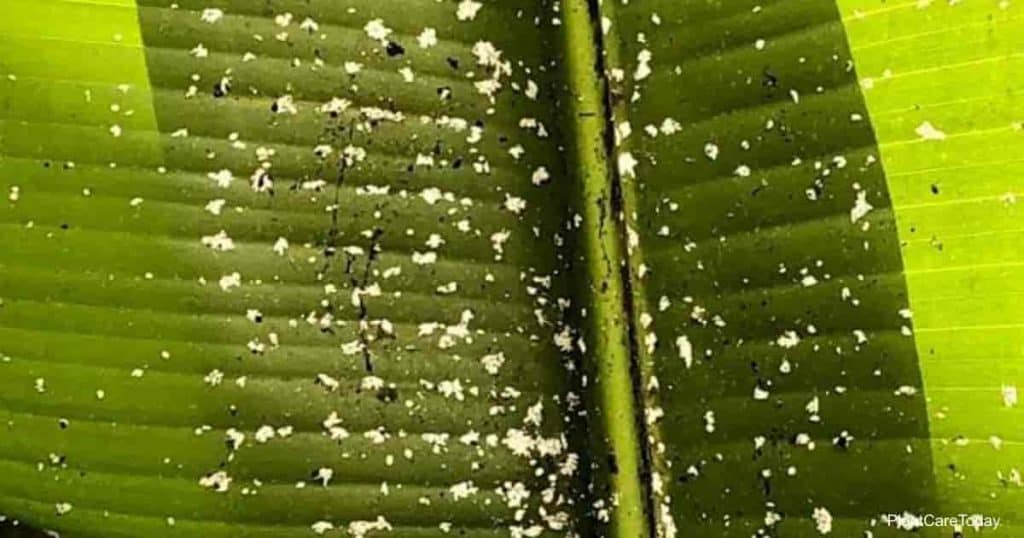
- Presence of small cottony or scaly-looking structures attached to the pseudostem and leaves.
- Yellowing and weakening of the leaves.
- Decreased growth and deformations in the plant.
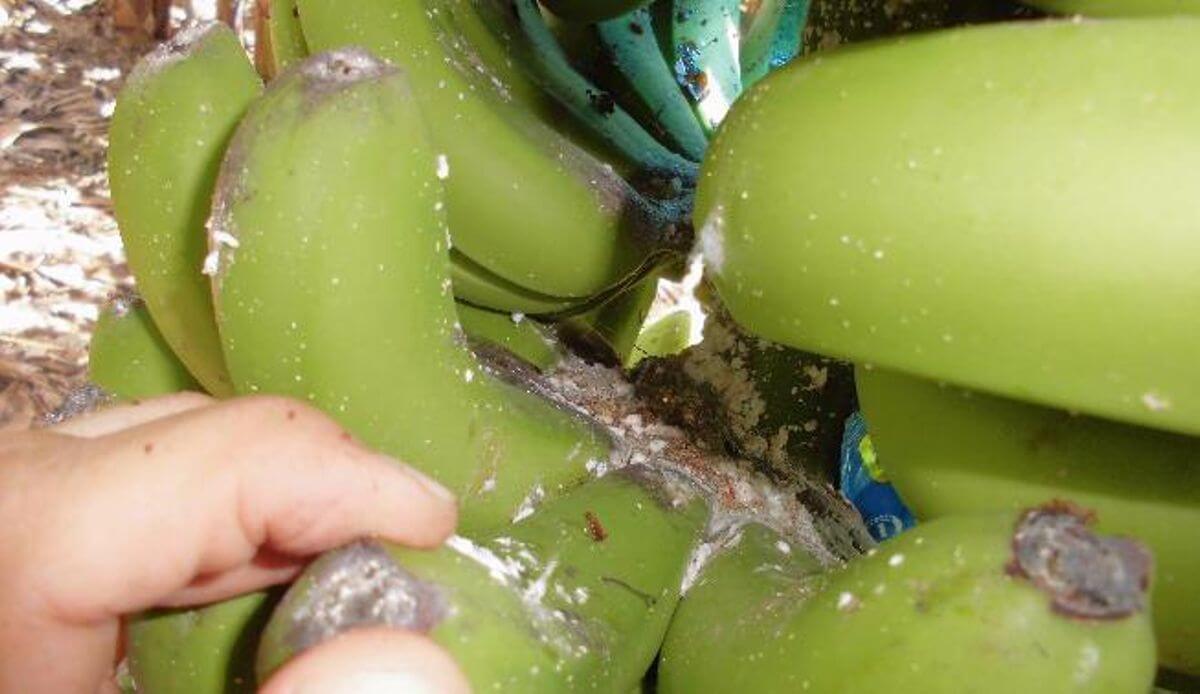
- Sooty mold scabs on leaves and fruits due to the accumulation of molasses.
- Reduction in the quality and quantity of bananas produced.
- Attraction of ants that protect the mealybugs and make their control difficult.


TEMPERATURE AND HUMIDITY
20°C - 30°C
65% - 85%

HOW IS IT SPREAD?
Contaminated plant material, contact between plants, agricultural tools, vector insects, wind, movement of infested leaves and pseudostems

HOW TO REMOVE IT?
Home remedies
There are no home treatments
Chemical treatments
• HUILE D'ORANGE 60g/L [ME] P/S
• HUILE DE PARAFFINE (CAS [64742-46-7]) 79 % [EC] P/V
• HUILE DE PARAFFINE (CAS [8042-47-5]) 54,6 % [EW] P/V
• HUILE DE PARAFFINE (CAS [8042-47-5]) 79 % [EC] P/V
• HUILE DE PARAFFINE (CAS [97862-82-3]) 40 % [EW] P/V
• HUILE DE PARAFFINE (CAS [97862-82-3]) 80% [EC] P/V
• Huile de paraffine 65,4 % [EW] P/V
• HUILE DE PARAFFINE 81,7 % [CE] P/V
• HUILE DE PARAFFINE 83 % [EC] P/V
• ACÉTAMIPRID 20 % [SG] P/P
• MALTODEXTRINE 47,6% [SL] P/V
• SELS DE POTASSIUM D'ACIDES GRAS C14-C20 48% [EW] P/V
• SPIROTETRAMAT 10 % [SC] P/V
Authorized treatments in organic farming
• HUILE D'ORANGE 60g/L [ME] P/S
• HUILE DE PARAFFINE (CAS [64742-46-7]) 79 % [EC] P/V
• HUILE DE PARAFFINE (CAS [8042-47-5]) 54,6 % [EW] P/V
• HUILE DE PARAFFINE (CAS [8042-47-5]) 79 % [EC] P/V
• HUILE DE PARAFFINE (CAS [97862-82-3]) 40 % [EW] P/V
• HUILE DE PARAFFINE (CAS [97862-82-3]) 80% [EC] P/V
• Huile de paraffine 65,4 % [EW] P/V
• HUILE DE PARAFFINE 81,7 % [CE] P/V
• HUILE DE PARAFFINE 83 % [EC] P/V
• MALTODEXTRINE 47,6% [SL] P/V
• SELS DE POTASSIUM D'ACIDES GRAS C14-C20 48% [EW] P/V
Insect allies
PREDATORY MITES
LADYBUGS
LACEWINGS
PARASITIC WASPS
HOVERFLIES OR PARASITIC FLIES
PREDATORY BUGS
There are no natural allies
Mycodiplosis oidii (predatory mosquito)
EFFECTIVE PRODUCTS TO ELIMINATE THIS DISEASE
Sponsored link
Sponsored link


Sponsored link
Sponsored link
Sponsored link


Sponsored link
Sponsored link
Effective against all types of fungi

Sponsored link


Sponsored link
Sponsored link

Sponsored link


Sponsored link
- Periodically inspect the banana tree for colonies of scale insects on the pseudostem, leaves and fruits.
- Carry out sanitary pruning to eliminate infested parts and prevent the spread of the pest.
- Promote biological control with natural predators such as Cryptolaemus montrouzieri and parasitoids such as Anagyrus spp.
- Apply potassium soaps and mineral oils to weaken the protective waxy layer of mealybugs.
- Avoid excessive use of nitrogen fertilizers, as they favor the proliferation of the pest.
- Improve ventilation and reduce humidity in the crop to limit favorable conditions for mealybugs.
- Control the presence of ants, since they protect the pest from its natural enemies.
- Implement physical barriers at the base of the pseudostem to prevent the dispersal of the nymphs.
- Apply treatments with specific insecticides, respecting the application intervals to prevent resistance.
Recommendations

Enjoy idMicrobe TOTALLY FREE, with no trial periods.


