

Psilas
Asian citrus psyllid: what it is, how it originates, and how to effectively eliminate it.
Asian Citrus Psyllid
Diaphorina Citri
Pathogen:
Insect
Type:
Risk to the plant:
CRITICAL
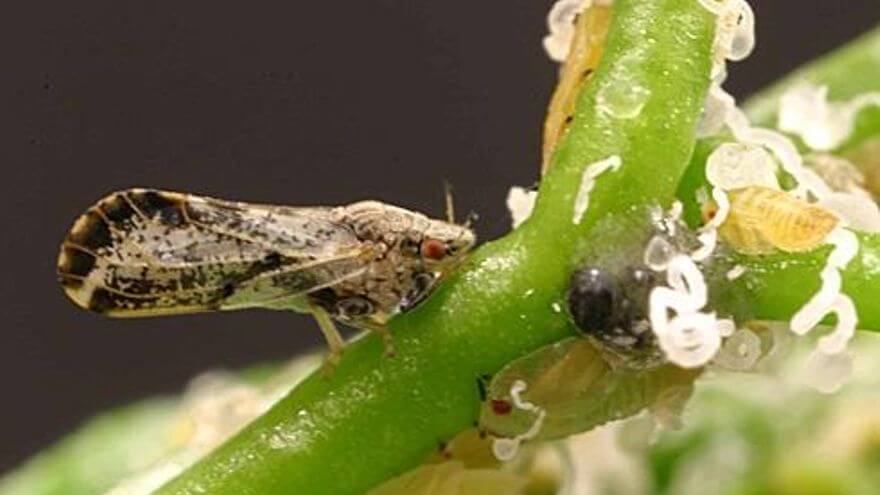
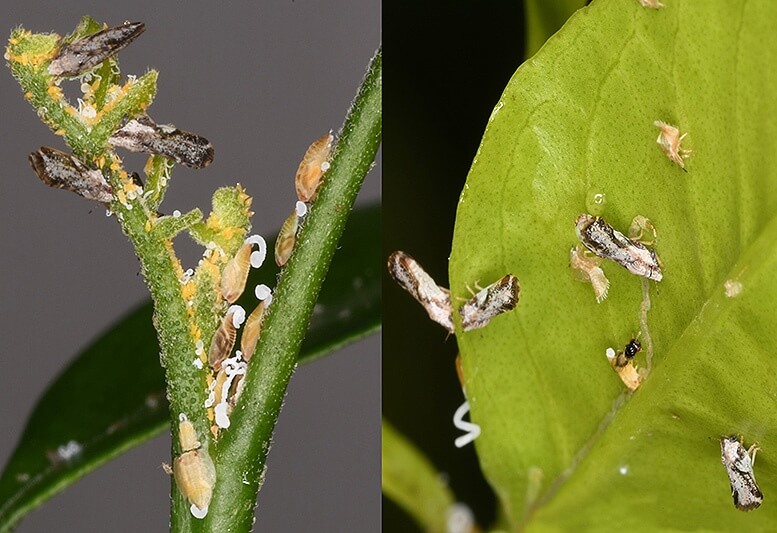

DESCRIPTION
WHO CAUSES IT?
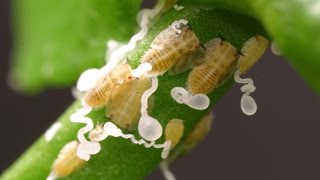
Diaphorina citri, known as the Asian citrus psyllid, is a small insect that belongs to the Psyllidae family. This insect goes through several stages from egg to adult. Adult females lay their eggs in the young shoots of citrus trees. The eggs hatch in about a week, giving rise to nymphs that go through five nymphal stages before becoming adults. The nymphs feed on the phloem of young leaves, causing the production of a sticky substance known as honeydew, which can encourage the growth of sooty molds. Adults are winged and can fly, thus facilitating the dispersal of the insect and the infection of new plants. This cycle can repeat several times a year, depending on environmental conditions, especially temperature and the availability of tender shoots on the host plants.
SYMPTOMS
The Asian citrus psyllid is a vector of huanglongbing (HLB), one of the most destructive diseases of orange trees. This insect, when feeding, transmits the bacteria Candidatus Liberibacter asiaticus, which causes HLB. The disease severely affects plant development and fruit quality, leading to significant loss of productivity.
- Leaves with asymmetrical mottling and yellowing.
- Young shoots with poor growth.
- Deformed and smaller fruits.
- Fruits with a bitter or metallic taste.
- Premature loss of fruits.
- Progressive death of branches and shoots.
- Presence of sooty molds due to the honeydew produced by the nymphs.
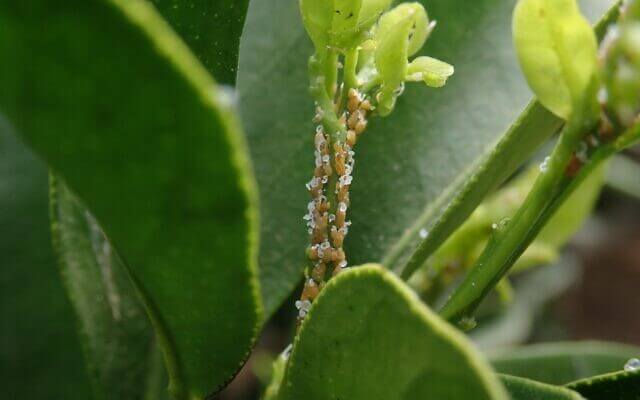
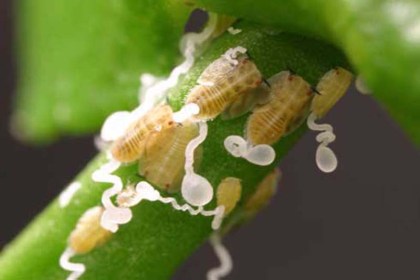

TEMPERATURE AND HUMIDITY
25-28°C
60-80%

HOW IS IT SPREAD?
Insect vectors, infected plant grafts, infected plant material

HOW TO REMOVE IT?
Home remedies
There are no home treatments
Chemical treatments
• PYRIPROXIFEN 10% [EC] P/V
• ORANGE OIL 60g/L [ME] P/S
Authorized treatments in organic farming
• ORANGE OIL 60g/L [ME] P/S
Insect allies
PREDATORY MITES
LADYBUGS
LACEWINGS
PARASITIC WASPS
HOVERFLIES OR PARASITIC FLIES
PREDATORY BUGS
There are no natural allies
Mycodiplosis oidii (predatory mosquito)
EFFECTIVE PRODUCTS TO ELIMINATE THIS DISEASE
Sponsored link

Sponsored link
Sponsored link
Sponsored link
Sponsored link
Sponsored link
Sponsored link
Sponsored link
Sponsored link
Sponsored link


Sponsored link
Sponsored link
Effective against all types of fungi

Sponsored link
Sponsored link
Sponsored link
Sponsored link
Sponsored link
Sponsored link
Sponsored link
Sponsored link


Sponsored link
Sponsored link

Sponsored link
Sponsored link
Sponsored link
Sponsored link
Sponsored link
Sponsored link
Sponsored link
Sponsored link


Sponsored link
Sponsored link
Sponsored link
Sponsored link
Sponsored link
Sponsored link
Sponsored link
Sponsored link
Sponsored link
Sponsored link


Sponsored link
- Carry out regular and systematic monitoring of citrus crops to detect the presence of psyllids and HLB symptoms.
- Use selective insecticides and biological control with natural enemies of the psyllid, such as predators and parasitoids.
- Promote crop diversification and plant rotation to reduce dependence on citrus fruits and reduce insect pressure.
- Implement cultural practices that strengthen plant health, such as pruning infested shoots and eliminating infected plants.
- Use physical barriers and sticky traps to reduce the psyllid population in crops.
- Maintain integrated pest management (IPM) that combines chemical, biological and cultural methods for more effective control.
- Collaborate with agricultural extension programs and local communities to share knowledge and management strategies for psyllid and HLB.
Recommendations

Enjoy idMicrobe TOTALLY FREE, with no trial periods.


