

Virus
Cruciferous Hernia Or Clubroot
Plasmodiophora Brassicae
Pathogen:
Fungus
Type:
Risk to the plant:
HIGH
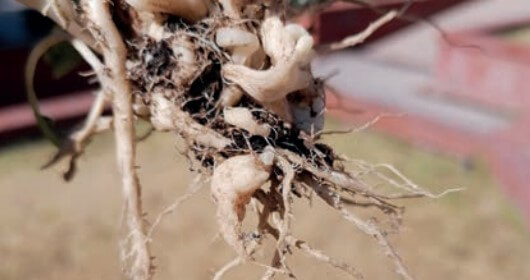
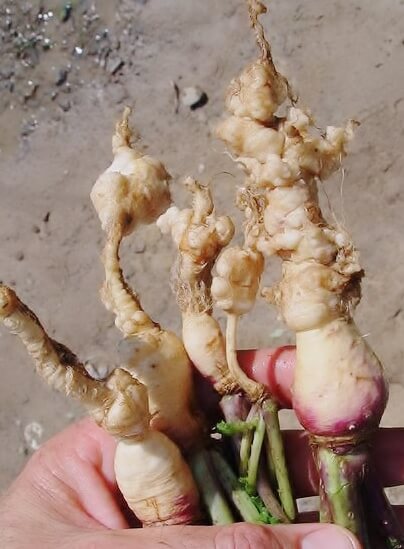

DESCRIPTION
WHO CAUSES IT?
Plasmodiophora brassicae is a soil pathogen that belongs to the group of protists, causing the disease known as crucifer hernia or clubroot. This microscopic organism invades the roots of host plants, such as radish, and forms resistance spores called sporangia. Sporangia can survive in the soil for many years, even in the absence of a host plant. When environmental conditions are favorable, the spores germinate and release motile zoospores that swim through the water in the soil and penetrate the young roots of the plants. Inside the roots, the pathogen develops and forms multinucleated plasmodia, which subsequently divide to produce new spores. These spores return to the soil when the infected roots decompose, completing the cycle and spreading the infection.
SYMPTOMS
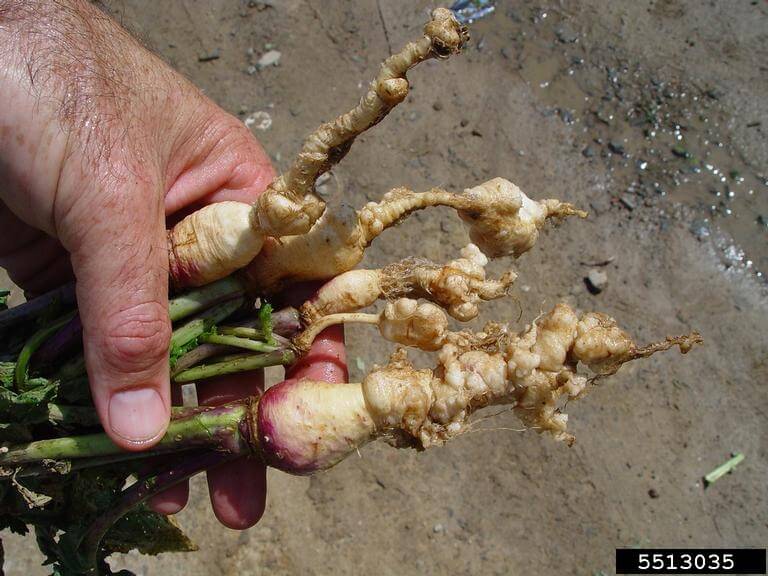
Crucifera or clubroot herniation, caused by Plasmodiophora brassicae, affects radish mainly through root deformation, which severely limits water and nutrient absorption. Infected roots develop large swellings or galls, which interfere with normal plant growth. This deformation reduces the plant's ability to absorb water and nutrients, leading to stunted growth and reduced production of quality edible roots.
- Swellings or galls on the roots
- Reduction in the size and quality of the roots
- Wilting and yellowing of foliage
- Stunted plant growth
- Decrease in the absorption of water and nutrients


TEMPERATURE AND HUMIDITY
18°C - 25°C
75% - 85%

HOW IS IT SPREAD?
Spores in soil, Contaminated irrigation water, Contaminated agricultural tools, Infected transplant material

HOW TO REMOVE IT?
Home remedies
There are no home treatments
Chemical treatments
There are no effective treatments against this disease. Disinfection of seeds before sowing, rotation with crops that are not susceptible and disinfectant treatments for the soil are recommended.
Authorized treatments in organic farming
There are no effective treatments against this disease. Disinfection of seeds before sowing, rotation with crops that are not susceptible and disinfectant treatments for the soil are recommended.
Insect allies
PREDATORY MITES
LADYBUGS
LACEWINGS
PARASITIC WASPS
HOVERFLIES OR PARASITIC FLIES
PREDATORY BUGS
There are no natural allies
Mycodiplosis oidii (predatory mosquito)
EFFECTIVE PRODUCTS TO ELIMINATE THIS DISEASE
Sponsored link
Sponsored link


Sponsored link
Sponsored link
Sponsored link


Sponsored link
Sponsored link
Effective against all types of fungi

Sponsored link


Sponsored link
Sponsored link

Sponsored link


Sponsored link
- Implement a prolonged crop rotation with non-host plants to reduce pathogen accumulation in the soil.
- Use radish varieties resistant or tolerant to Plasmodiophora brassicae.
- Maintain soil pH at alkaline levels (pH 7.2-7.5) by applying agricultural lime to reduce infection.
- Improve soil drainage to avoid waterlogging conditions that favor the spread of the pathogen.
- Disinfect agricultural tools and machinery to prevent the spread of the pathogen between fields.
- Eliminate and destroy infected plants to reduce the source of inoculum in the field.
- Avoid the use of irrigation water contaminated with spores of the pathogen.
- Apply organic amendments that improve soil structure and increase beneficial microbial activity.
Recommendations

Enjoy idMicrobe TOTALLY FREE, with no trial periods.


