

Mildiu
Mildew
Peronospora Farinosa
Pathogen:
Oomycete
Type:
Risk to the plant:
HIGH

DESCRIPTION
WHO CAUSES IT?
Peronospora farinosa is an oomycete pathogen that causes downy mildew in various plants, including sugar beet. This pathogen develops mainly in humid and cool conditions. Its development begins with the germination of spores on the surface of the leaves when there is sufficient moisture. The spores, known as sporangia, are released and carried by wind or water to the host plants. Once on the leaf, the spores germinate and the mycelium invades the intercellular tissues of the plant, extracting nutrients and producing reproductive structures called conidiophores. These conidiophores emerge through the stomata and produce new spores that can infect other plants. The perpetuation of the pathogen can occur through resistant spores (oospores) that survive in soil or plant debris during unfavorable periods.
SYMPTOMS
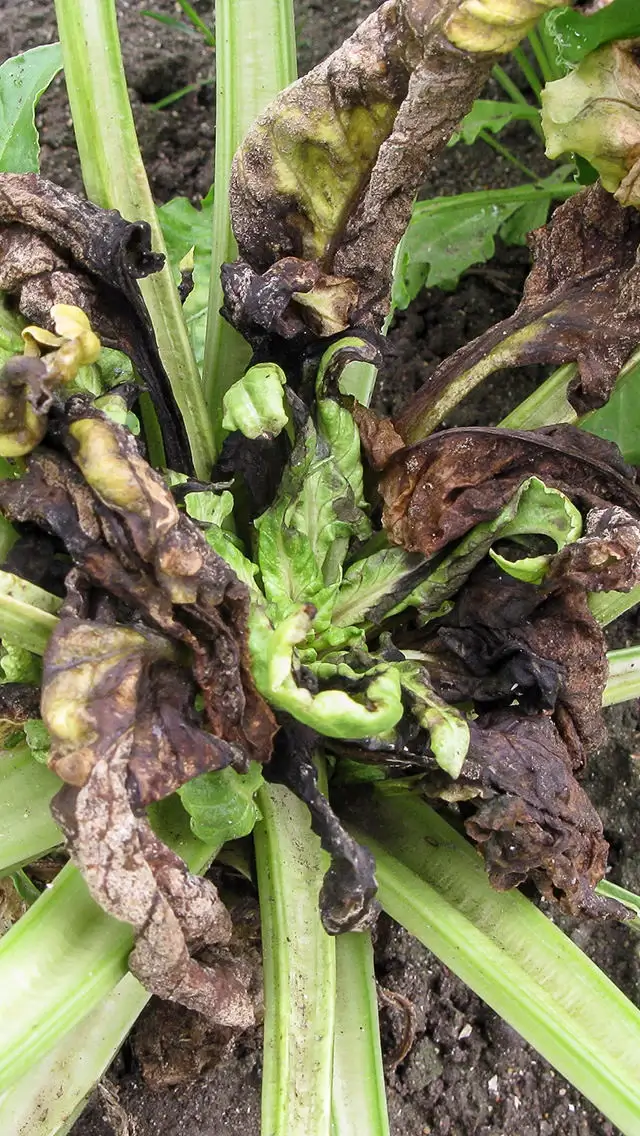
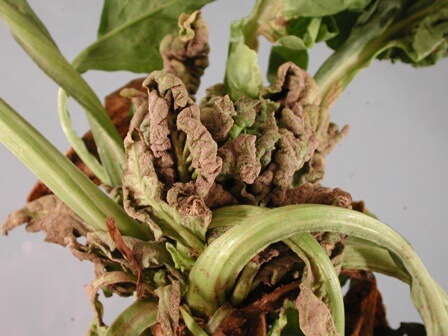
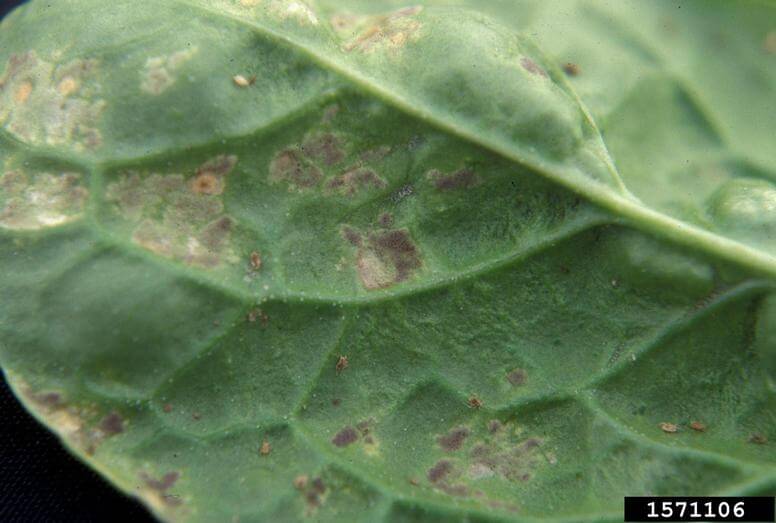
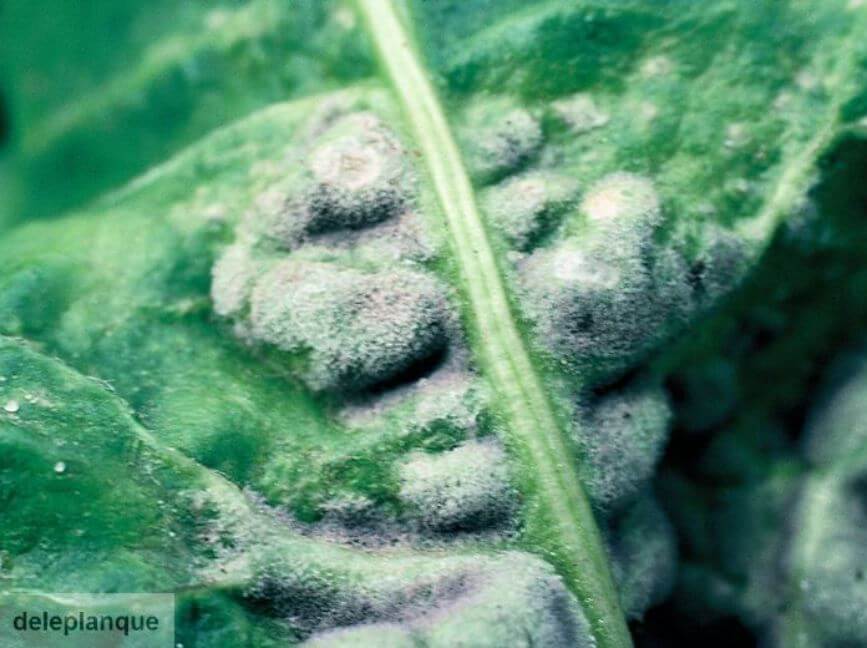
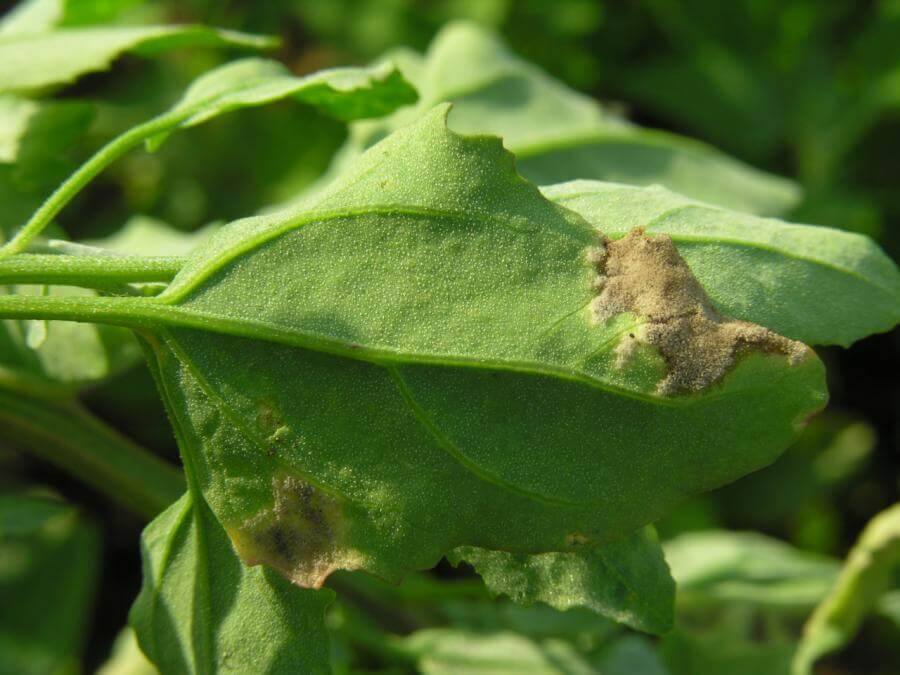
The downy mildew disease caused by Peronospora farinosa in sugar beet causes a series of symptoms that affect the growth and productivity of the plant. The initial infection usually manifests itself on young leaves, which show chlorotic Taches and a gray powdery layer on the underside due to the production of sporangia. As the disease progresses, the symptoms spread and worsen.
- Chlorotic Taches on the leaves.
- Gray powdery layer on the underside of the leaves.
- Deformation and thickening of the leaves.
- Delay in plant growth.
- Necrosis of leaf tissues.
- Premature defoliation.
- Reduced root yield.
- Appearance of sporulation in conditions of high humidity.
- Death of young seedlings in severe infections.

TEMPERATURE AND HUMIDITY
15°C - 20°C
85% - 95%

HOW IS IT SPREAD?
Spores in the wind, Irrigation water, Contaminated tools, Infected plant remains

HOW TO REMOVE IT?
Home remedies
There are no home treatments
Chemical treatments
• COS-OGA 1.25% [SL] P/V
• CUPRIC HYDROXIDE 13.6% (EXPR. IN CU) + COPPER OXYCHLORIDE 13.6% (EXPR. IN CU) [SC] P/V
Authorized treatments in organic farming
• COS-OGA 1.25% [SL] P/V
• CUPRIC HYDROXIDE 13.6% (EXPR. IN CU) + COPPER OXYCHLORIDE 13.6% (EXPR. IN CU) [SC] P/V
Insect allies
PREDATORY MITES
LADYBUGS
LACEWINGS
PARASITIC WASPS
HOVERFLIES OR PARASITIC FLIES
PREDATORY BUGS
There are no natural allies
Mycodiplosis oidii (predatory mosquito)
EFFECTIVE PRODUCTS TO ELIMINATE THIS DISEASE
Sponsored link

Sponsored link


Sponsored link
Sponsored link
Sponsored link


Sponsored link
Sponsored link
Effective against all types of fungi

Sponsored link


Sponsored link
Sponsored link

Sponsored link


Sponsored link
- Use mildew-resistant sugar beet varieties.
- Implement crop rotations to reduce the accumulation of inoculum in the soil.
- Maintain adequate separation between plants to improve air circulation and reduce humidity.
- Avoid overhead irrigation at night to minimize moisture on the foliage.
- Remove and destroy infected plant remains after harvest to reduce sources of inoculum.
- Apply specific fungicides preventively and according to local recommendations.
- Regularly monitor crops to detect the first symptoms of the disease.
- Practice good fertilization management to avoid excesses of nitrogen that favor the development of the pathogen.
- Promote tillage practices that minimize leaf contact with the soil.
Recommendations

Enjoy idMicrobe TOTALLY FREE, with no trial periods.


