

Minadores
Citrus Miner
Phyllocnistis Citrella
Pathogen:
Insect
Type:
Risk to the plant:
MILD


DESCRIPTION
WHO CAUSES IT?
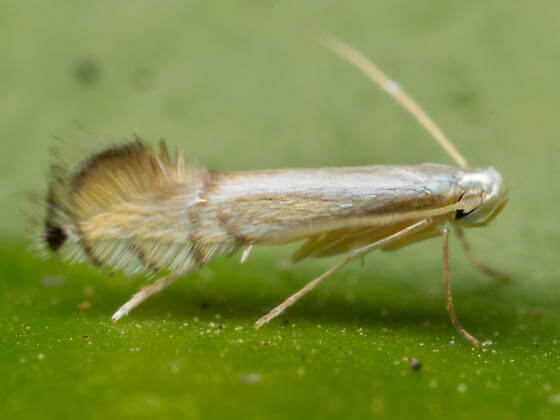
Phyllocnistis citrella is a small moth native to Southeast Asia that has become a worrying pest for citrus in various regions of the world. This moth lays its eggs on the tender leaves of citrus trees, where the emerging larvae feed and form characteristic galleries between the layers of the leaf epidermis.
SYMPTOMS
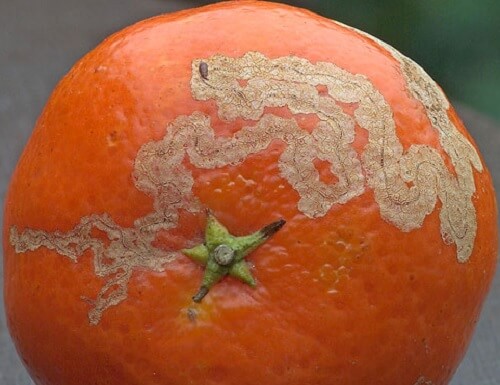
The disease caused by Phyllocnistis citrella on citrus is known as "citrus leaf miner." Symptoms include the formation of mined galleries on the leaves, which appear as serpentine tunnels that leave a characteristic silvery scar on the surface of the leaves. These galleries reduce the plant's ability to carry out photosynthesis and can significantly weaken it if the infestation is severe.


TEMPERATURE AND HUMIDITY
20°C - 30°C
60% - 80%

HOW IS IT SPREAD?
Movement of larvae and adults between citrus plants, passive transport by wind, and dispersal through infested plant products.

HOW TO REMOVE IT?
Home remedies
There are no home treatments
Chemical treatments
• ACETAMIPRID 20% [SG] P/P
• ACETAMIPRID 20% [SL] P/V
• ACETAMIPRID 20% [SP] P/P
• AZADIRACTIN 1% (AS AZADIRACTIN A) [EC] P/V
• Azadirachtin 2.6% (AS AZADIRACTIN A) [EC] P/V
• CHLORANTRANILIPROL 20% [SC] P/V
• MILBEMECTIN 0.93% [EC] P/V
• Phyllocnistis citrella (Pheromone)
• TEBUFENOCIDE 24% [SC] P/V
Authorized treatments in organic farming
• AZADIRACTIN 1% (AS AZADIRACTIN A) [EC] P/V
• Azadirachtin 2.6% (AS AZADIRACTIN A) [EC] P/V
• Phyllocnistis citrella (Pheromone)
Insect allies
PREDATORY MITES
LADYBUGS
LACEWINGS
PARASITIC WASPS
HOVERFLIES OR PARASITIC FLIES
PREDATORY BUGS
There are no natural allies
Mycodiplosis oidii (predatory mosquito)
EFFECTIVE PRODUCTS TO ELIMINATE THIS DISEASE
Sponsored link
Sponsored link


Sponsored link
Sponsored link
Sponsored link


Sponsored link
Sponsored link
Effective against all types of fungi

Sponsored link


Sponsored link
Sponsored link

Sponsored link


Sponsored link
To prevent and control Phyllocnistis citrella infestation in citrus crops, it is recommended to implement integrated pest management measures. This includes pruning infested branches, regularly monitoring moth populations, using pheromone traps to control the adult population, and selectively applying insecticides when necessary.
Recommendations

Enjoy idMicrobe TOTALLY FREE, with no trial periods.


