

Monilia
Monilinia or brown rot: what it is, how it originates, and how to eliminate it effectively.
Monilinia Or Brown Rot
Monilinia Laxa
Pathogen:
Fungus
Type:
Risk to the plant:
HIGH


DESCRIPTION
WHO CAUSES IT?
Monilinia laxa is a pathogenic fungus that mainly affects stone fruit trees, such as peach, peach and nectarine. This fungus is characterized by its ability to survive during the winter in vegetative structures and in mummified fruits that remain on the tree or in the soil. With the arrival of spring and favorable temperature and humidity conditions, the fungus produces conidia, which are asexual spores responsible for primary dissemination. These spores are transported by wind, water and insects, and when they reach the flowers, young shoots or fruits, they germinate and initiate the infection. Monilinia laxa penetrates plant tissues through wounds or natural openings, such as stomata or nectaries. As the fungus grows, it forms a mycelium that invades and decomposes plant tissues, producing masses of spores that continue the infectious cycle throughout the growing season.
SYMPTOMS
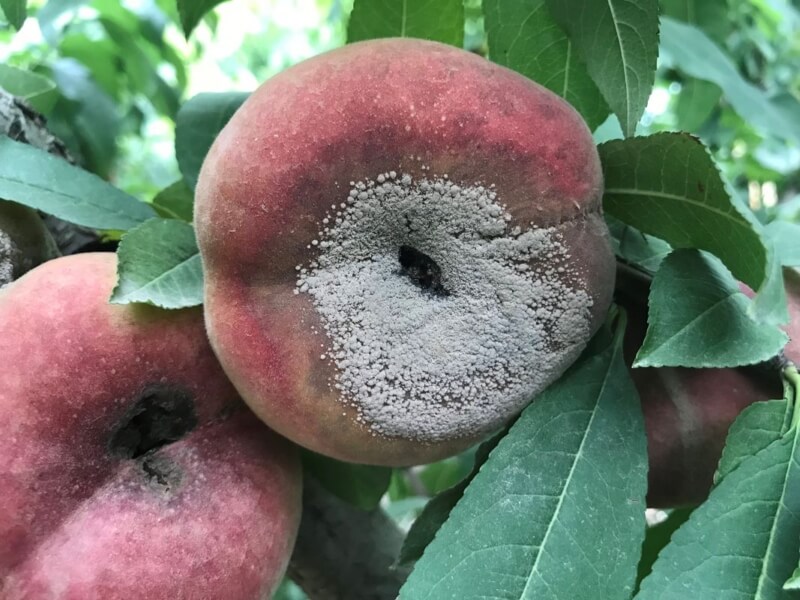
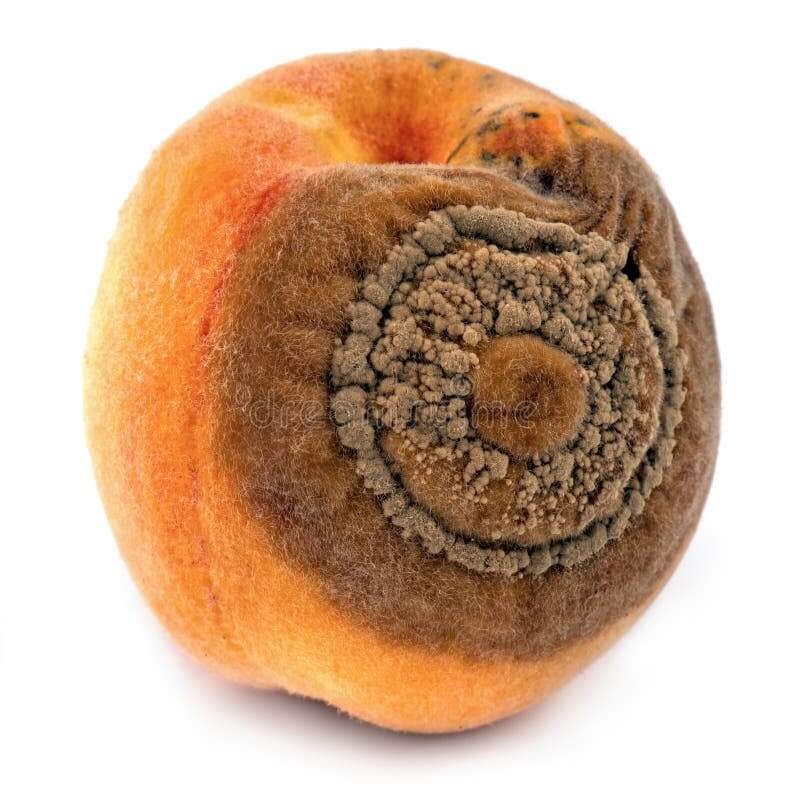
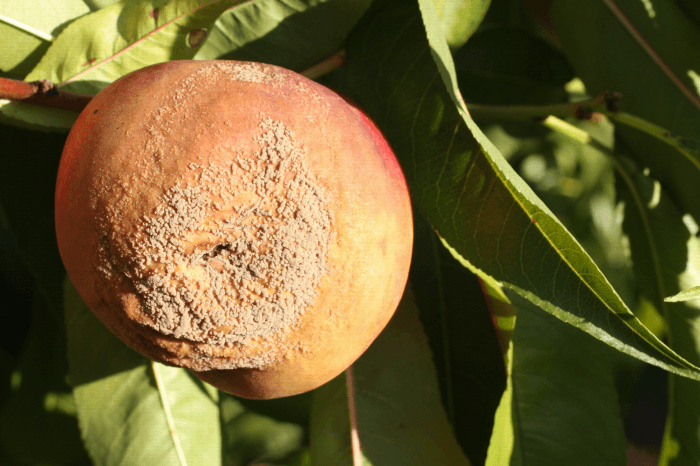
In peach, peach or nectarine, infection by Monilinia laxa causes the disease known as monilinia or brown rot. This disease is particularly harmful during flowering and fruit development, as it can cause significant losses in crop production and quality. The first symptoms appear in the flowers, which turn brown and wither without falling from the tree. Young shoots can also become infected, showing symptoms of wilting and dieback. On fruits, the disease appears as brown Taches that expand rapidly, producing soft, watery decay.
- Wilting and death of flowers
- Brown Taches on the fruits
- Soft and watery decomposition in the fruits
- Wilting of young shoots
- Presence of whitish spores in infected areas
- Loss of quality and quantity in the harvest
- Mummified fruits attached to the tree


TEMPERATURE AND HUMIDITY
15-25°C
60-80%

HOW IS IT SPREAD?
Wind, rainwater, insects, contaminated tools, direct contact between plants, fallen fruits

HOW TO REMOVE IT?
Home remedies
There are no home treatments
Chemical treatments
• SULFUR 70% [SC] P/V
• SULFUR 72% [SC] P/V
• CAPTAN 47.5% [SC] P/V
• CAPTAIN 80% [WG] P/P
• CIPRODINIL 18.75% + TEBUCONAZOLE 12.5% [EC] P/V
• CIPRODINIL 37.5% + FLUDIOXONIL 25% [WG] P/P
• Cyprodinil 50% [WG] P/P
• DIFENOCONAZOLE 1.67% [EC] P/V
• DIFENOCONAZOLE 25% [EC] P/V
• PHENHEXAMIDE 50% [SC] P/V
• PHENHEXAMIDE 50% [WG] P/P
• PHENPIRAZAMINE 50% [WG] P/P
• FLUDIOXONIL 50% [WG] P/P
• FLUOPYRAM 20% + TEBUCONAZOLE 20% [SC] P/V
• FLUOPYRAM 50% [SC] P/V
• POTASSIUM HYDROGEN CARBONATE 0.425% [AL] P/V
• POTASSIUM HYDROGEN CARBONATE 85% [SP] P/P
• CUPRIC HYDROXIDE 13.6% (EXPR. IN CU) + COPPER OXYCHLORIDE 13.6% (EXPR. IN CU) [SC] P/V
• CUPRIC HYDROXIDE 20% (EXPR. IN CU) [WG] P/P
• CUPRIC HYDROXIDE 25% (EXPR. IN CU) [WG] P/P
• CUPRIC HYDROXIDE 30% (EXPR. IN CU) [WG] P/P
• CUPRIC HYDROXIDE 35% (EXPR. IN CU) [WG] P/P
• CUPRIC HYDROXIDE 36% (EXPR. IN CU) [SC] P/V
• CUPRIC HYDROXIDE 40% (EXPR. IN CU) [WG] P/P
• CUPRIC HYDROXIDE 50% (EXPR. IN CU) [WG] P/P
• CUPRIC HYDROXIDE 50% (EXPR. IN CU) [WP] P/P
• MANDESTROBIN 25% [SC] P/V
• MEFENTRIFLUCONAZOLE 7.5% [SC] P/V
• COPPER OXYCHLORIDE 30% (EXPR. IN CU) [WP] P/P
• COPPER OXYCHLORIDE 35% (exp. in Cu) [WG] P/P
• COPPER OXYCHLORIDE 35% (EXPR. IN CU) [WG] P/P
• COPPER OXYCHLORIDE 37.5% (EXPR. IN CU) [WG] P/P
• COPPER OXYCHLORIDE 38% (EXPR. IN CU) [SC] P/V
• COPPER OXYCHLORIDE 50% (EXPR. IN CU) [WG] P/P
• COPPER OXYCHLORIDE 50% (EXPR. IN CU) [WP] P/P
• COPPER OXYCHLORIDE 52% (EXPR. IN CU) [SC] P/V
• COPPER OXYCHLORIDE 70% (EXPR. IN CU) [SC] P/V
• COPPER OXYCHLORIDE 70% [SC] P/V
• CUPROUS OXIDE 50% (EXPR. IN CU) [WP] P/P
• CUPROUS OXIDE 75% (EXPR. IN CU) [WG] P/P
• PIRACLOSTROBIN 6.7% + BOSCALIDE 26.7% ( ) [WG] P/P
• PIRACLOSTROBIN 6.7% + BOSCALIDE 26.7% [WG] P/P
• CALCIUM POLYSULPHIDE 38% [DC] P/V
• CUPROCALCIC SULFATE 12.4% (EXPR. IN CU) [SC] P/V
• CUPROCALCIC SULFATE 20% (EXPR. IN CU) [WG] P/P
• CUPROCALCIC SULFATE 20% (EXPR. IN CU) [WP] P/P
• CUPROCALCIC SULFATE 20% (EXPR. IN CU) [WG] P/P
• CUPROCALCIC SULFATE 20% [WP] P/P
• TRIBASIC COPPER SULFATE 40% (EXPR. IN CU) [WG] P/P
• TEBUCONAZOLE 20% [EW] P/V
• TEBUCONAZOLE 25% [EC] P/V
• TEBUCONAZOLE 25% [EW] P/V
• TEBUCONAZOLE 25% [WG] P/P
• TEBUCONAZOLE 50% + TRIFLOXISTROBIN 25% [WG] P/P
Authorized treatments in organic farming
• SULFUR 70% [SC] P/V
• SULFUR 72% [SC] P/V
• POTASSIUM HYDROGEN CARBONATE 0.425% [AL] P/V
• POTASSIUM HYDROGEN CARBONATE 85% [SP] P/P
• CUPRIC HYDROXIDE 13.6% (EXPR. IN CU) + COPPER OXYCHLORIDE 13.6% (EXPR. IN CU) [SC] P/V
• CUPRIC HYDROXIDE 20% (EXPR. IN CU) [WG] P/P
• CUPRIC HYDROXIDE 25% (EXPR. IN CU) [WG] P/P
• CUPRIC HYDROXIDE 30% (EXPR. IN CU) [WG] P/P
• CUPRIC HYDROXIDE 35% (EXPR. IN CU) [WG] P/P
• CUPRIC HYDROXIDE 36% (EXPR. IN CU) [SC] P/V
• CUPRIC HYDROXIDE 40% (EXPR. IN CU) [WG] P/P
• CUPRIC HYDROXIDE 50% (EXPR. IN CU) [WG] P/P
• CUPRIC HYDROXIDE 50% (EXPR. IN CU) [WP] P/P
• COPPER OXYCHLORIDE 30% (EXPR. IN CU) [WP] P/P
• COPPER OXYCHLORIDE 35% (exp. in Cu) [WG] P/P
• COPPER OXYCHLORIDE 35% (EXPR. IN CU) [WG] P/P
• COPPER OXYCHLORIDE 37.5% (EXPR. IN CU) [WG] P/P
• COPPER OXYCHLORIDE 38% (EXPR. IN CU) [SC] P/V
• COPPER OXYCHLORIDE 50% (EXPR. IN CU) [WG] P/P
• COPPER OXYCHLORIDE 50% (EXPR. IN CU) [WP] P/P
• COPPER OXYCHLORIDE 52% (EXPR. IN CU) [SC] P/V
• COPPER OXYCHLORIDE 70% (EXPR. IN CU) [SC] P/V
• COPPER OXYCHLORIDE 70% [SC] P/V
• CUPROUS OXIDE 50% (EXPR. IN CU) [WP] P/P
• CUPROUS OXIDE 75% (EXPR. IN CU) [WG] P/P
• CUPROCALCIC SULFATE 12.4% (EXPR. IN CU) [SC] P/V
• CUPROCALCIC SULFATE 20% (EXPR. IN CU) [WG] P/P
• CUPROCALCIC SULFATE 20% (EXPR. IN CU) [WP] P/P
• CUPROCALCIC SULFATE 20% (EXPR. IN CU) [WG] P/P
• CUPROCALCIC SULFATE 20% [WP] P/P
• TRIBASIC COPPER SULFATE 40% (EXPR. IN CU) [WG] P/P
Insect allies
PREDATORY MITES
LADYBUGS
LACEWINGS
PARASITIC WASPS
HOVERFLIES OR PARASITIC FLIES
PREDATORY BUGS
There are no natural allies
Mycodiplosis oidii (predatory mosquito)
EFFECTIVE PRODUCTS TO ELIMINATE THIS DISEASE
Sponsored link
Sponsored link


Sponsored link
Sponsored link
Sponsored link


Sponsored link
Sponsored link
Effective against all types of fungi

Sponsored link


Sponsored link
Sponsored link

Sponsored link


Sponsored link
- Carry out sanitation pruning, eliminating infected flowers, buds and fruits.
- Maintain good ventilation in the plantation to reduce relative humidity.
- Apply specific fungicides during flowering and fruit development.
- Eliminate and destroy plant remains and mummified fruits that may harbor the fungus.
- Implement cultural practices that minimize plant wounds, such as careful management during pruning and harvest.
- Regularly monitor the crop to detect the first signs of the disease and act quickly.
- Use physical barriers, such as mesh, to protect fruits from insect vectors.
- Establish crop rotations to avoid the accumulation of the pathogen in the soil.
- Promote biodiversity in the plantation, including plants that attract beneficial insects.
- Use varieties resistant or tolerant to monilinia when available.
Recommendations

Enjoy idMicrobe TOTALLY FREE, with no trial periods.


