

Oídio
Powdery Mildew
Podosphaera Leucotricha
Pathogen:
Fungus
Type:
Risk to the plant:
HIGH


DESCRIPTION
WHO CAUSES IT?
Podosphaera leucotricha is an ascomycete fungus that causes the disease known as powdery mildew in pome fruit trees. This fungus overwinters in the form of mycelium on infected shoots and in spring, when conditions are favorable, it produces conidia that are dispersed by the wind. Conidia germinate on the surface of leaves, flowers and fruits, forming a white, powdery mycelium. The fungus feeds on plant tissues through haustoria, specialized structures that penetrate the plant cells without destroying them. Throughout the growing season, the fungus continues to produce conidia, perpetuating the infection and spreading to new areas of the host. In autumn, the fungus enters a dormant phase, surviving in infected tissues until the following spring.
SYMPTOMS
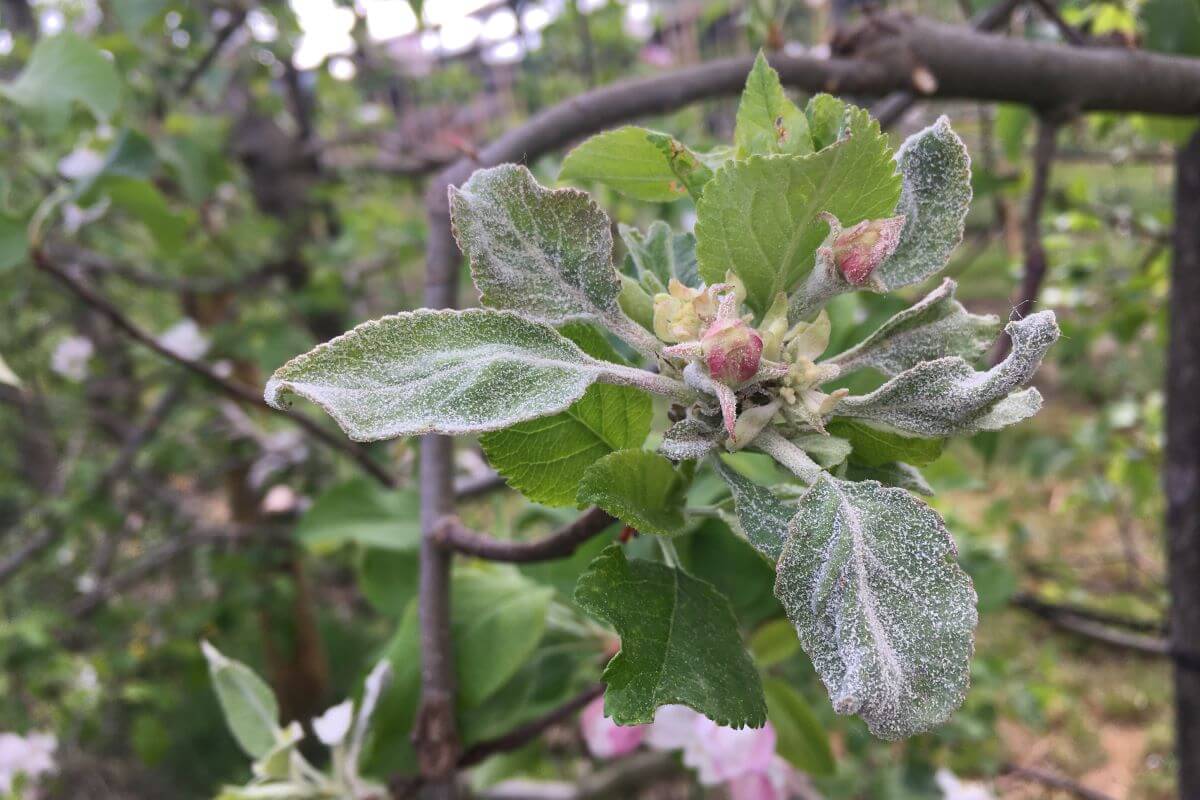
The powdery mildew disease caused by Podosphaera leucotricha affects pome fruit trees, compromising both the quality and quantity of production. Infections usually begin in spring, initially manifesting as white, powdery Taches on leaves and young shoots.
- Leaves with white, powdery Taches.
- Young shoots deformed and covered with white mycelium.
- Infected flowers, which can lead to poor fruiting.
- Fruits with a superficial white layer and deformations.
- Delayed growth of affected shoots.
- Premature fall of leaves and flowers.


TEMPERATURE AND HUMIDITY
15-25 °C
60-80 %

HOW IS IT SPREAD?
Spores carried by wind, direct contact with infected tissues, contaminated pruning tools, clothing and hands of workers

HOW TO REMOVE IT?
Home remedies
There are no home treatments
Chemical treatments
• ORANGE OIL 60g/L [ME] P/S
• SULFUR 70% [SC] P/V
• SULFUR 72% [SC] P/V
• SULFUR 80% [SC] P/V
• SULFUR 80% [WG] P/P
• SULFUR 80% [WP] P/P
• SULFUR 82.5% [SC] P/V
• CIFLUFENAMID 5.13% [EW] P/V
• FLUXAPYROXAD 30% [SC] P/V
• POTASSIUM HYDROGEN CARBONATE 99% [SP] P/P
• Penconazole 10% [EC] P/V
• PENCONAZOLE 20% [EW] P/V
• TEBUCONAZOLE 25% [WG] P/P
Authorized treatments in organic farming
• ORANGE OIL 60g/L [ME] P/S
• SULFUR 70% [SC] P/V
• SULFUR 72% [SC] P/V
• SULFUR 80% [SC] P/V
• SULFUR 80% [WG] P/P
• SULFUR 80% [WP] P/P
• SULFUR 82.5% [SC] P/V
• POTASSIUM HYDROGEN CARBONATE 99% [SP] P/P
Insect allies
PREDATORY MITES
LADYBUGS
LACEWINGS
PARASITIC WASPS
HOVERFLIES OR PARASITIC FLIES
PREDATORY BUGS
There are no natural allies
Mycodiplosis oidii (predatory mosquito)
EFFECTIVE PRODUCTS TO ELIMINATE THIS DISEASE
Sponsored link
Sponsored link
Sponsored link


Sponsored link
Sponsored link
Sponsored link
Sponsored link


Sponsored link
Sponsored link
Effective against all types of fungi

Sponsored link
Sponsored link


Sponsored link
Sponsored link

Sponsored link
Sponsored link


Sponsored link
- Carry out sanitary pruning to eliminate infected shoots and branches, thus reducing the source of inoculum.
- Apply preventive fungicide treatments in spring, before the first visible symptoms appear.
- Promote ventilation of the orchard through an adequate planting and pruning framework, reducing relative humidity.
- Use varieties of pome fruit trees resistant to powdery mildew whenever possible.
- Avoid excess nitrogen fertilization, as it can favor the growth of tender shoots susceptible to infection.
- Regularly monitor the orchard for early detection of symptoms and apply curative treatments when necessary.
- Implement integrated pest management (IPM) practices to reduce pathogen pressure.
- Maintain good hygiene in the garden, removing and destroying infected plant remains to prevent the spread of the fungus.
Recommendations

Enjoy idMicrobe TOTALLY FREE, with no trial periods.


