

Septoriosis
Carrot Blight
Septoria Carotae
Pathogen:
Fungus
Type:
Risk to the plant:
HIGH

DESCRIPTION
WHO CAUSES IT?
Septoria carotae is a phytopathogenic fungus that causes a disease known as carrot blight. This fungus survives on infected plant remains and in the soil as resistant spores. During periods of high humidity and moderate temperatures, these spores germinate and release conidia, which are asexual spores that are dispersed by wind and rainwater. Conidia land on carrot foliage, where they germinate and penetrate tissues through stomata or wounds. Once inside the plant, the fungus colonizes the tissues, causing necrosis and producing new spores that spread to continue the infectious process in other plants. The infection spreads rapidly in moist conditions, especially when leaves are wet for long periods.
SYMPTOMS
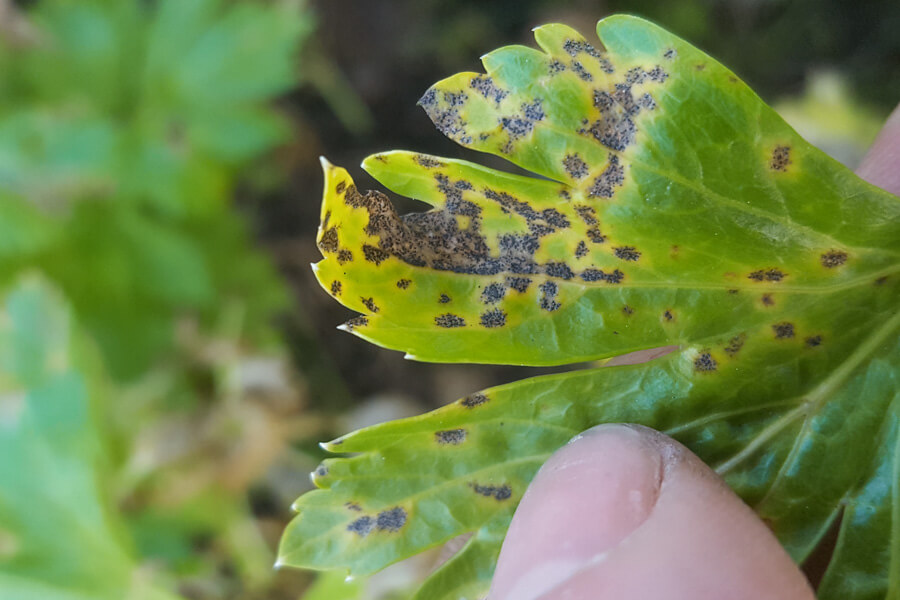
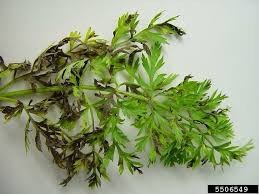
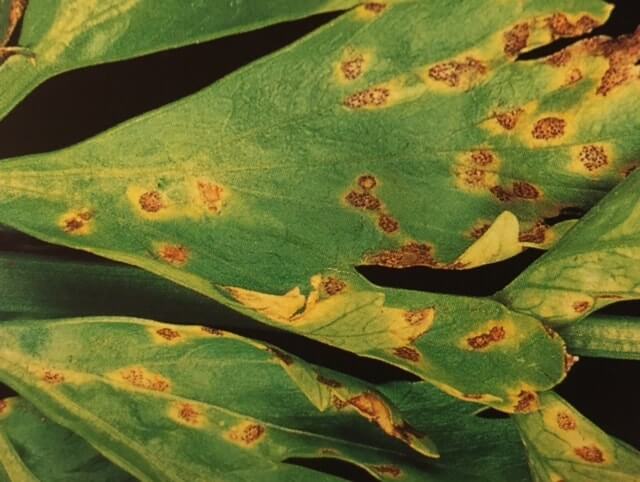
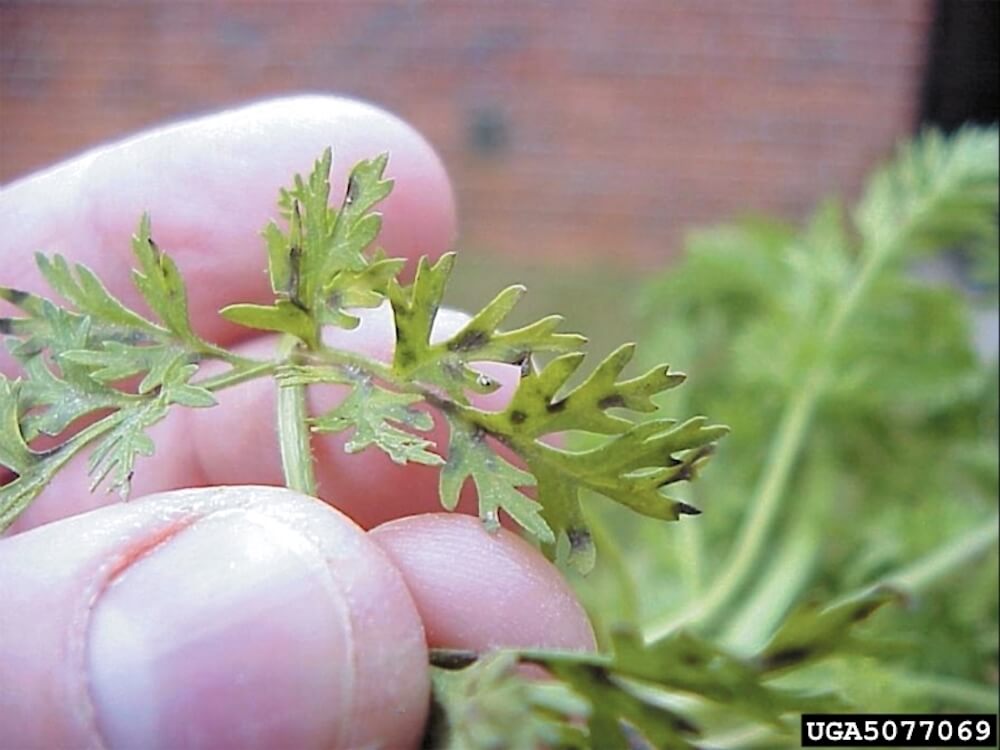
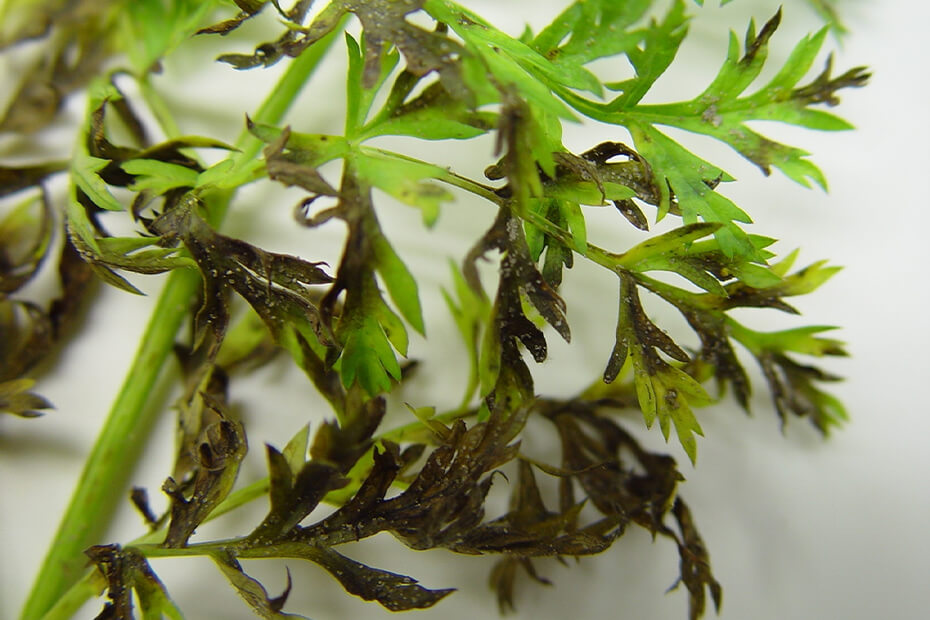
Carrot blight caused by Septoria carotae causes leaf Taches that can lead to defoliation and weakening of plants, seriously affecting crop quality and yield. Infected carrots show obvious signs on the foliage, which become more visible as the disease progresses.
- Small brown or black Taches on the leaves
- Taches surrounded by yellow halos
- Taches that enlarge and merge, causing necrosis
- Severe defoliation in advanced cases
- Reduction of plant growth
- General weakening of the plant

TEMPERATURE AND HUMIDITY
15°C - 25°C
80% - 100%

HOW IS IT SPREAD?
Wind, Rainwater, Infected crop remains, Contaminated tools and equipment, Infected seeds

HOW TO REMOVE IT?
Home remedies
There are no home treatments
Chemical treatments
• AZOXISTROBIN 20% + DIFENOCONAZOLE 12.5% [SC] P/V
• AZOXISTROBIN 25% [SC] P/V
• DIFENOCONAZOLE 25% [EC] P/V
• COPPER OXYCHLORIDE 35% (EXPR. IN CU) [WG] P/P
• COPPER OXYCHLORIDE 38% (EXPR. IN CU) [SC] P/V
• COPPER OXYCHLORIDE 50% (EXPR. IN CU) [WP] P/P
• PIRACLOSTROBIN 6.7% + BOSCALIDE 26.7% ( ) [WG] P/P
• CUPROCALCIC SULFATE 20% (EXPR. IN CU) [WG] P/P
Authorized treatments in organic farming
• COPPER OXYCHLORIDE 35% (EXPR. IN CU) [WG] P/P
• COPPER OXYCHLORIDE 38% (EXPR. IN CU) [SC] P/V
• COPPER OXYCHLORIDE 50% (EXPR. IN CU) [WP] P/P
• CUPROCALCIC SULFATE 20% (EXPR. IN CU) [WG] P/P
Insect allies
PREDATORY MITES
LADYBUGS
LACEWINGS
PARASITIC WASPS
HOVERFLIES OR PARASITIC FLIES
PREDATORY BUGS
There are no natural allies
Mycodiplosis oidii (predatory mosquito)
EFFECTIVE PRODUCTS TO ELIMINATE THIS DISEASE
Sponsored link

Sponsored link


Sponsored link
Sponsored link
Sponsored link


Sponsored link
Sponsored link
Effective against all types of fungi

Sponsored link


Sponsored link
Sponsored link

Sponsored link


Sponsored link
- Implement a crop rotation of at least three years, avoiding planting carrots in the same place consecutively.
- Use certified pathogen-free seeds to reduce the initial introduction of Septoria carotae.
- Remove and destroy remains of previous crops and infected plants to reduce inoculum sources.
- Improve crop ventilation through adequate spacing between plants to reduce humidity in the foliage.
- Avoid sprinkler irrigation, preferring drip irrigation to keep the foliage dry.
- Apply specific fungicides according to technical recommendations and following a product rotation program to avoid resistance.
- Regularly monitor the crop to detect the first signs of infection and take quick measures to control it.
- Practice good hygiene in the field, including disinfection of tools and equipment to prevent the spread of the pathogen.
Recommendations

Enjoy idMicrobe TOTALLY FREE, with no trial periods.


