

Phytophthora
Sadness Or Dryness Of The Pepper
Phytophthora Capsici
Pathogen:
Oomycete
Type:
Risk to the plant:
CRITICAL

DESCRIPTION
WHO CAUSES IT?
Phytophthora capsici is an oomycete that causes serious damage to pepper crops and other solanaceous plants. This pathogen reproduces through spores that can survive in soil and infected plant remains. When environmental conditions are favorable, the spores germinate and form infective structures called zoospores, which are mobile in water. These zoospores swim to the roots of the plants and penetrate the tissues through the roots or wounds at the base of the stem. Once inside the plant, the pathogen spreads rapidly, producing sporangia on the surface of infected tissues, which release more zoospores. This infection and reproduction process can be repeated several times during the growing season, especially under conditions of high humidity and moderate temperatures, which facilitates the rapid spread of the disease. Furthermore, Phytophthora capsici can form oospores, resistance structures that allow the pathogen to survive in adverse conditions for long periods.
SYMPTOMS
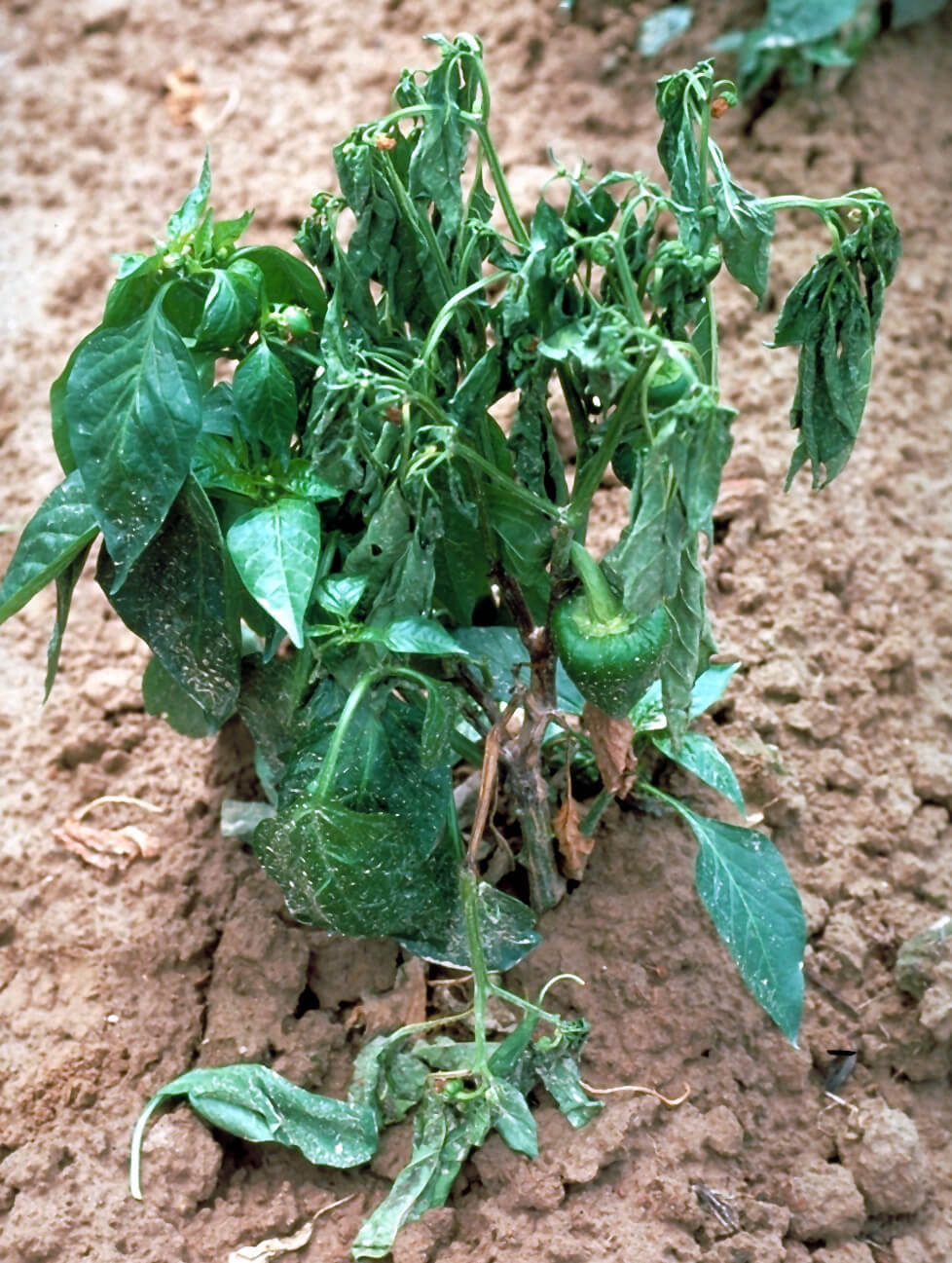
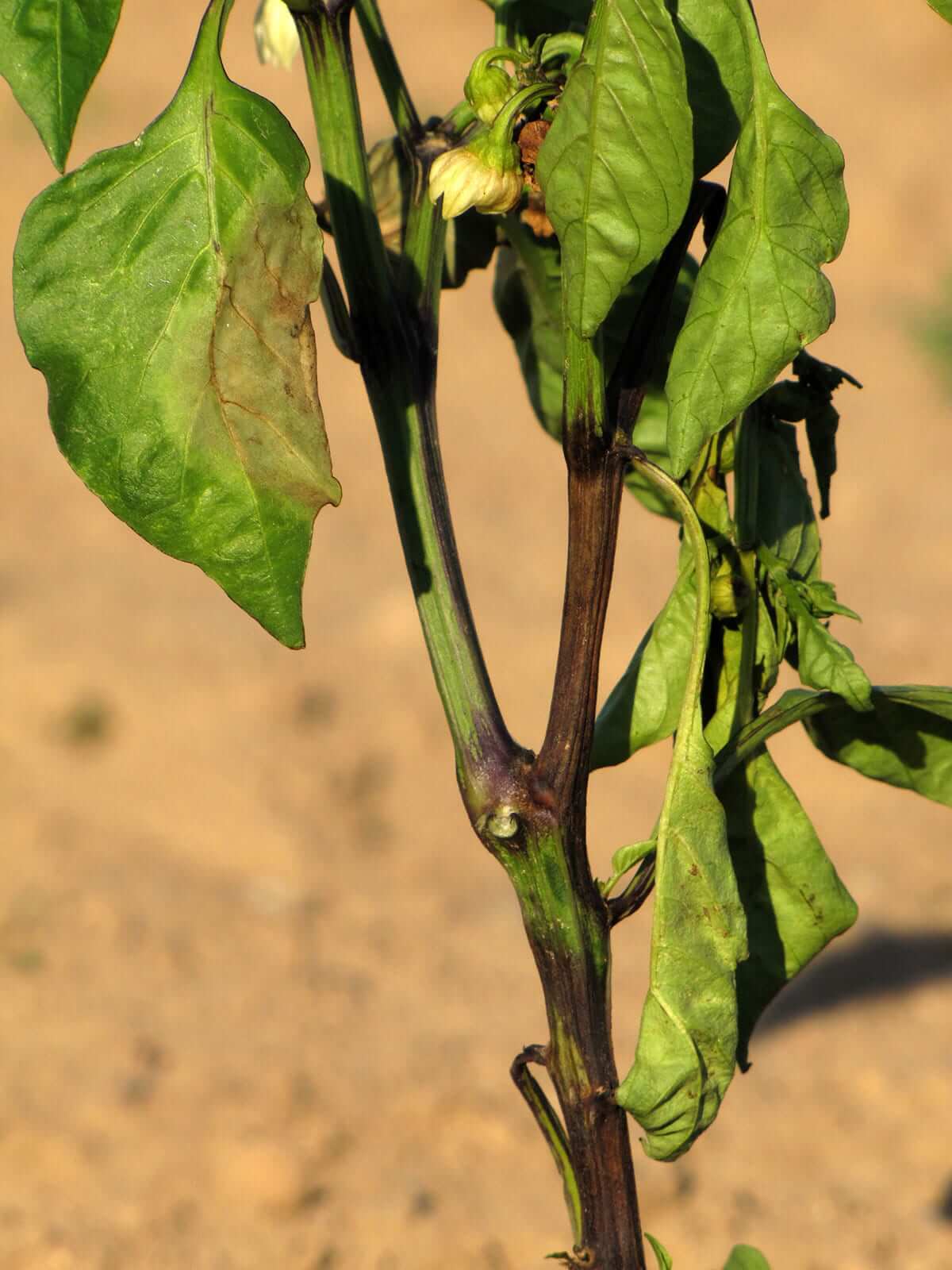
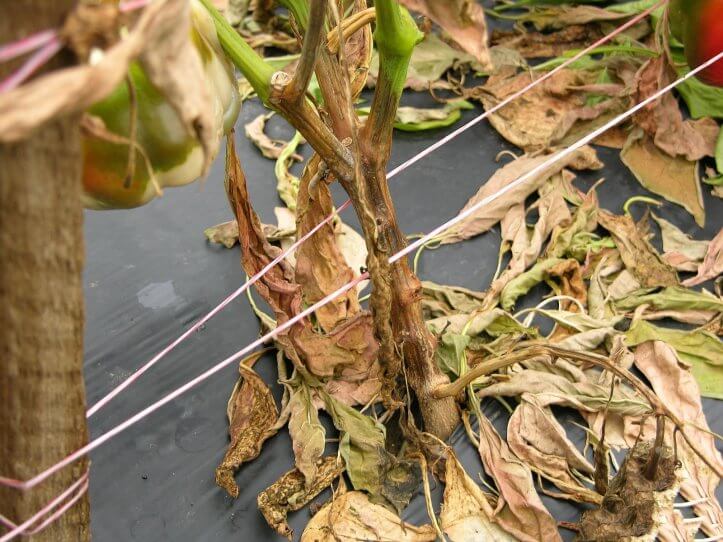
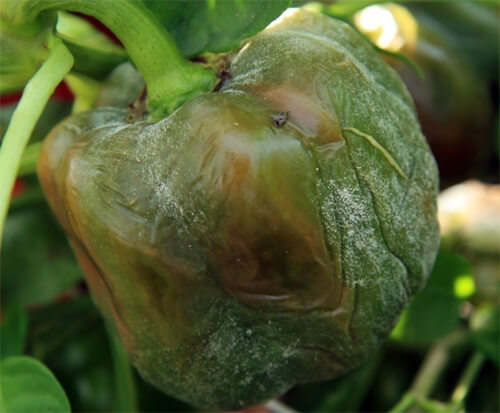
Pepper blight, caused by Phytophthora capsici, is a devastating disease that affects pepper plants, compromising their development and production. Symptoms appear in various parts of the plant, frequently starting in the roots and progressing to the stems and fruits.
Sudden wilting and collapse of plants, even when the soil is wet
Dark, watery lesions at the base of the stem, which may extend upwards
Necrosis of the roots, which become brown and brittle
Yellowing and premature leaf fall
Watery Taches on the fruits, which become soft and rotten
Presence of a white layer of sporangia in affected areas, especially in humid conditions


TEMPERATURE AND HUMIDITY
24-29 °C
80-100 %

HOW IS IT SPREAD?
Contaminated soil, irrigation water, infected plant remains, agricultural tools and machinery, infected seedlings, dispersal by rain and wind

HOW TO REMOVE IT?
Home remedies
There are no home treatments
Chemical treatments
• FOSETIL 31% + Propamocarb 53% [SL] P/V
• POTASSIUM PHOSPHONATES 51% (Exp. as phosphorous acid) [SL] P/V
• CUPRIC HYDROXIDE 50% (EXPR. IN CU) [WG] P/P
• CUPRIC HYDROXIDE 50% (EXPR. IN CU) [WP] P/P
• METALAXIL 25% [WP] P/P
• COPPER OXYCHLORIDE 25% (EXPR. IN CU) [WG] P/P
• COPPER OXYCHLORIDE 30% (EXPR. IN CU) [WP] P/P
• COPPER OXYCHLORIDE 35% (exp. in Cu) [WG] P/P
• COPPER OXYCHLORIDE 35% (EXPR. IN CU) [WG] P/P
• COPPER OXYCHLORIDE 38% (EXPR. IN CU) [SC] P/V
• COPPER OXYCHLORIDE 50% (EXPR. IN CU) [WG] P/P
• COPPER OXYCHLORIDE 50% (EXPR. IN CU) [WP] P/P
• COPPER OXYCHLORIDE 52% (EXPR. IN CU) [SC] P/V
• CUPROUS OXIDE 50% (EXPR. IN CU) [WP] P/P
• PROPAMOCARB 60.5% (c. hydrochloride) [SL] P/V
• CUPROCALCIC SULFATE 20% (EXPR. IN CU) [WG] P/P
• CUPROCALCIC SULFATE 20% (EXPR. IN CU) [WP] P/P
Authorized treatments in organic farming
• CUPRIC HYDROXIDE 50% (EXPR. IN CU) [WG] P/P
• CUPRIC HYDROXIDE 50% (EXPR. IN CU) [WP] P/P
• COPPER OXYCHLORIDE 25% (EXPR. IN CU) [WG] P/P
• COPPER OXYCHLORIDE 30% (EXPR. IN CU) [WP] P/P
• COPPER OXYCHLORIDE 35% (exp. in Cu) [WG] P/P
• COPPER OXYCHLORIDE 35% (EXPR. IN CU) [WG] P/P
• COPPER OXYCHLORIDE 38% (EXPR. IN CU) [SC] P/V
• COPPER OXYCHLORIDE 50% (EXPR. IN CU) [WG] P/P
• COPPER OXYCHLORIDE 50% (EXPR. IN CU) [WP] P/P
• COPPER OXYCHLORIDE 52% (EXPR. IN CU) [SC] P/V
• CUPROUS OXIDE 50% (EXPR. IN CU) [WP] P/P
• CUPROCALCIC SULFATE 20% (EXPR. IN CU) [WG] P/P
• CUPROCALCIC SULFATE 20% (EXPR. IN CU) [WP] P/P
Insect allies
PREDATORY MITES
LADYBUGS
LACEWINGS
PARASITIC WASPS
HOVERFLIES OR PARASITIC FLIES
PREDATORY BUGS
There are no natural allies
Mycodiplosis oidii (predatory mosquito)
EFFECTIVE PRODUCTS TO ELIMINATE THIS DISEASE
Sponsored link
Sponsored link
Sponsored link


Sponsored link
Sponsored link
Sponsored link
Sponsored link


Sponsored link
Sponsored link
Effective against all types of fungi

Sponsored link
Sponsored link


Sponsored link
Sponsored link

Sponsored link
Sponsored link


Sponsored link
Use pepper cultivars resistant or tolerant to Phytophthora capsici
Implement an adequate crop rotation, avoiding planting nightshades in the same place for at least 3-4 years
Improve soil drainage to prevent waterlogging, which favors the spread of the pathogen
Apply specific fungicides preventively and in the recommended doses, alternating products to avoid resistance.
Avoid excessive irrigation and prefer irrigation methods that minimize moisture at the soil surface, such as drip irrigation
Remove and destroy infected plant remains to reduce the source of inoculum
Disinfect growing tools and equipment to prevent the spread of the pathogen
Use organic amendments that improve the structure and drainage capacity of the soil
Regularly monitor the crop to detect early symptoms and take immediate action
Recommendations

Enjoy idMicrobe TOTALLY FREE, with no trial periods.


