


Moteado
Mottling or scab: what it is, how it originates, and how to eliminate it effectively
Mottling Or Scab
Venturia Pyrina
Pathogen:
Fungus
Type:
Risk to the plant:
HIGH

DESCRIPTION
WHO CAUSES IT?
Venturia pyrina is an ascomycete fungus that causes mottling or scab on pome fruit trees. This pathogen begins its development in leaves and fruits fallen to the ground, where it forms resting structures known as pseudothecia during the winter. In spring, when temperature and humidity conditions are suitable, pseudothecia mature and release ascospores that are transported by wind and rain to the young shoots, leaves and fruits of the trees. Once ascospores are deposited on the surface of plant tissues, they germinate and form germ tubes that penetrate epidermal cells. The fungus develops intercellularly, forming conidia that generate new secondary infections throughout the growing season. These conidia are responsible for the secondary dispersal of the fungus, allowing the disease to spread rapidly in the orchard.
SYMPTOMS
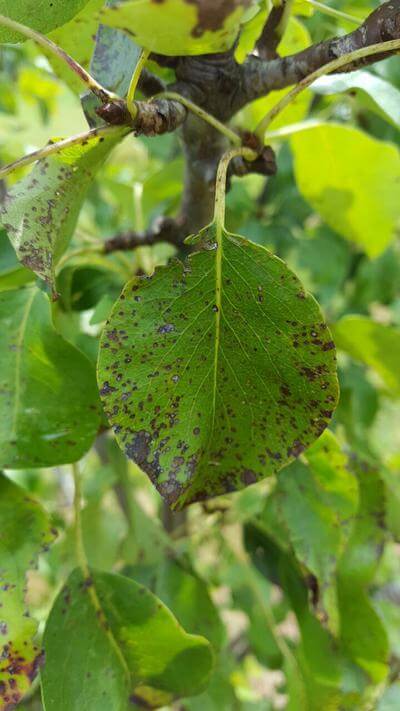
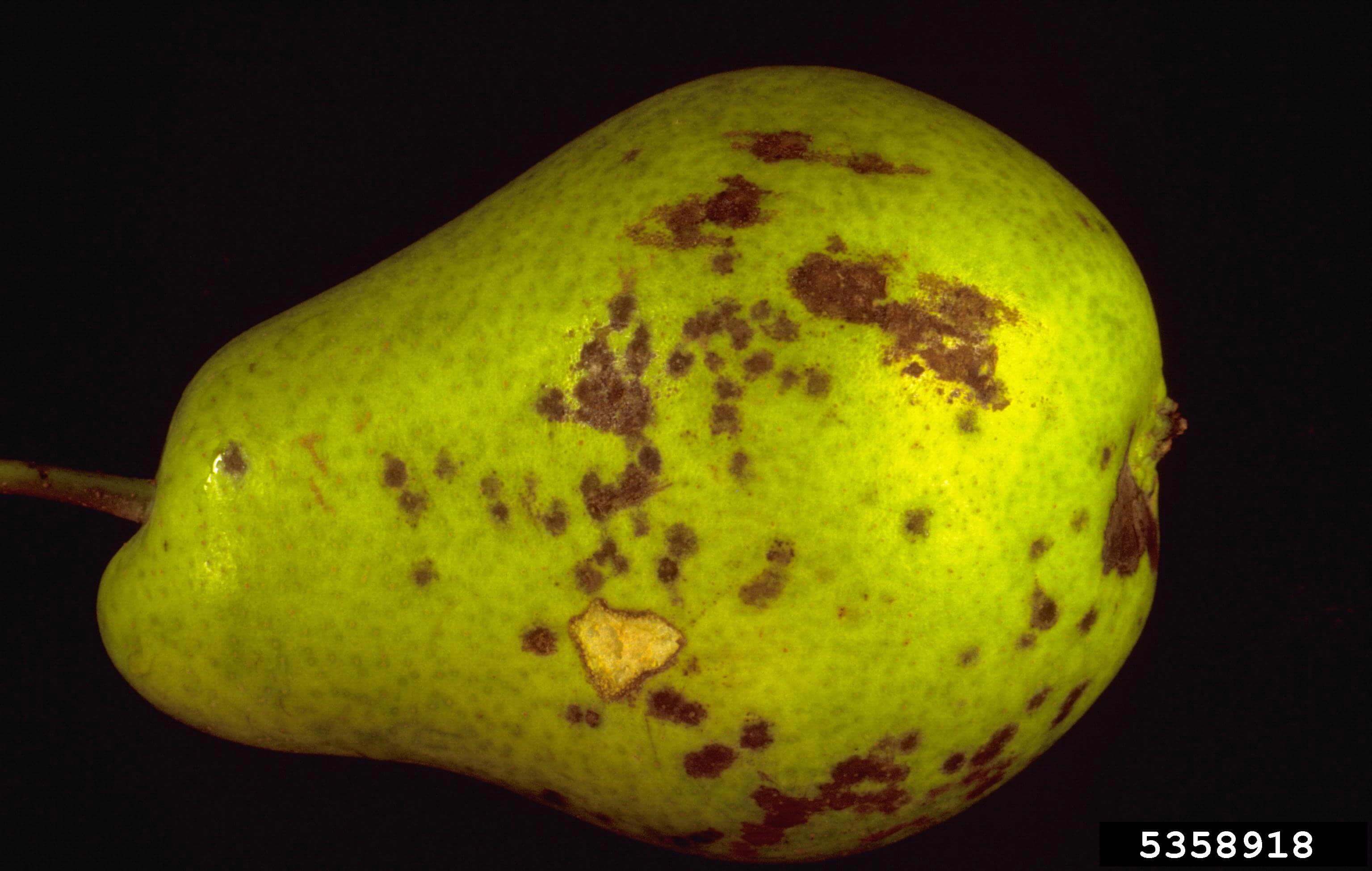
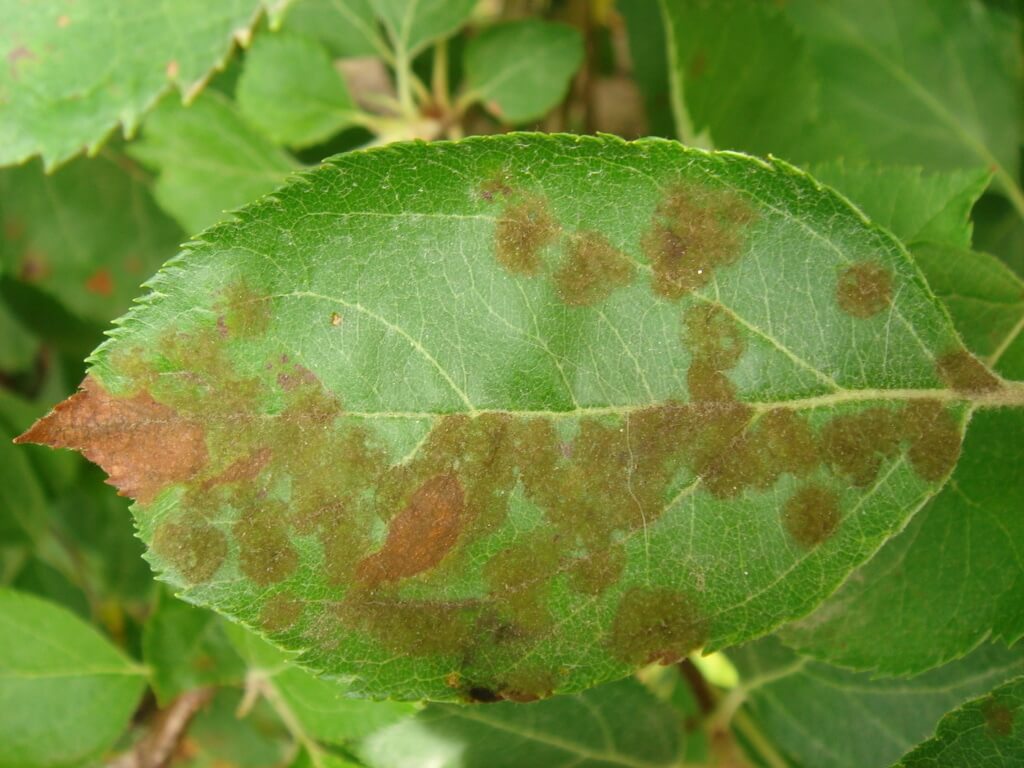
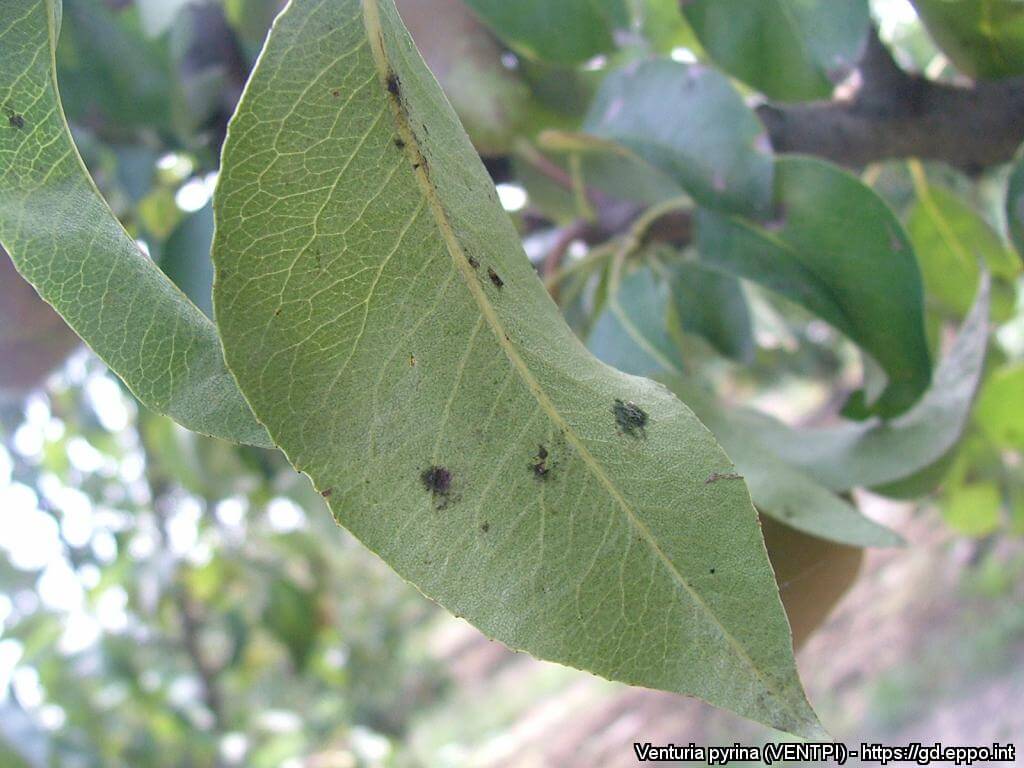
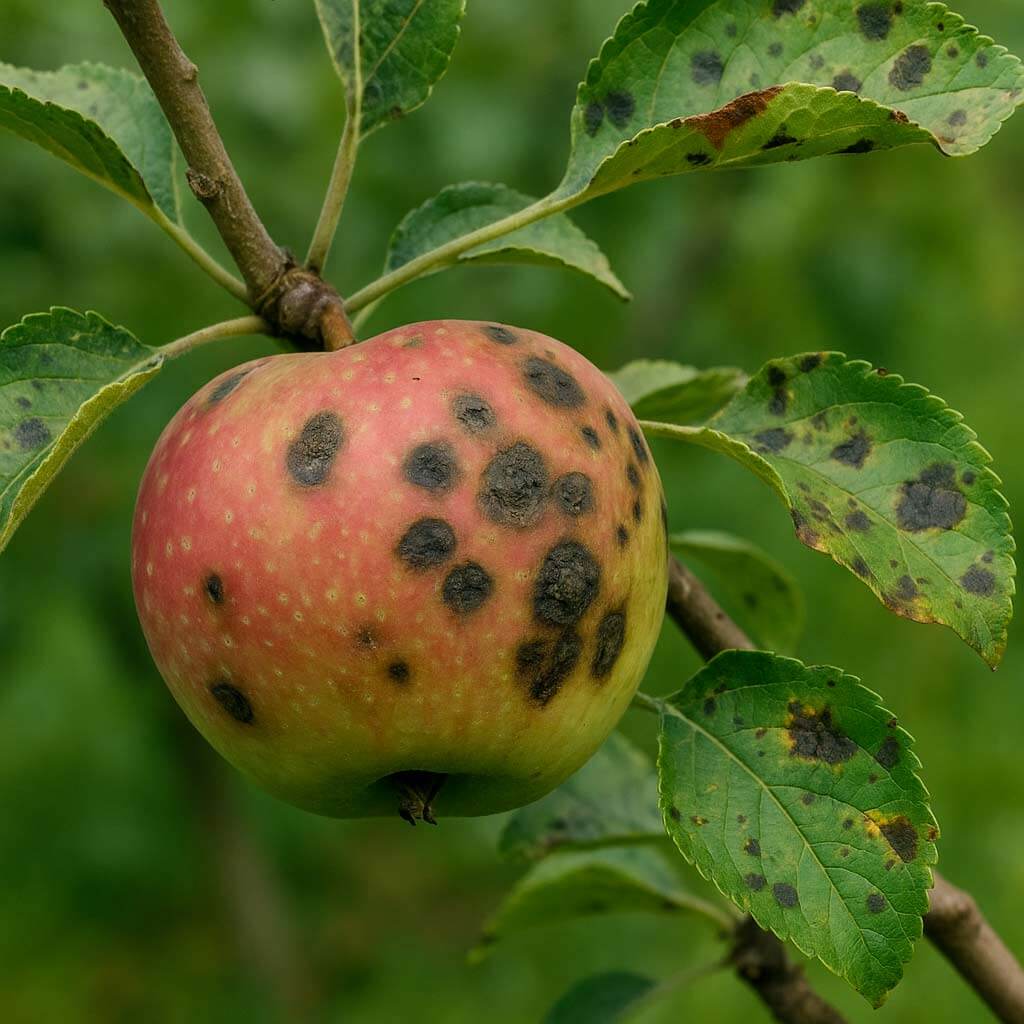
The spot or scab caused by Venturia pyrina is a disease that seriously affects pome fruit trees, reducing both the quality and quantity of production. The first symptoms usually appear on the leaves and young fruits, where dark, circular Taches are observed. As the infection progresses, leaves may become chlorotic and drop prematurely, while fruits develop deformities and crusty Taches that make them unsuitable for market.
- Dark, circular Taches on leaves and fruits.
- Chlorosis and premature leaf fall.
- Deformities and crusty Taches on the fruits.
- Reduction in the quality and quantity of the harvest.
- Necrosis in young shoots.
- Loss of vigor in affected trees.

TEMPERATURE AND HUMIDITY
10°C - 25°C
70% - 90%

HOW IS IT SPREAD?
Wind, Rain, Contaminated tools, Direct contact with infected trees

HOW TO REMOVE IT?
Home remedies
There are no home treatments
Chemical treatments
• SULFUR 70% [SC] P/V
• CAPTAN 47.5% [SC] P/V
• CAPTAIN 80% [WG] P/P
• CIPRODINIL 37.5% + FLUDIOXONIL 25% [WG] P/P
• Cyprodinil 50% [WG] P/P
• Ditianone 12.5% + Potassium phosphonates 56.1% [SC] P/V
• DITHIANONE 70% [WG] P/P
• DODINA 40% [SC] P/V
• DODINA 54.4% [SC] P/S
• FLUXAPYROXAD 30% [SC] P/V
• POTASSIUM HYDROGEN CARBONATE 0.425% [AL] P/V
• POTASSIUM HYDROGEN CARBONATE 99% [SP] P/P
• CUPRIC HYDROXIDE 13.6% (EXPR. IN CU) + COPPER OXYCHLORIDE 13.6% (EXPR. IN CU) [SC] P/V
• CUPRIC HYDROXIDE 20% (EXPR. IN CU) [WG] P/P
• CUPRIC HYDROXIDE 25% (EXPR. IN CU) [WG] P/P
• CUPRIC HYDROXIDE 35% (EXPR. IN CU) [WG] P/P
• CUPRIC HYDROXIDE 36% (EXPR. IN CU) [SC] P/V
• CUPRIC HYDROXIDE 40% (EXPR. IN CU) [WG] P/P
• CUPRIC HYDROXIDE 50% (EXPR. IN CU) [WP] P/P
• METIRAM 70% [WG] P/P
• COPPER OXYCHLORIDE 14% (exp. in Cu) + CUPRIC HYDROXIDE 14% (exp. in Cu) [WG] P/P
• COPPER OXYCHLORIDE 25% (EXPR. IN CU) [WG] P/P
• COPPER OXYCHLORIDE 30% (EXPR. IN CU) [WP] P/P
• COPPER OXYCHLORIDE 35% (exp. in Cu) [WG] P/P
• COPPER OXYCHLORIDE 35% (EXPR. IN CU) [WG] P/P
• COPPER OXYCHLORIDE 37.5% (EXPR. IN CU) [WG] P/P
• COPPER OXYCHLORIDE 38% (EXPR. IN CU) [SC] P/V
• COPPER OXYCHLORIDE 50% (EXPR. IN CU) [WG] P/P
• COPPER OXYCHLORIDE 50% (EXPR. IN CU) [WP] P/P
• COPPER OXYCHLORIDE 52% (EXPR. IN CU) [SC] P/V
• COPPER OXYCHLORIDE 70% (EXPR. IN CU) [SC] P/V
• COPPER OXYCHLORIDE 70% [SC] P/V
• CUPROUS OXIDE 75% (EXPR. IN CU) [WG] P/P
• CUPROCALCIC SULFATE 12.4% (EXPR. IN CU) [SC] P/V
• CUPROCALCIC SULFATE 20% (EXPR. IN CU) [WG] P/P
• CUPROCALCIC SULFATE 20% (EXPR. IN CU) [WP] P/P
• CUPROCALCIC SULFATE 20% (EXPR. IN CU) [WG] P/P
• CUPROCALCIC SULFATE 20% [WP] P/P
• TEBUCONAZOLE 25% [WG] P/P
Treatments allowed in organic farming
• SULFUR 70% [SC] P/V
• POTASSIUM HYDROGEN CARBONATE 0.425% [AL] P/V
• POTASSIUM HYDROGEN CARBONATE 99% [SP] P/P
• CUPRIC HYDROXIDE 13.6% (EXPR. IN CU) + COPPER OXYCHLORIDE 13.6% (EXPR. IN CU) [SC] P/V
• CUPRIC HYDROXIDE 20% (EXPR. IN CU) [WG] P/P
• CUPRIC HYDROXIDE 25% (EXPR. IN CU) [WG] P/P
• CUPRIC HYDROXIDE 35% (EXPR. IN CU) [WG] P/P
• CUPRIC HYDROXIDE 36% (EXPR. IN CU) [SC] P/V
• CUPRIC HYDROXIDE 40% (EXPR. IN CU) [WG] P/P
• CUPRIC HYDROXIDE 50% (EXPR. IN CU) [WP] P/P
• COPPER OXYCHLORIDE 14% (exp. in Cu) + CUPRIC HYDROXIDE 14% (exp. in Cu) [WG] P/P
• COPPER OXYCHLORIDE 25% (EXPR. IN CU) [WG] P/P
• COPPER OXYCHLORIDE 30% (EXPR. IN CU) [WP] P/P
• COPPER OXYCHLORIDE 35% (exp. in Cu) [WG] P/P
• COPPER OXYCHLORIDE 35% (EXPR. IN CU) [WG] P/P
• COPPER OXYCHLORIDE 37.5% (EXPR. IN CU) [WG] P/P
• COPPER OXYCHLORIDE 38% (EXPR. IN CU) [SC] P/V
• COPPER OXYCHLORIDE 50% (EXPR. IN CU) [WG] P/P
• COPPER OXYCHLORIDE 50% (EXPR. IN CU) [WP] P/P
• COPPER OXYCHLORIDE 52% (EXPR. IN CU) [SC] P/V
• COPPER OXYCHLORIDE 70% (EXPR. IN CU) [SC] P/V
• COPPER OXYCHLORIDE 70% [SC] P/V
• CUPROUS OXIDE 75% (EXPR. IN CU) [WG] P/P
• CUPROCALCIC SULFATE 12.4% (EXPR. IN CU) [SC] P/V
• CUPROCALCIC SULFATE 20% (EXPR. IN CU) [WG] P/P
• CUPROCALCIC SULFATE 20% (EXPR. IN CU) [WP] P/P
• CUPROCALCIC SULFATE 20% (EXPR. IN CU) [WG] P/P
• CUPROCALCIC SULFATE 20% [WP] P/P
Insect allies
PREDATORY MITES
LADYBUGS
LACEWINGS
PARASITIC WASPS
HOVERFLIES OR PARASITIC FLIES
PREDATORY BUGS
There are no natural allies
Mycodiplosis oidii (predatory mosquito)
EFFECTIVE PRODUCTS TO ELIMINATE THIS DISEASE





- Carry out a good cleaning of the orchard, eliminating and destroying fallen leaves and fruits to reduce the source of inoculum.
- Apply preventive fungicides at the beginning of sprouting and continue with periodic applications according to the product recommendations.
- Select varieties of pome fruit trees that are resistant or tolerant to mottling.
- Maintain adequate ventilation and luminosity in the orchard through adequate pruning to reduce relative humidity.
- Implement an integrated pest and disease management program that combines the use of fungicides, cultural practices and biological control.
- Regularly monitor the orchard to detect the first symptoms of the disease and act quickly.
- Avoid sprinkler irrigation, as it increases relative humidity and favors the spread of the fungus.
- Use phytosanitary products with different modes of action to avoid the development of resistance in the fungus.
Recommendations



Explore more tools
Services
Contact
Legal
©2023 por ZeriMar Laboratoire. Todos los derechos reservados.