


Hongos
Phyllosticta: what it is, how it develops, and how to effectively eliminate it from fruit
Black spot
Phyllosticta sp.
Pathogen:
Fungus
Type:
Risk to the plant:
HIGH

DESCRIPTION
WHO CAUSES IT?
Phyllosticta sp. is a genus of ascomycete fungi that includes numerous species associated with different crops and plants, some of which can significantly affect fruit. Species in this genus can behave as pathogens of living plant tissues and also develop on weakened or dead tissues, depending on the species and the crop affected. The fungus develops a mycelium composed of hyphae that colonize infected tissues and can form reproductive structures called pycnidia, within which numerous conidia are produced. These pycnidia usually develop within lesions and constitute an important source of inoculum. In some species, sexual structures such as pseudothecia can also be produced, which generate ascospores and can contribute to the dispersal and emergence of new infections. The pathogen can survive between favorable periods in affected fruits, plant debris, branches, leaves, and other infected tissues that remain in the crop or in the soil. When environmental conditions are favorable, the reproductive structures release conidia, especially in the presence of free water or high humidity. Conidia can be transported by raindrops, water splashes, and other short-distance dispersal mechanisms, reaching the surface of healthy fruit. Once deposited on susceptible tissue, conidia can germinate and form germ tubes that penetrate the tissues, especially where wounds, micro-fissures, or weakened areas are present. Prolonged moisture on the fruit surface favors germination and the establishment of the infection. After penetration, the fungus develops mycelium within the tissues and causes localized cell death, resulting in characteristic lesions. As the infection progresses, new pycnidia can form in the affected areas, where new conidia are produced that can cause secondary infections. In certain species, infections can remain latent for a period and become visible later, especially when the fruit ripens or is subjected to stress, mechanical damage, or favorable environmental conditions. The disease can become particularly important during storage and preservation, as some fruits may exhibit infections that are barely visible at harvest but progress subsequently. The amount of inoculum present, the susceptibility of the fruit, the presence of wounds, and the duration of periods of humidity are determining factors for the appearance and spread of the disease.
SYMPTOMS
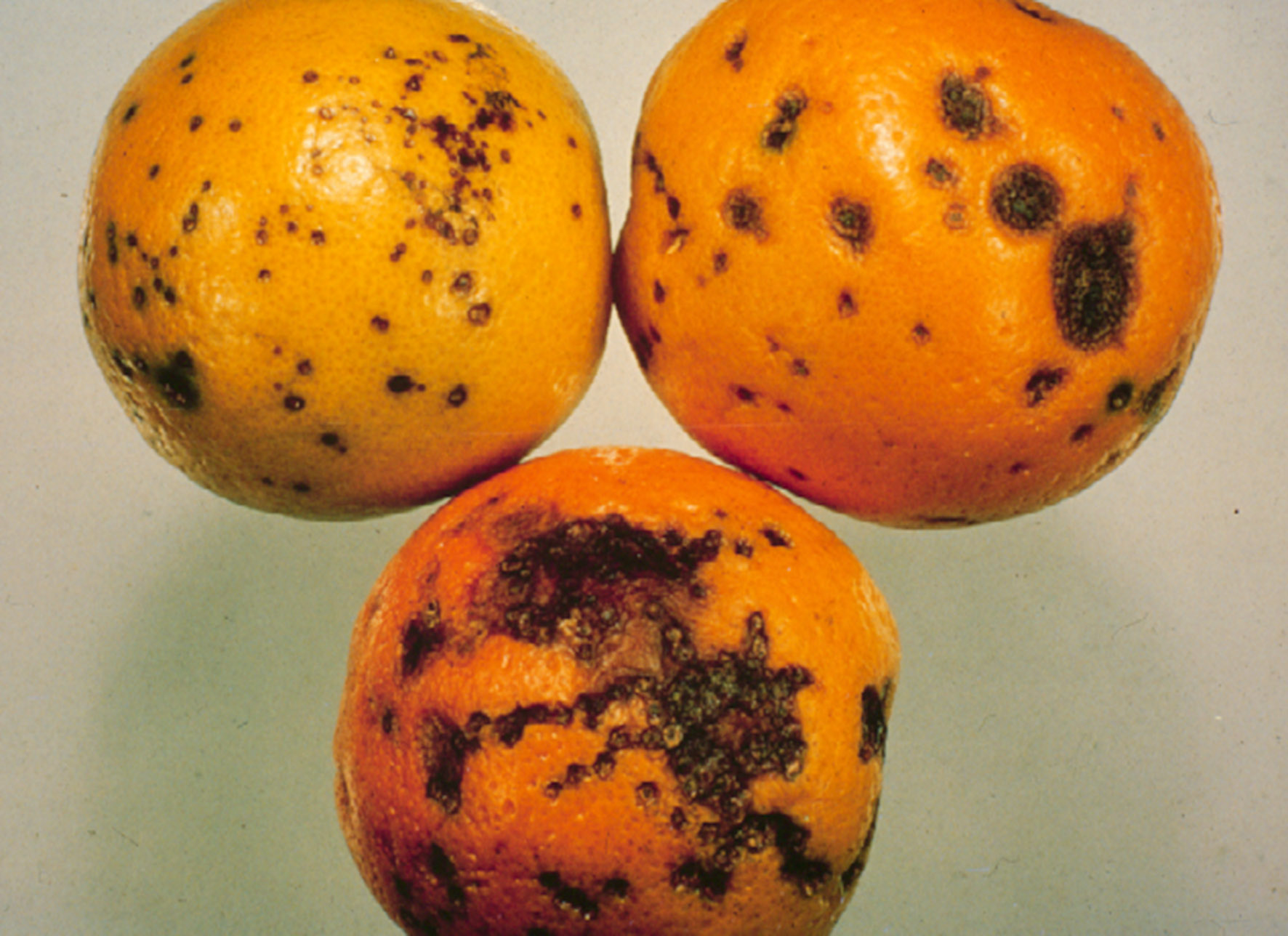
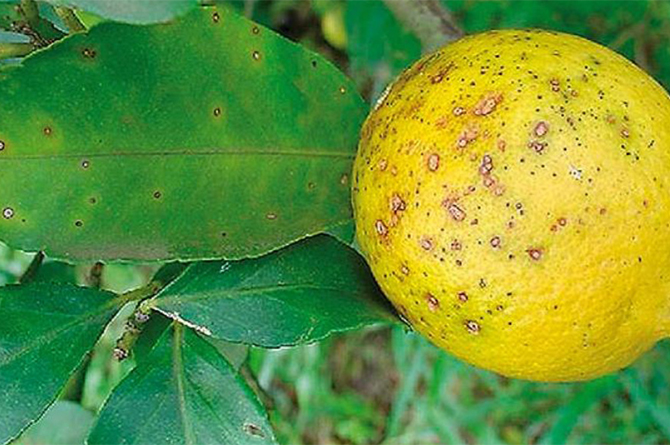
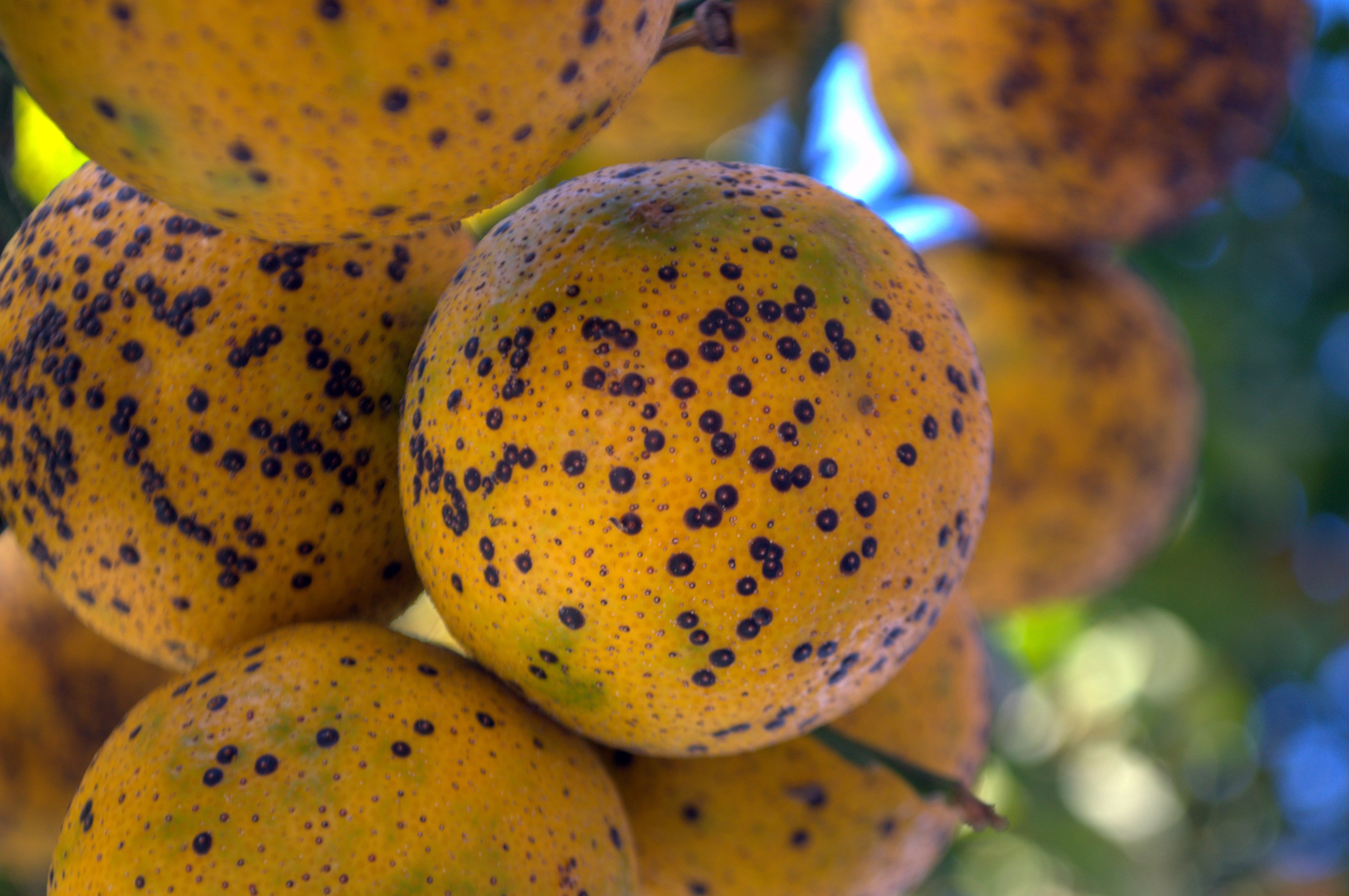
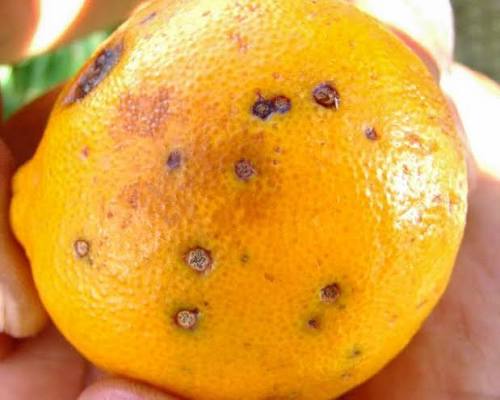
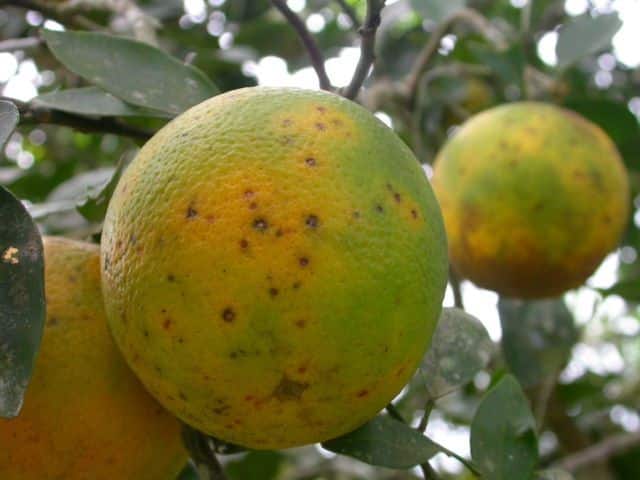
Black spot caused by Phyllosticta sp. can produce necrotic lesions on fruit that initially appear as small, circular or irregular discolored areas, later turning brown, dark, or black. The lesions may remain superficial or progress into the internal tissues, causing gradual deterioration and loss of quality. Depending on the Phyllosticta species and the affected fruit, the spots may have well-defined borders, sunken areas, and visible reproductive structures such as small black dots. These structures are primarily pycnidia and can be observed on the lesions when the disease is well-developed. High humidity favors the production and release of conidia and can accelerate the spread of the lesions. In advanced infections, several spots can merge and form large necrotic areas, leading to rot and loss of commercial value. Symptoms can appear during fruit development and continue to progress after harvest, especially when the fruit is stored under conditions that favor fungal activity. The disease can manifest itself through:
• Small, circular or irregular spots on the surface of the fruit.
• Appearance of brown, dark gray, or black lesions.
• Progressively sunken lesions.
• Well-defined borders around the spots on certain fruits.
• Gradual spread of the lesions into adjacent tissues.
• Formation of small black dots corresponding to the reproductive structures of the fungus.
• Appearance of pycnidia on the affected areas.
• Localized necrosis of the tissues.
• Merging of several lesions, forming extensive areas of necrotic tissue.
• Cracks or deterioration of the epidermis in advanced lesions.
• Fruit rot when the infection progresses into the internal tissues.
• Loss of firmness and altered texture.
• Progressive deterioration during storage.
• Appearance or intensification of symptoms after harvest. • Reduction in commercial quality and increase in the percentage of rejected fruit.

TEMPERATURE AND HUMIDITY
20–28 °C
85–100 %

HOW IS IT SPREAD?
Conidia, ascospores, rain, water splashes, irrigation water, infected fruit, contaminated plant debris, contact between fruit, contaminated tools, agricultural machinery, contaminated harvesting boxes, workers' hands and clothing, contaminated plant material.

HOW TO REMOVE IT?
Home remedies
There are no home treatments
Chemical treatments
• Orange Oil 6% [SL] w/v
• Azoxystrobin 25% [SC] w/v
• Sulfur 80% [SC] w/v
• Sulfur 80% [WG] w/w
• Sulfur 80% [WP] w/w
• Difenoconazole 0.0167% [AL] w/v
• Difenoconazole 1.67% [EC] w/v
• Copper Hydroxide 25% (expressed as Cu) [WG] w/w
• Copper Hydroxide 50% (expressed as Cu) [WP] w/w
• Copper Oxychloride 14% (expressed as Cu) + Copper Hydroxide 14% (expressed as Cu) [WG] w/w
• Copper Oxychloride 30% (EXPR. IN CU) [WP] P/P
• COPPER OXYCHLORIDE 35% (exp. in Cu) [WG] P/P
• COPPER OXYCHLORIDE 35% (EXPR. IN CU) [WG] P/P
• COPPER OXYCHLORIDE 38% (EXPR. IN CU) [SC] P/V
• COPPER OXYCHLORIDE 50% (EXPR. IN CU) [WP] P/P
• COPPER OXYCHLORIDE 52% (EXPR. IN CU) [SC] P/V
• CUPROUS OXIDE 50% (EXPR. IN CU) [WP] P/P
• PIRACLOSTROBIN 6.7% + BOSCALIDE 26.7% ( ) [WG] P/P
• PIRACLOSTROBIN 6.7% + BOSCALIDE 26.7% (I) [WG] P/P
• CUPROCALCIC SULFATE 20% (EXPR. IN CU) [WG] P/P
• CUPROCALCIC SULFATE 20% (EXPR. IN CU) [WP] P/P
• TRIBASIC COPPER SULFATE 19% (EXPR. IN CU) [SC] P/V
• TETRACONAZOLE 10% [EC] P/V
• TETRACONAZOLE 12.5% [ME] P/V
• TETRACONAZOLE 4% [ME] P/V
Treatments allowed in organic farming
• ORANGE OIL 6% [SL] P/V
• SULFUR 80% [SC] P/V
• SULFUR 80% [WG] P/P
• SULFUR 80% [WP] P/P
• CUPRIC HYDROXIDE 25% (EXPR. IN CU) [WG] P/P
• CUPRIC HYDROXIDE 50% (EXPR. IN CU) [WP] P/P
• COPPER OXYCHLORIDE 14% (exp. in Cu) + CUPRIC HYDROXIDE 14% (exp. in Cu) [WG] P/P
• COPPER OXYCHLORIDE 30% (EXPR. IN CU) [WP] P/P
• COPPER OXYCHLORIDE 35% (exp. in Cu) [WG] P/P
• COPPER OXYCHLORIDE 35% (EXPR. IN CU ) [WG] P/P
• COPPER OXYCHLORIDE 38% (EXPR. IN CU) [SC] P/V
• COPPER OXYCHLORIDE 50% (EXPR. IN CU) [WP] P/P
• COPPER OXYCHLORIDE 52% (EXPR. IN CU) [SC] P/V
• CUPROUS OXIDE 50% (EXPR. IN CU) [WP] P/P
• CUPROCALCIC SULFATE 20% (EXPR. IN CU) [WG] P/P
• CUPROCALCIC SULFATE 20% (EXPR. IN CU) [WP] P/P
• TRIBASIC COPPER SULFATE 19% (EXPR. IN CU) [SC] P/V
Insect allies
PREDATORY MITES
LADYBUGS
LACEWINGS
PARASITIC WASPS
HOVERFLIES OR PARASITIC FLIES
PREDATORY BUGS
There are no natural allies
Mycodiplosis oidii (predatory mosquito)
EFFECTIVE PRODUCTS TO ELIMINATE THIS DISEASE





• Remove and discard affected fruit from the plant and the soil to reduce sources of inoculum.
• Remove mummified fruit and any infected plant debris that may remain in the plot.
• Avoid leaving diseased plant material accumulated near crops.
• Properly manage pruning debris and other plant residues that may contain the pathogen's reproductive structures.
• Maintain good ventilation of the vegetation to promote rapid drying of the fruit after rain or irrigation.
• Avoid excessive vegetation density that prolongs moisture on the fruit.
• Reduce the time free water remains on the fruit surface.
• Avoid sprinkler irrigation, when possible, during periods of high disease pressure.
• Manage irrigation to avoid excessive and prolonged moisture in the crop.
• Avoid wounds, cuts, bruises, and abrasions during agricultural work. • Control pests that can cause wounds on the fruit and facilitate the entry of the pathogen.
• Handle the fruit carefully during harvesting to reduce mechanical damage.
• Separate any fruit with lesions, wounds, or suspicious symptoms during harvesting.
• Avoid placing affected fruit in warehouses or cold storage rooms along with healthy fruit.
• Maintain proper hygiene of crates, tools, machinery, and surfaces used during harvesting and handling.
• Properly disinfect work materials when there is a risk of contamination between plots or batches.
• Maintain storage conditions that reduce condensation and surface moisture on the fruit.
• Pay special attention to the fruit during ripening and in the phases immediately preceding harvest.
• Carry out regular inspections to detect the first spots and quickly remove affected tissue.
• Use healthy plant material and avoid introducing contaminated fruit or debris into disease-free plots. • Only apply plant protection products authorized for the crop and for disease control.
• Strictly adhere to the doses, application intervals, maximum number of treatments, and other conditions established on the label.
• Carry out preventative applications at times of highest risk when established by the authorized control strategy.
• Alternate active ingredients belonging to different modes of action groups to reduce selection pressure.
• Avoid consecutive applications of active ingredients belonging to the same FRAC group when authorized alternatives exist.
• Do not use doses lower than recommended, as this may favor the survival of less susceptible individuals.
• Integrate plant protection treatments with hygiene measures, moisture management, and elimination of inoculum sources.
• Avoid relying exclusively on chemical control and use an integrated strategy to reduce disease pressure.
• Monitor the effectiveness of treatments to detect possible decreases in susceptibility in pathogen populations.
Recommendations



Explore more tools
Services
Contact
Legal
©2023 por ZeriMar Laboratoire. Todos los derechos reservados.