top of page

Virus

Citrus tristeza virus: what it is, how it originates, and how to effectively eliminate it.

Citrus Sadness Virus

Ctv (Citrus Tristeza Virus)

Pathogen:

Virus

Type:

Risk to the plant:

CRITICAL

Citrus tristeza virus: what it is, how it originates, and how to effectively eliminate it.
Citrus tristeza virus in orange trees | idMicrobe

Don’t know which pest or disease your plant has?

Correctly identifying the problem is key to saving the plant.


A plant expert analyzes the photos and sends you a clear diagnosis within 24 hours, explaining the causes and the most effective solutions step by step.

1709890758744.png

DESCRIPTION

WHO CAUSES IT?

Citrus Tristeza Virus (CTV) is a phytopathogenic virus that affects citrus trees, particularly orange trees, and is considered one of the most destructive viruses for this family of plants. It is primarily transmitted by grafting, but can also be spread by aphid vectors, such as the California louse. This virus has the ability to infect a wide range of citrus species and rootstock strains, making it a significant threat to the citrus industry worldwide. CTV causes a disease known as citrus sadness virus, which can result in the death of infected trees and a significant decrease in fruit production.

SYMPTOMS

The disease caused by Citrus Tristeza Virus in orange trees is characterized by a series of general symptoms that affect the health and performance of the trees. These symptoms include widespread yellowing of leaves, reduction in fruit size and quality, decreased growth, and eventual death of the tree. In addition, more specific symptoms may be observed, such as the formation of suckers on the trunk, the presence of rough bark, and the proliferation of roots on the soil surface.

Generalized yellowing of the leaves.
Reduction in the size and quality of the fruits.
Decreased growth.
Formation of suckers on the trunk.
Presence of rough bark.
Proliferation of roots on the soil surface.
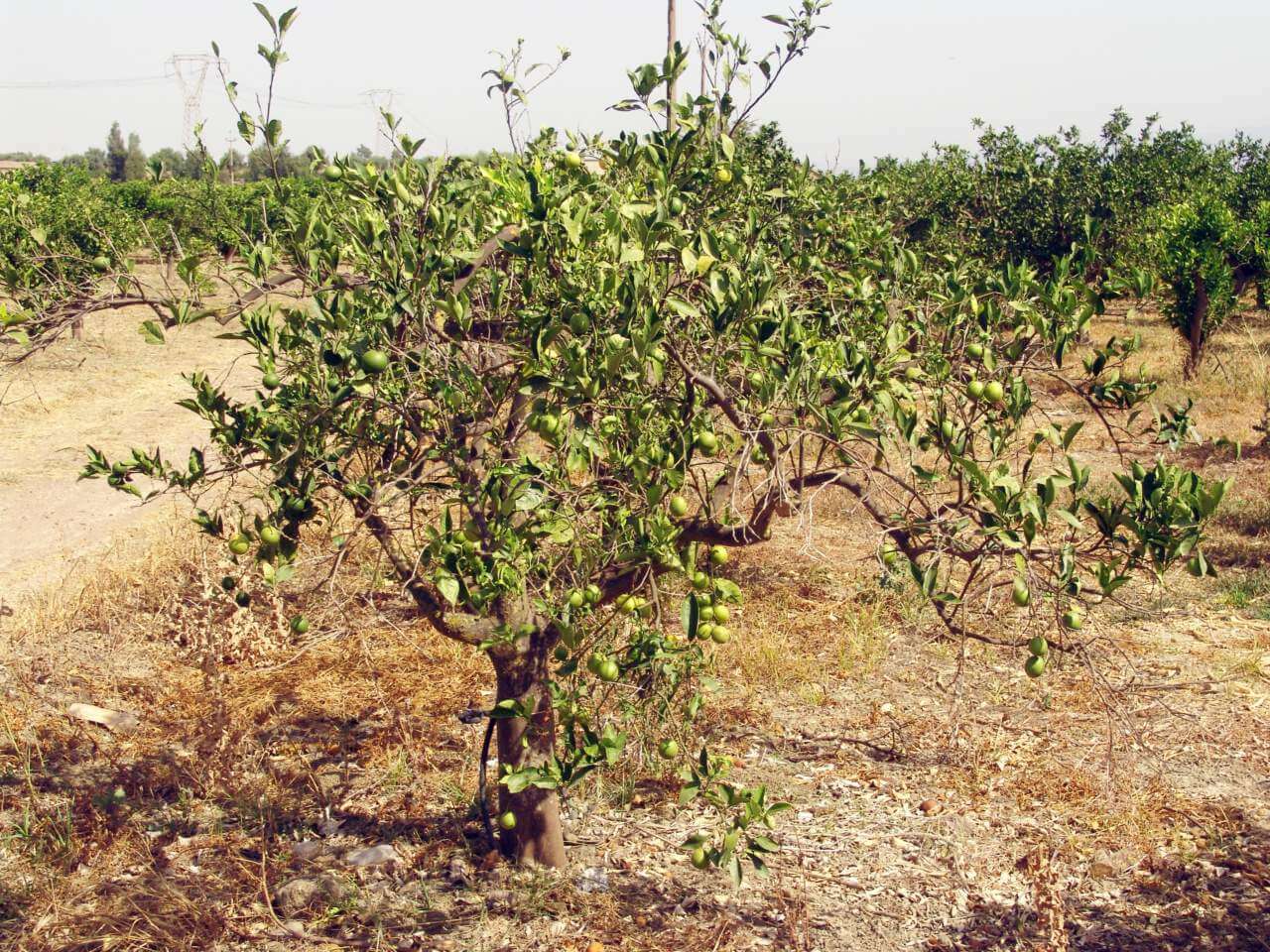
Citrus tristeza virus: Symptoms and damage in orange trees
Damage caused by Citrus tristeza virus in Naranjo
Citrus tristeza virus in orange trees: How to recognize and treat it effectively

Don’t know which pest or disease your plant has?

A plant expert reviews your photos and sends you a clear diagnosis within 24 hours, with step-by-step solutions.

1709890758650.png

TEMPERATURE AND HUMIDITY

20°C - 30°C

60% - 80%

Cargando...

HOW IS IT SPREAD?

Insect vectors, infected grafts, contaminated plant material.

1709890758673.png

HOW TO REMOVE IT?

Home remedies

BONE MEAL OR GROUND FISH SHELLS

RUSTY NAILS OR IRON SHAVINGS

BANANA PEELS

EPSOM SALTS (MAGNESIUM SULFATE)

SOLUTION WITH HOUSEHOLD BORAX

GROUND OR BOILED EGGSHELLS

COMPOST WITH ONION OR GARLIC SCRAPS

VEGETABLE COOKING WATER

WOOD ASH

WATER WITH VINEGAR OR LEMON (VERY DILUTED)

GARLIC INFUSION

USED COFFEE OR TEA

BANANA AND EGGSHELL INFUSION

POTATO OR LEGUME COOKING WATER

COMPOST FROM FRESH GREEN LEAVES

COMPOST OR WELL-AGED MANURE

DILUTED MILK (1:10)

BANANA TEA

LEAF COMPOST

NETTLE SLURRY

POTASSIUM SOAP AND NEEM OIL SOLUTION

POTASSIUM SOAP SOLUTION + NEEM OIL + DIATOMACEOUS EARTH

BAKING SODA AND NEUTRAL SOAP SOLUTION

GARLIC INFUSION WITH NEUTRAL SOAP

CHROMATIC OR ADHESIVE TRAPS

DILUTED MILK

HORSETAIL INFUSION

TRUNK WHITEWASHING

DIATOMACEOUS EARTH

WOOD ASH

NETTLE SLURRY

CUT THE AFFECTED BRANCHES AND APPLY CINNAMON

GARLIC AND CINNAMON INFUSION

INFUSION OF WORMWOOD, CHILI OR CHILLI

CLEAN THE AFFECTED AREA AND APPLY ASH PASTE WITH GARLIC OR CINNAMON

GARLIC AND MINT INFUSION

LIGHT TRAPS

APPLY CINNAMON POWDER

PITFALL TRAPS

CRUSHED EGG SHELLS

CLEAN AND SEAL THE WOUND WITH CLAY, CINNAMON AND GARLIC PASTE

GARLIC INFUSION

MATURE COMPOST

TRAPS WITH VINEGAR AND SOAP

SEAL HOLES WITH ASH PASTE AND CRUSHED GARLIC

VINEGAR AND BAKING SODA SOLUTION

ANT TRAP

TAPE TRAP

PHEROMONE TRAP

ALCOHOL TRAPS

FUNNEL TRAP

There are no home treatments

Chemical treatments

There are no effective treatments against viruses, the treatments are focused on combating the insect or vector carrying the virus (SEE THE TREATMENTS AVAILABLE AGAINST APHIDS)

Treatments allowed in organic farming

There are no effective treatments against viruses, the treatments are focused on combating the insect or vector carrying the virus (SEE THE TREATMENTS AVAILABLE AGAINST APHIDS)

Insect allies

PREDATORY MITES

LADYBUGS

LACEWINGS

PARASITIC WASPS

HOVERFLIES OR PARASITIC FLIES

PREDATORY BUGS

There are no natural allies

Mycodiplosis oidii (predatory mosquito)

EFFECTIVE PRODUCTS TO ELIMINATE THIS DISEASE

Sponsored link

Ecoworm Potassium Soap

Ecoworm Potassium Soap

Multi-purpose solution for insects. Effective against whiteflies, mites, thrips, leafhoppers, aphids and scale insects.

Sponsored link

Fruit Fly Traps

Fruit Fly Traps

Ready-to-use fruit fly trap with attractant.

Sponsored link

Liquid Copper Fungicide

Liquid Copper Fungicide

Copper fungicide for fungal diseases and plant diseases.

Sponsored link

Organic Seaweed Fertiliser

Organic Seaweed Fertiliser

Plant Food Ideal for All Plants, Rich in Additional Nutrients

Sponsored link

Fungus Fighter Plus | Fungicide for Plants

Fungus Fighter Plus | Fungicide for Plants

Broad-spectrum fungicide for effective control of fungal diseases in plants.

Sponsored link

Ultimate Bug Killer | Broad-Spectrum Insecticide

Ultimate Bug Killer | Broad-Spectrum Insecticide

Fast acting bug spray with up to 2 weeks protection, controls common garden pests

To prevent and control the spread of Citrus Tristeza Virus in orange trees, several integrated pest and disease management measures are recommended. These recommendations include:

Use certified and virus-free plant material for grafting.
Regularly inspect trees to detect and remove those that show symptoms of the disease.
Implement cultural management practices, such as proper pruning and weed control, to reduce stress on trees.
Use resistant aphids as virus carriers or apply insecticidal treatments to reduce the vector population.

Recommendations

Consulting on plant problems and diseases
bottom of page


