


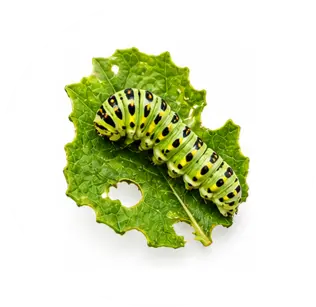
Caterpillars and worms on plants: how to recognize and control them
How to identify caterpillars and protect plants from their damage
Caterpillars and other worms can cause significant damage to plants by feeding on leaves, shoots, flowers and fruits. Some species feed directly on visible parts of the plant and can cause holes, chewed edges or considerable tissue loss in a short time. Others remain hidden inside leaves, stems or fruits, where they continue developing and causing damage that may go unnoticed at first. Because their damage can increase rapidly, it is important to recognize their presence as soon as possible and act before they significantly affect plant development and production.
How to recognize caterpillars and worms
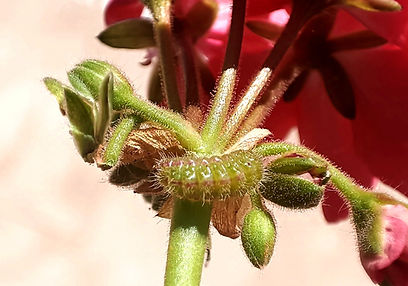
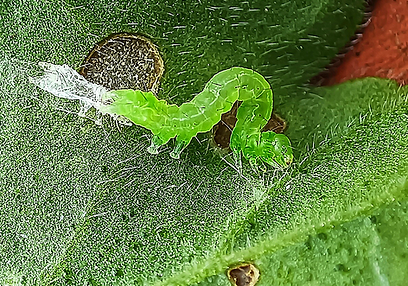
Caterpillars are the larvae of butterflies and moths that mainly feed on plant tissues. They usually attack leaves, although some species can also feed on shoots, flowers and fruits. Damage can increase rapidly because a single caterpillar can consume a significant amount of plant tissue in a short time.
The main symptoms are:
• Holes of different sizes in leaves.
• Chewed leaf edges with an irregular appearance.
• Areas of leaves that have been partially eaten.
• Large parts of leaves that have been completely consumed.
• Leaves with a cut-out appearance or large areas of missing tissue.
• Damage to young shoots and tender leaves.
• Flowers with eaten or damaged parts.
• Fruits with bite marks or consumed areas in some species.
• Small dark or greenish droppings on leaves or beneath damaged areas.
• Presence of caterpillars on leaves, shoots, flowers or fruits.
• Caterpillars hidden on the underside of leaves or among vegetation.
• Damage that may occur mainly at night in some species.
• Rapid loss of leaf area when the caterpillar population is high.
Do not confuse them with leaf miners
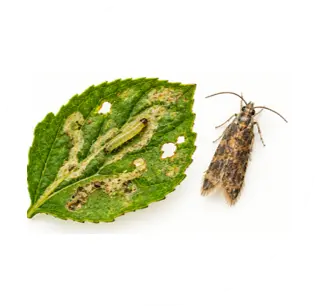
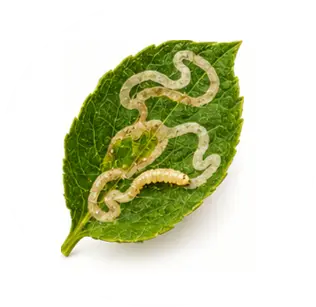
Leaf miners live and feed inside leaves, between their layers, leaving visible tunnels or trails in the tissue. Caterpillars that feed externally, on the other hand, directly consume the leaf surface and leave holes, chewed edges or large eaten areas.
Treatments recommended against caterpillars and worms
To control caterpillars and worms, it is important to act directly on the larvae and choose the treatment according to the type of pest. Contact insecticides can quickly reduce caterpillars found on the plant, while Bacillus thuringiensis (Bt) provides a specific treatment that is particularly effective against the larvae of certain butterflies and moths.
The main recommendations and treatments are:
• Contact insecticide: acts directly on caterpillars present on leaves, shoots and other parts of the plant, allowing the population to be reduced quickly and feeding damage to be stopped.
• Bacillus thuringiensis (Bt): is a specific treatment for caterpillars of certain butterflies and moths. When feeding on treated plant parts, the larvae ingest the toxins produced by the bacterium, stop feeding and subsequently die. It is particularly recommended when caterpillars are young, as the treatment is more effective at this stage. To achieve good control, it is essential to cover the areas of the plant where the caterpillars are feeding.
Products for treating caterpillars / worms

Other common problems
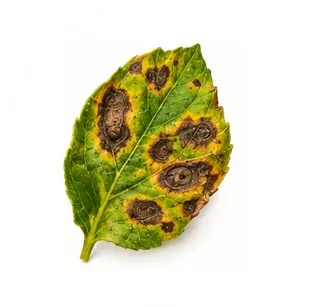
Discover the most common problems and select the one that interests you.



Explore more tools
Services
Contact
Legal
©2023 by ZERIMAR S.A.R.L. All rights reserved