


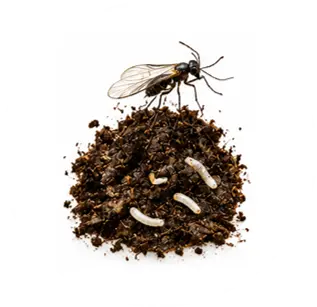
Fungus gnats: how to recognize and eliminate them
How to identify fungus gnats and control their larvae and adults
Fungus gnats are small insects that mainly appear around the soil of pots and other moist growing media. Adults are usually seen flying close to the surface, while their larvae develop in the growing medium and can feed on organic matter and affect fine roots. Damage is particularly important in young plants or plants with poorly developed root systems, potentially causing weakening, reduced growth and loss of vigor when populations are high. Detecting their presence early and acting before the population increases is essential to prevent root damage from spreading and compromising plant development.
How to recognize fungus gnats?
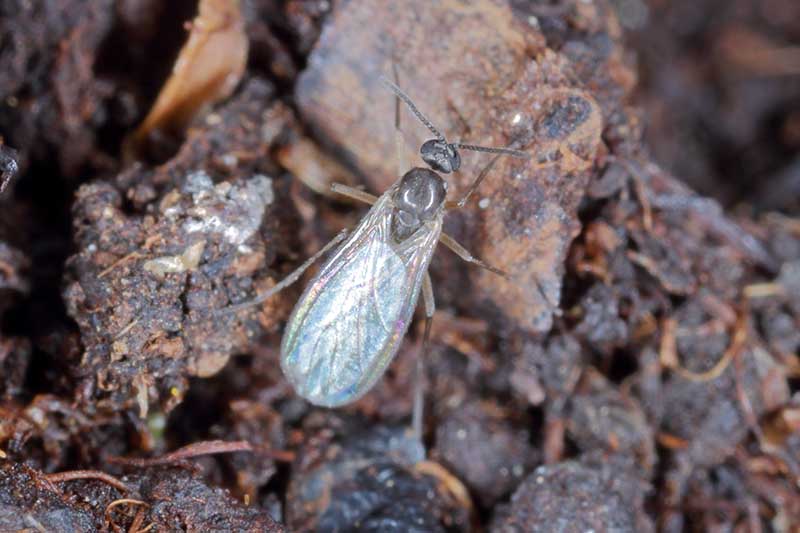
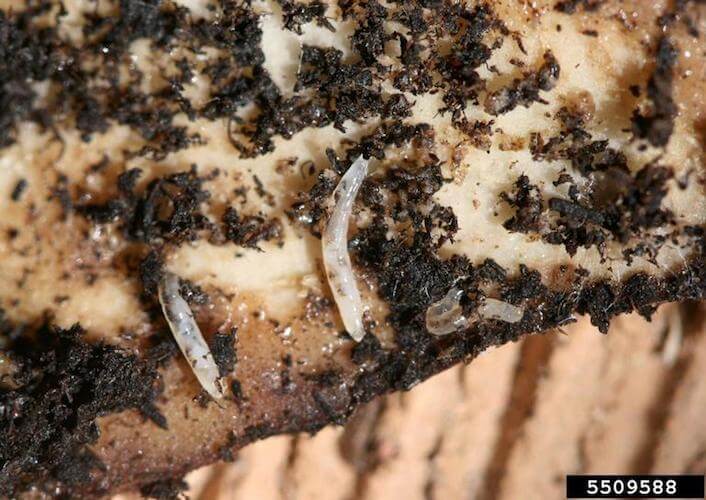
Fungus gnats are small dark flies, usually black or grayish, that tend to fly close to the soil surface. Several may appear at the same time when the plant is watered, the pot is moved or the growing medium is disturbed. Their larvae mainly live in moist layers and are small, elongated and whitish or translucent, with a darker head.
The main symptoms and signs are:
• Small dark flies flying around the surface of the growing medium.
• Several gnats emerging from the soil when the plant is watered or the pot is moved.
• Greater presence of adults when the growing medium remains wet for a long time.
• Small, elongated and whitish or translucent larvae in the moist layers of the growing medium.
• Larvae with a darker head than the rest of the body.
• Young plants with slow growth when the larval population is high.
• Weakened seedlings or reduced development.
• Damaged fine roots in severe infestations.
• Plants that may show wilting or loss of vigor when root damage is severe.
• Greater incidence in seedbeds, young plants and growing media with excess moisture and organic matter.
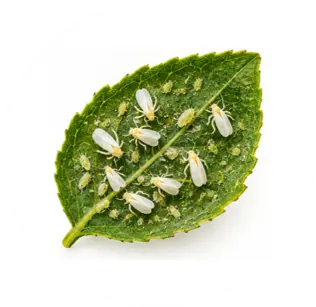
Do not confuse with whitefly
Whitefly is white and mainly concentrates on the underside of leaves. When the plant is moved, adults fly away and form a small cloud around the leaves. Fungus gnats are dark and mainly remain around the soil.
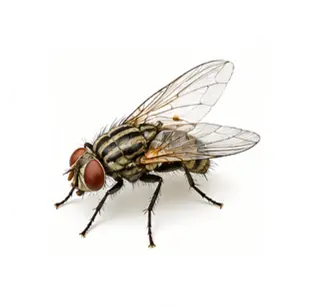
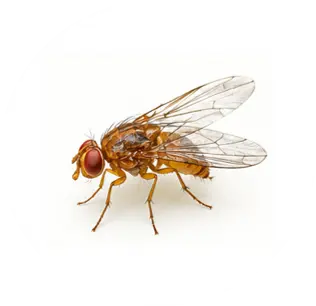
Do not confuse with fruit flies
Fruit flies are usually found around ripe, damaged or decomposing fruits. Fungus gnats, on the other hand, concentrate around moist soil and their larvae develop in the growing medium.
Recommended treatments for fungus gnats
Fungus gnats mainly develop in soil and growing media with high moisture levels. The larvae remain in the growing medium and feed on organic matter and, under certain conditions, can damage roots, while adults fly around the plant and continue reproducing. Therefore, combining a treatment directed at the larvae with another intended to capture adults allows the different stages of the pest to be targeted and its population to be reduced more effectively.
The main recommendations and treatments are:
• Control growing-medium moisture: avoid keeping the soil constantly wet and allow the surface layer to dry between waterings, whenever the plant's needs allow it. This makes reproduction and development of the gnats more difficult.
• Remove plant debris: removing dead leaves, organic residues and accumulated plant material from the surface of the growing medium reduces favorable areas for larval reproduction.
• Sticky traps: these are highly effective for capturing adults flying around the plant. Placing them close to the surface of the growing medium allows the visible population to be rapidly reduced and decreases the number of adults that can continue reproducing.
• Entomopathogenic nematodes: these act directly in the growing medium against gnat larvae. These organisms seek out the larvae, penetrate them and cause their death, reducing the population at the larval stage and preventing some of them from becoming adults. They are particularly recommended when the pest reproduces continuously in the growing medium.
• Sticky traps + nematodes: combining both treatments allows the two main stages of the pest to be targeted: the traps reduce the adults present, while the nematodes control the larvae remaining in the growing medium. This reduces both the visible population and the emergence of new generations.
Products for treating fungus gnats

Other common problems
Discover the most common problems and select the one that interests you.





Explore more tools
Services
Contact
Legal
©2023 by ZERIMAR S.A.R.L. All rights reserved