

Deficiencia de Calcio
Calcium deficiency or blossom-end rot
-
Pathogen:
Nutritional disorder
Type:
Risk to the plant:
INTERMEDIATE

DESCRIPTION
WHO CAUSES IT?
Calcium deficiency, or blossom-end rot, is a physiological disorder that occurs when the fruit does not receive enough calcium in its developing tissues, even if the soil contains seemingly adequate amounts. Calcium is relatively immobile within the plant, and its transport depends primarily on the flow of water to the tissues. Therefore, any situation that reduces or alters transpiration and water movement can contribute to the problem. Roots absorb calcium from the soil solution, and this calcium is transported mainly by the xylem to the aerial parts of the plant. During periods of rapid fruit growth, the demand for calcium increases, and imbalances can occur when the supply does not keep pace with development. Water stress, sudden fluctuations in soil moisture, excessive salinity, root damage, high concentrations of other cations that interfere with calcium absorption, and certain environmental conditions can all reduce the amount of calcium reaching the fruit. The problem is especially common when there is rapid fruit growth accompanied by an irregular water supply, since calcium cannot be easily redistributed from the leaves and other organs to the areas with the greatest need. For this reason, there is no infection, reproduction, or propagation phase typical of a pathogenic organism, but rather a gradual onset of the disorder when physiological and environmental conditions hinder the delivery of calcium to the young fruit tissues.
SYMPTOMS
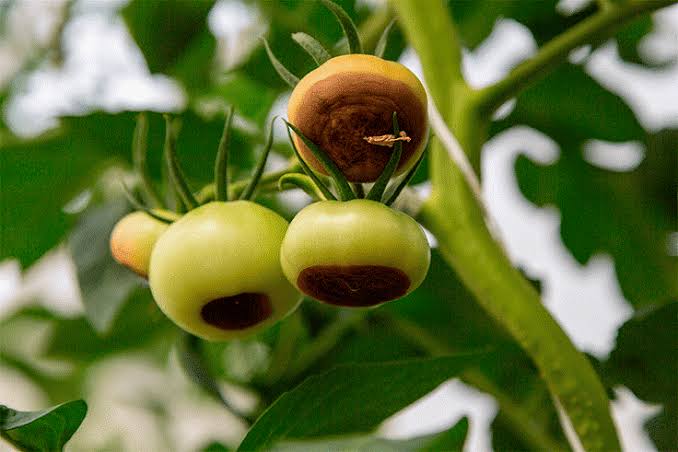
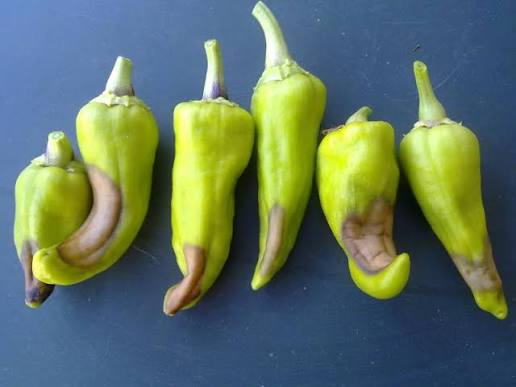
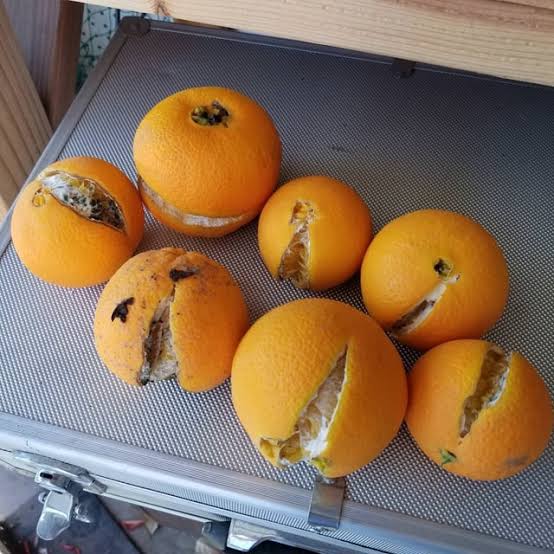
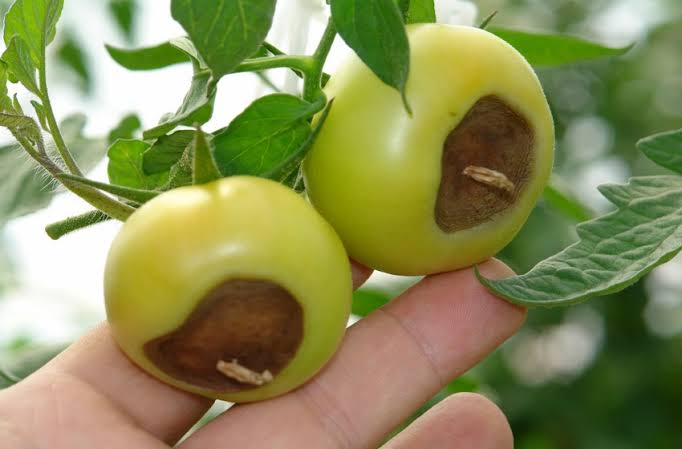
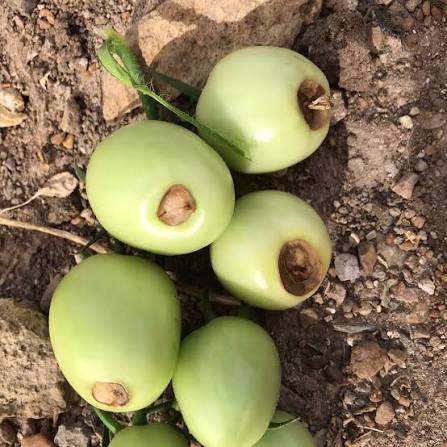
Calcium deficiency, or blossom-end rot, primarily affects fruit during the growth and ripening stages. The disorder typically begins at the distal end of the fruit, opposite the point of attachment to the plant. In the early stages, a small, depressed area may be observed, appearing watery or slightly translucent. This area later turns brown or black and gradually increases in size. The affected tissues lose firmness, dehydrate, and eventually become necrotic. Under high humidity, the damaged areas can subsequently be colonized by opportunistic microorganisms and develop secondary rots, although these organisms are not the initial cause of the problem. The severity can vary considerably among fruits on the same plant, and the first affected fruits usually show relatively small lesions that can progress rapidly when water stress or conditions that hinder calcium absorption and transport persist. Affected fruits may become deformed, develop a dark, sunken distal area, and lose some or all of their commercial value. Watery or spongy appearance in the distal area / Brown or black spots on the fruit tip / Sunken spots / Tissue necrosis / Secondary rot / Dehydration and loss of firmness / Fruit deformation

TEMPERATURE AND HUMIDITY
-
-

HOW IS IT SPREAD?
-

HOW TO REMOVE IT?
Home remedies
There are no home treatments
Chemical treatments
• SOLUBLE CALCIUM FERTILIZERS: Calcium nitrate, calcium chloride; immediate action.
• CONTROLLED-RELEASE FERTILIZERS: Stable formulations that ensure prolonged supply.
• ORGANIC FERTILIZERS + CALCIUM: Bone meal, ground hulls, enriched compost.
• FERTILIZERS WITH AMINO ACIDS + CALCIUM: Promote rapid foliar absorption during critical periods (fruit set, fruit development).
Authorized treatments in organic farming
• SOLUBLE CALCIUM FERTILIZERS: Calcium nitrate, calcium chloride; immediate action.
• CONTROLLED-RELEASE FERTILIZERS: Stable formulations that ensure prolonged supply.
• ORGANIC FERTILIZERS + CALCIUM: Bone meal, ground hulls, enriched compost.
• FERTILIZERS WITH AMINO ACIDS + CALCIUM: Promote rapid foliar absorption during critical periods (fruit set, fruit development).
Insect allies
PREDATORY MITES
LADYBUGS
LACEWINGS
PARASITIC WASPS
HOVERFLIES OR PARASITIC FLIES
PREDATORY BUGS
There are no natural allies
Mycodiplosis oidii (predatory mosquito)
EFFECTIVE PRODUCTS TO ELIMINATE THIS DISEASE
Sponsored link

Sponsored link
Sponsored link


Sponsored link
Sponsored link
Effective against all types of fungi

Sponsored link


Sponsored link
Sponsored link

Sponsored link


Sponsored link
Sponsored link
Sponsored link


Sponsored link
* Maintain stable soil moisture, avoiding alternating periods of drought with excessive or very heavy watering.
* Provide regular watering adapted to the plant's needs, especially during flowering, fruit set, and rapid fruit growth.
* Prevent plants from suffering water stress during periods of peak fruit growth.
* Improve drainage when water accumulates in the soil, as waterlogging can damage roots and reduce their absorption capacity.
* Also avoid excessively rapid drainage that leads to highly irregular water availability around the roots.
* Check the soil calcium content when the problem recurs.
* Maintain a suitable soil pH to promote calcium availability and proper root system function.
* Avoid excessive fertilizer applications that can increase soil salinity and hinder water and nutrient absorption. * Avoid significant imbalances between calcium and other cations such as potassium, magnesium, or ammonium, especially when intensive fertilization is carried out.
* Maintain a healthy and active root system, avoiding root damage during cultivation, transplanting, or work around the plant.
* Use organic matter and improve soil structure when necessary to promote adequate water retention and good root activity.
* Avoid excessive pruning or situations that drastically alter the ratio between leaf area and fruit load.
* Avoid excessively rapid vegetative growth caused by high nitrogen applications, especially during fruit development.
* Maintain balanced nutrition throughout the entire cycle, avoiding correcting the problem solely with one-off calcium applications.
* Apply calcium fertilizers to the soil when an analysis indicates insufficient calcium availability and the soil pH and conditions are compatible with their use. * In susceptible crops, consider foliar applications of calcium as a complementary measure, bearing in mind that their effectiveness in correcting blossom-end rot may be limited because calcium applied to the leaves does not always effectively reach the internal tissues of the fruit.
* Prioritize stable irrigation and proper root function over isolated foliar treatments.
* Remove severely affected fruit when necessary to prevent necrotic tissue from being colonized by secondary microorganisms.
* Avoid wounds and damage to affected fruit, as these can facilitate the entry of opportunistic fungi and bacteria.
* Conduct soil analysis and, when necessary, foliar analysis to determine if a nutritional deficiency actually exists before increasing fertilization rates.
Recommendations

Enjoy idMicrobe TOTALLY FREE, with no trial periods.


