

Orugas o gusanos
Wireworm
Agriotes Sp.
Pathogen:
Insect
Type:
Risk to the plant:
HIGH


DESCRIPTION
WHO CAUSES IT?
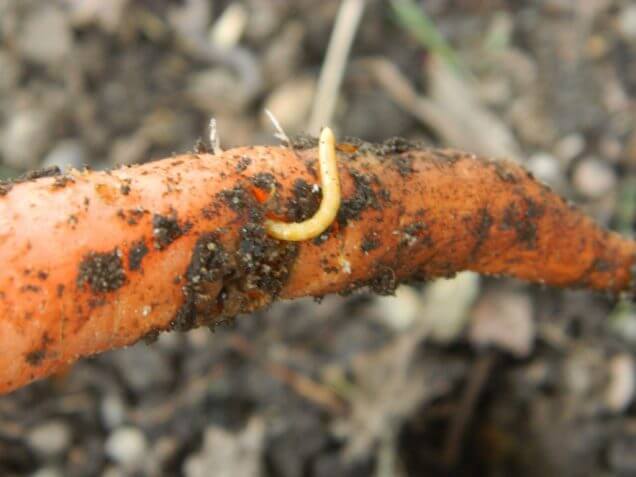
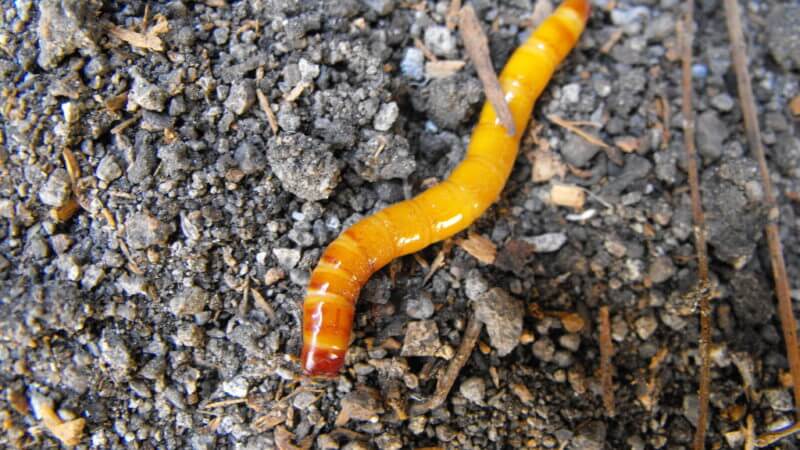
The pathogen Agriotes sp., known as wireworm, belongs to the Elateridae family. Adults are elongated, dark brown beetles that lay their eggs in the soil near the roots of plants. The larvae, which develop from these eggs, are thin and hard-bodied, similar to a wire, which gives them their common name. These larvae can live in the soil for several years, going through multiple larval stages. During this time, they feed on the roots of various plants, including important crops such as carrots. When they reach the last larval stage, they pupate in the soil and, after a period of pupation, emerge as adults completing their life cycle.
SYMPTOMS
The wireworm disease of carrots is very damaging, as the larvae feed on the roots, causing extensive damage that can lead to the total loss of the plant. The symptoms are varied and mainly affect the carrot root system, compromising the absorption of water and nutrients, resulting in poor growth and weakened plants. In severe cases, carrots may develop deformations and holes that make them unsuitable for consumption.
- Poor growth
- Weakened plants
- Deformations in carrots
- Holes in the roots
- Death of young plants


TEMPERATURE AND HUMIDITY
15°C - 25°C
70% - 90%

HOW IS IT SPREAD?
Soil dispersal, Movement of infested plants, Wind, Human activities, Animals, Contaminated plant material

HOW TO REMOVE IT?
Home remedies
There are no home treatments
Chemical treatments
• Agriotes lineatus (Pheromone)
• DELTAMETHRIN 1.57% [SC] P/V
• LAMBDA CYHALOTHRIN 0.15% [GR] P/P
• LAMBDA CYHALOTHRIN 0.24% [GR] P/P
• LAMBDA CYHALOTHRIN 0.4% [GR] P/P
• TEFLUTRIN 0.5% [GR] P/P
• TEFLUTHRIN 1.5% [GR] P/P
Authorized treatments in organic farming
• Agriotes lineatus (Pheromone)
• LAMBDA CYHALOTHRIN 0.15% [GR] P/P
• LAMBDA CYHALOTHRIN 0.24% [GR] P/P
• LAMBDA CYHALOTHRIN 0.4% [GR] P/P
Insect allies
PREDATORY MITES
LADYBUGS
LACEWINGS
PARASITIC WASPS
HOVERFLIES OR PARASITIC FLIES
PREDATORY BUGS
There are no natural allies
Mycodiplosis oidii (predatory mosquito)
EFFECTIVE PRODUCTS TO ELIMINATE THIS DISEASE
Sponsored link
Sponsored link
Sponsored link
Sponsored link
Sponsored link
Sponsored link
Sponsored link
Sponsored link
Sponsored link
Sponsored link


Sponsored link
Sponsored link
Effective against all types of fungi

Sponsored link
Sponsored link
Sponsored link
Sponsored link
Sponsored link
Sponsored link
Sponsored link
Sponsored link


Sponsored link
Sponsored link

Sponsored link
Sponsored link
Sponsored link
Sponsored link
Sponsored link
Sponsored link
Sponsored link
Sponsored link


Sponsored link
Sponsored link
Sponsored link
Sponsored link
Sponsored link
Sponsored link
Sponsored link
Sponsored link
Sponsored link
Sponsored link


Sponsored link
- Carry out a crop rotation with plants not susceptible to wireworm.
- Maintain good cleanliness of the field, eliminating residues from previous crops that may harbor larvae.
- Use traps baited with pheromones to capture and monitor the adult population.
- Implement physical barriers around plants to prevent larvae access.
- Apply biological treatments with entomopathogenic fungi such as Metarhizium anisopliae.
- Apply insecticides at the appropriate time, following technical recommendations to minimize the appearance of resistance.
- Promote biological control through the conservation of natural predators such as birds and beneficial nematodes.
Recommendations

Enjoy idMicrobe TOTALLY FREE, with no trial periods.


