


Moscas de la fruta
Cherry fruit fly: what it is, how it originates, and how to eliminate it effectively.
Cherry Fly
Rhagoletis Cerasi
Pathogen:
Insect
Type:
Risk to the plant:
CRITICAL

DESCRIPTION
WHO CAUSES IT?
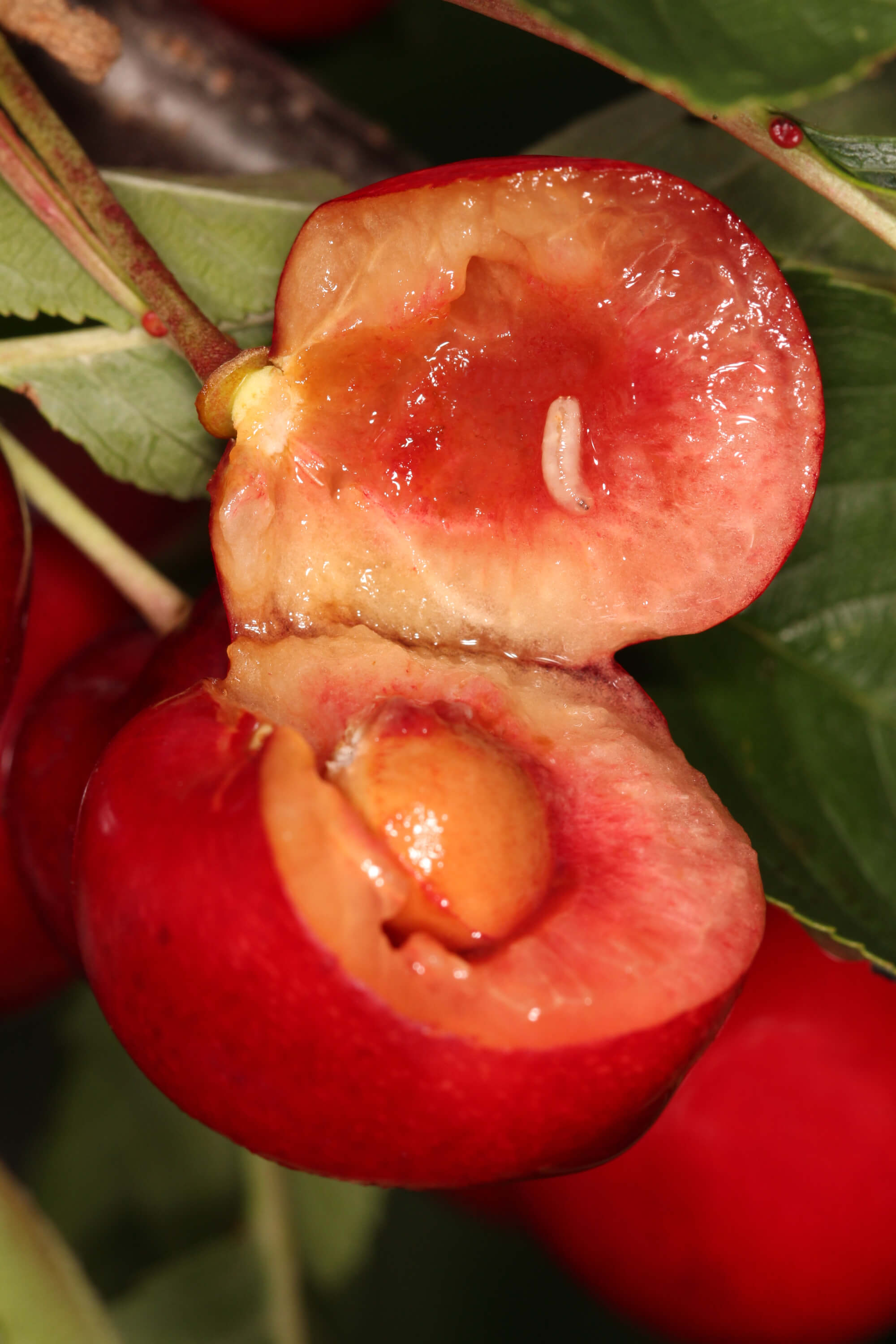
Rhagoletis cerasi, commonly known as the cherry fly, is an insect that belongs to the Tephritidae family. The adult fly is approximately 4-5 mm long and black with light wings that have dark transverse bands. The life cycle of this insect begins with the female laying eggs on the surface of unripe cherries. The eggs hatch into larvae, which are small, whitish and legless. The larvae feed on the inside of the cherry, causing significant damage to the fruit. Once they complete their development, the larvae emerge from the fruit and fall to the ground, where they burrow and transform into pupae. The pupae remain in the soil during the winter, emerging as adults the following spring, thus completing the cycle.
SYMPTOMS
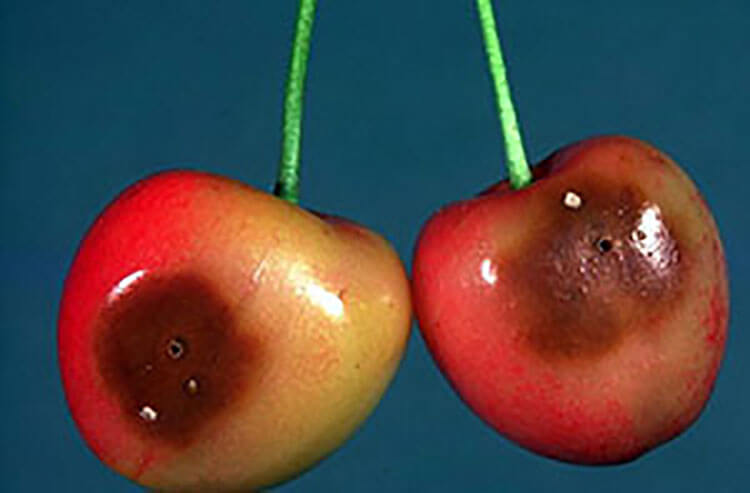
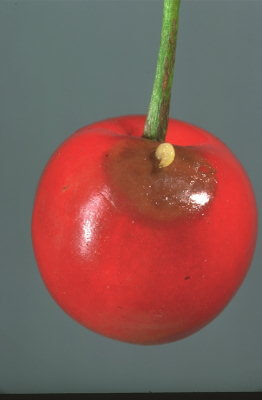
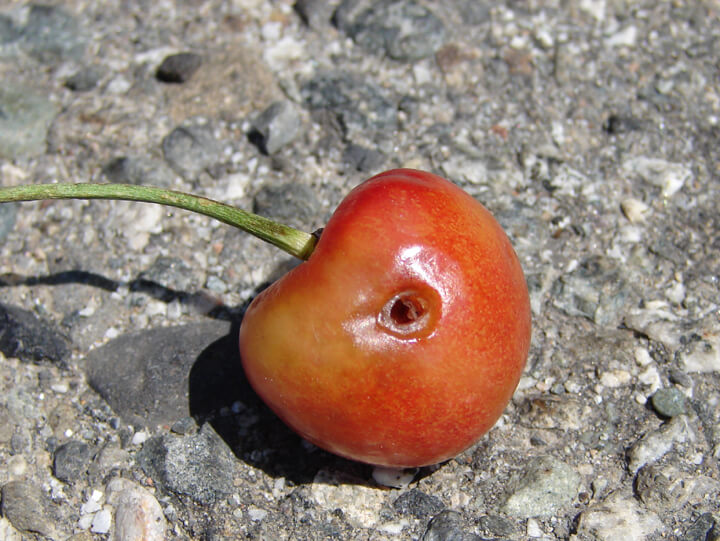
The infestation of Rhagoletis cerasi in the cherry tree produces the disease known as the cherry fly, which seriously affects the quality of the fruits and can lead to significant losses in the harvest. Infested cherries show visible signs of damage making the fruits unsuitable for consumption or sale.
- Appearance of small holes on the surface of the cherry
- Presence of whitish larvae inside the fruit
- Discoloration and softening of the cherry pulp
- Premature fall of affected fruits
- Development of secondary rots in damaged fruits


TEMPERATURE AND HUMIDITY
20°C - 25°C
60% - 80%

HOW IS IT SPREAD?
Wind, Movement of infested fruits, Transport of contaminated soil, Agricultural tools

HOW TO REMOVE IT?
Home remedies
There are no home treatments
Chemical treatments
• ACETAMIPRID 20% [SL] P/V
• ACETAMIPRID 20% [SP] P/P
• DELTAMETHRIN 0.015g/trap [RB] P/P
• DELTAMETHRIN 10% [EC] P/V
• DELTAMETHRIN 2.5% [EC] P/V
• DELTAMETHRIN 2.5% [EW] P/V
• LAMBDA CYHALOTHRIN 1.5% [CS] P/V
• LAMBDA CYHALOTHRIN 10% [CS] P/V
• LAMBDA CYHALOTHRIN 2.5% [WG] P/P
• SPINOSAD 48% [SC] P/V
• TRAPS
• Rhagoletis cerasi (Pheromone)
Authorized treatments in organic farming
• DELTAMETHRIN 0.015g/trap [RB] P/P
• LAMBDA CYHALOTHRIN 1.5% [CS] P/V
• LAMBDA CYHALOTHRIN 10% [CS] P/V
• LAMBDA CYHALOTHRIN 2.5% [WG] P/P
• SPINOSAD 48% [SC] P/V
• TRAPS
• Rhagoletis cerasi (Pheromone)
Insect allies
PREDATORY MITES
LADYBUGS
LACEWINGS
PARASITIC WASPS
HOVERFLIES OR PARASITIC FLIES
PREDATORY BUGS
There are no natural allies
Mycodiplosis oidii (predatory mosquito)
EFFECTIVE PRODUCTS TO ELIMINATE THIS DISEASE





- Use yellow sticky traps to monitor and reduce the population of adult flies.
- Carry out insecticide treatments according to the adult emergence calendar to reduce oviposition.
- Implement sexual confusion techniques using pheromones to interfere with the mating of flies.
- Apply physical barriers such as fine mesh around trees to prevent flies from entering.
- Maintain good orchard hygiene, eliminating and destroying fallen and damaged cherries that can serve as a source of reinfestation.
- Till the soil in autumn and winter to expose and destroy buried pupae.
- Encourage the presence of natural enemies, such as parasitoid wasps, which can help control Rhagoletis cerasi populations.
- Carry out regular pruning to improve air circulation and sunlight penetration, which can reduce the survival of flies and their larvae.
Recommendations



Explore more tools
Services
Contact
Legal
©2023 by ZeriMar Laboratoire. All rights reserved.