

Royas
Pear Rust
Gymnosporangium Clavariiforme
Pathogen:
Fungus
Type:
Risk to the plant:
INTERMEDIATE

DESCRIPTION
WHO CAUSES IT?
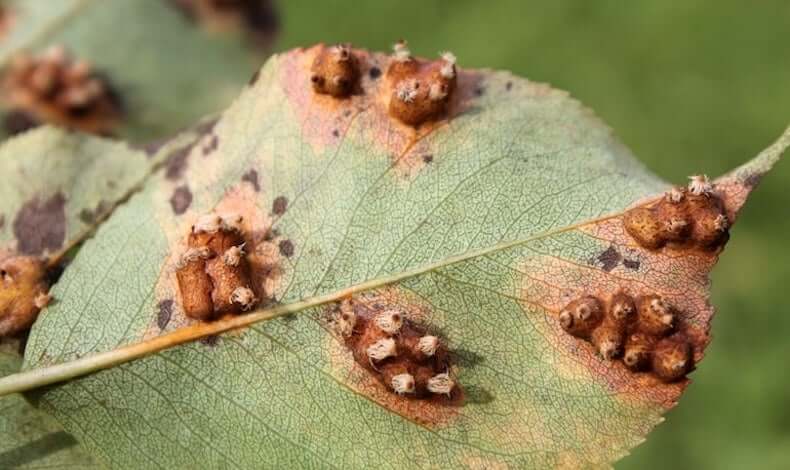
Gymnosporangium clavariiforme is a heteroectic fungus that requires two different hosts to complete its life cycle: pear and juniper species (Juniperus spp.). On junipers, the fungus forms swollen, discolored structures on branches known as galls. During spring, the galls produce orange gelatinous structures called teliospores, which release basidiospores when moisture is present. These spores are carried by the wind to pear trees, where they infect the leaves, branches and fruits. In the pear tree, the fungus develops pycnidia on the lower part of the leaves and ecidia on the upper part, which release secondary spores that complete the cycle by infecting the junipers again. This complex interaction between both hosts is essential for the perpetuation of the fungus.
SYMPTOMS
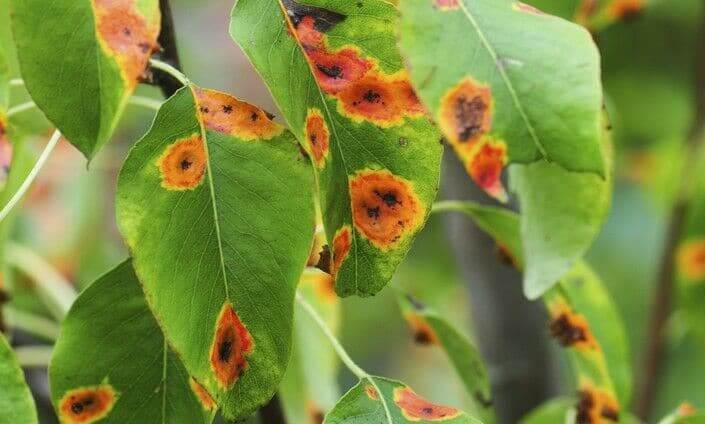
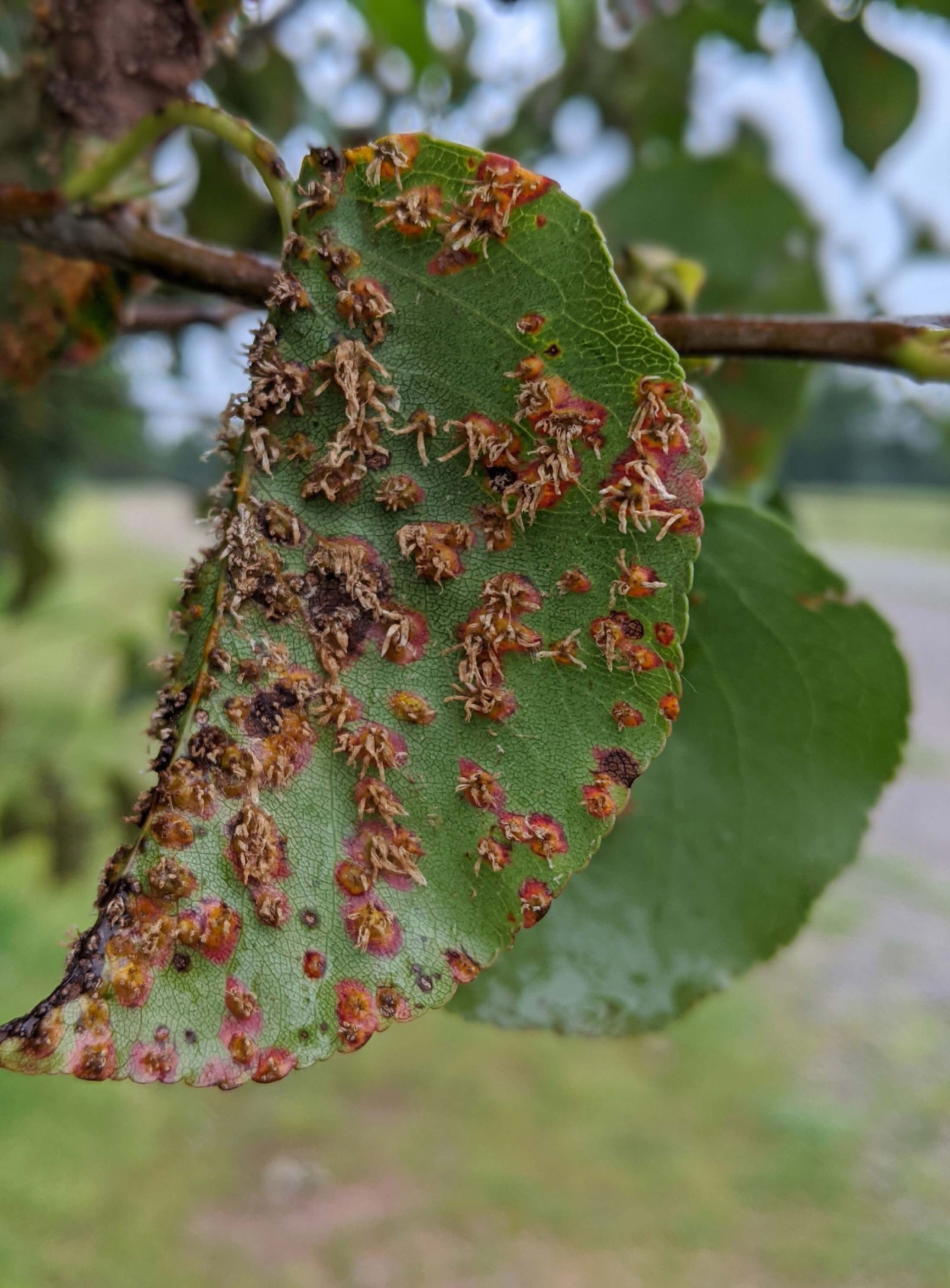
In the pear tree, Gymnosporangium clavariiforme causes the disease known as pear rust. This disease manifests itself mainly in the leaves, but can also affect fruits and branches, causing a decrease in photosynthesis and general weakening of the tree.
- Orange or reddish Taches on the upper part of the leaves.
- Presence of black structures (pycnidia) on the underside of the leaves.
- Deformations and abnormal growth in the leaves.
- Premature fall of leaves.
- Lesions in young branches.
- Reduction in the quality and size of the fruits.


TEMPERATURE AND HUMIDITY
15-25°C
70-90%

HOW IS IT SPREAD?
Wind, Rain, Direct contact between plants

HOW TO REMOVE IT?
Home remedies
There are no home treatments
Chemical treatments
• DIFENOCONAZOLE 1.67% [EC] P/V
• DIFENOCONAZOLE 25% [EC] P/V
Authorized treatments in organic farming
-
Insect allies
PREDATORY MITES
LADYBUGS
LACEWINGS
PARASITIC WASPS
HOVERFLIES OR PARASITIC FLIES
PREDATORY BUGS
There are no natural allies
Mycodiplosis oidii (predatory mosquito)
EFFECTIVE PRODUCTS TO ELIMINATE THIS DISEASE





Sponsored link

Sponsored link
Sponsored link


Sponsored link



Sponsored link
Sponsored link


Sponsored link
Sponsored link
Effective against all types of fungi






Sponsored link


Sponsored link
Sponsored link




Sponsored link
Sponsored link


Sponsored link
- Plant rust-resistant varieties of pear trees.
- Maintain an adequate distance between pear trees and juniper trees to avoid the transfer of spores.
- Remove and destroy galls on juniper trees during winter and spring.
- Carry out sanitary pruning to eliminate infected branches and improve air circulation.
- Apply preventive fungicides to pear trees before symptoms appear, especially during spring.
- Regularly monitor trees to detect early signs of the disease and act quickly.
- Avoid sprinkler irrigation that favors humidity in the leaves.
- Implement integrated pest management that combines chemical and cultural methods to reduce fungal pressure.
Recommendations

Enjoy idMicrobe TOTALLY FREE, with no trial periods.


