

Cactus
How to recognize and combat carmine mealybugs on cacti
Carmine Mealybug
Insect
Type:
Risk to the plant:
HIGH
Dactylopius Coccus
Pathogen:
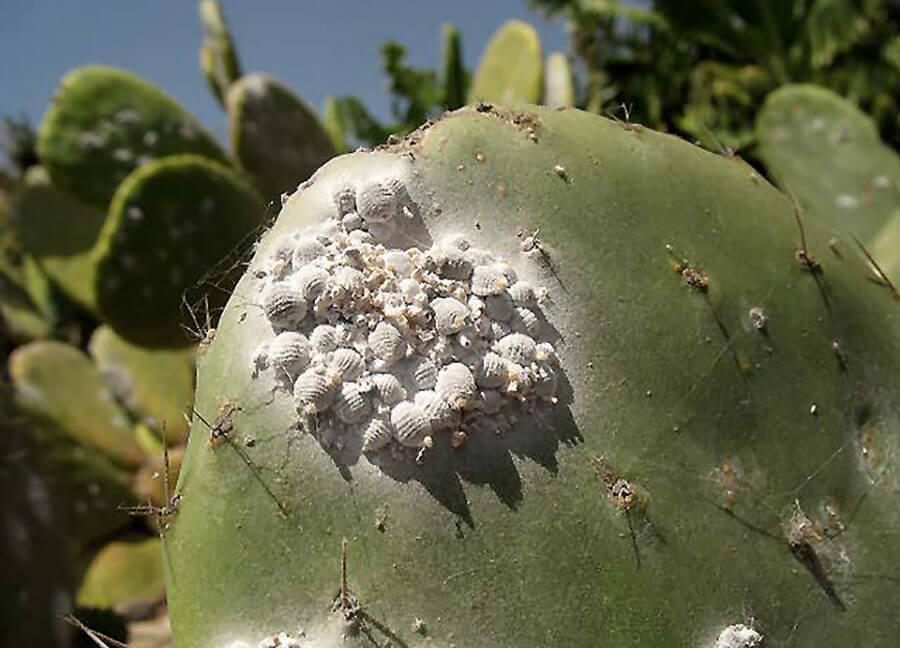
Cochinillas


WHO CAUSES IT?
Dactylopius coccus, known as the carmine mealybug, is a hemipteran insect that feeds on plant sap. Its life cycle includes several stages, beginning with the adult female laying her eggs on the cactus pads. After hatching, the nymphs, also called "crawlers", move until they find a suitable place to feed, where they insert their mouth stylets into the tissue of the cactus. The nymphs go through several molts before reaching maturity. The males, in contrast to the females, are winged and do not feed once they reach adulthood, living only a few days to fertilize the females. Adult females are immobile and cover their bodies with a white protective wax, where they remain attached to the host plant. This pattern ensures the perpetuation of the species, since fertile females can produce a large number of offspring that quickly colonize new areas of the cactus.
.png)
SYMPTOMS
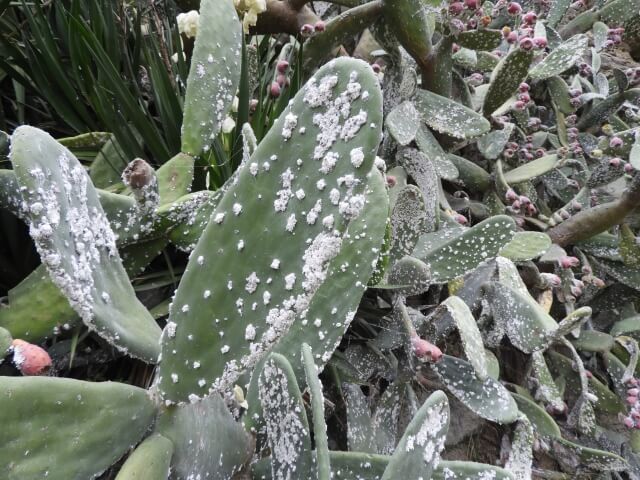
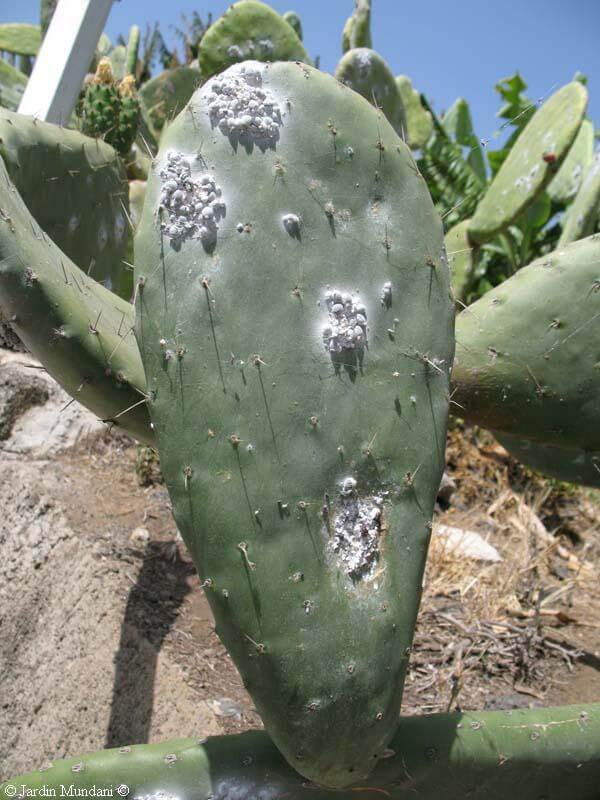
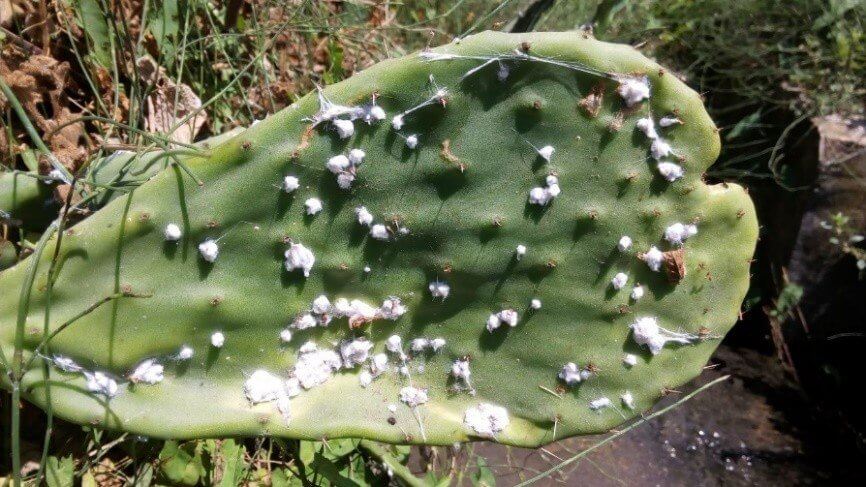
The carmine mealybug causes significant damage to cacti by feeding on their sap. This process weakens the plant, reduces its growth and can lead to death if the infestation is severe. Mealybugs produce a waxy, sticky substance that can attract sooty fungi, further complicating the condition of the cactus. Additionally, the infestation causes discoloration and collapse of the plant tissues, interfering with its vital functions.
- Discoloration of the cactus tissues.
- Appearance of a white waxy substance on the surface of the cactus.
- Loss of vigor and delay in growth.
- Presence of soot fungi due to the waxy substance.
- Collapse of plant tissues.
- Death of the plant in severe cases.


DEVELOPMENT CONDITIONS
Temperature:
20°C a 30°C
Humidity:
60% a 80%

HOW IS IT SPREAD?
Direct contact between plants, Wind, Contaminated tools, Vector animals, Movement of infested plants

HOW TO ELIMINATE IT?
Home treatments
There are no home treatments
Natural allies
Chemical treatments
There are no treatments for this disease. Treatments are directed at the insect vectors that transmit it. See insect treatments.
RECOMMENDED PRODUCTS TO ELIMINATE THE PEST
Sponsored link

Sponsored link


Sponsored link
Sponsored link
Sponsored link


Sponsored link
Sponsored link
Effective against all types of fungi

Sponsored link


Sponsored link
Sponsored link

Sponsored link


Sponsored link

PLANTAS REPELENTES

RECOMMENDATIONS
OTHER PESTS THAT MAY INTEREST YOU


DID YOU LIKE IT?
Now you can always have it on your mobile, without ads and totally FREE. TRY idMicrobe NOW!


