

Naranjo
How to recognize and combat Asian citrus psyllids in orange trees
Asian Citrus Psyllid
Insect
Type:
Risk to the plant:
CRITICAL
Diaphorina Citri
Pathogen:
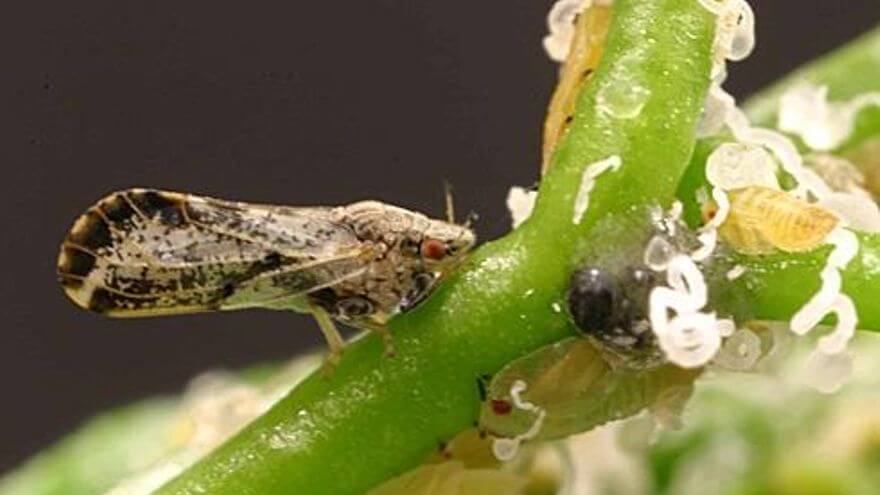
Psilas


WHO CAUSES IT?
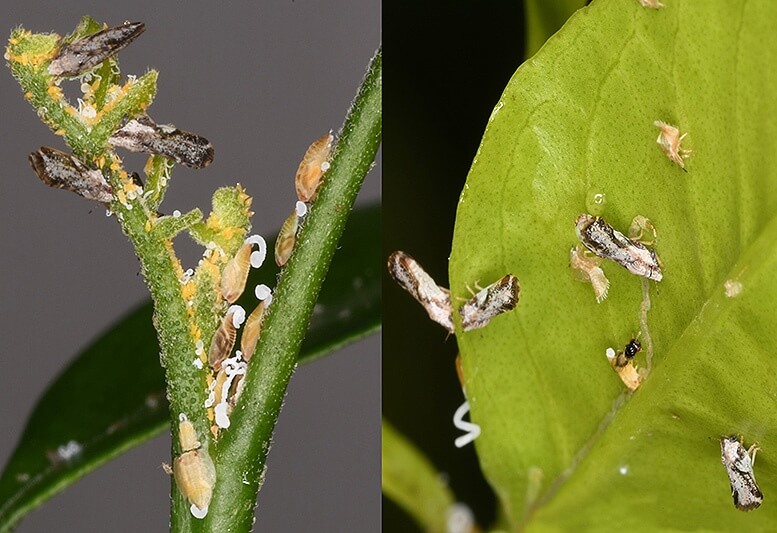
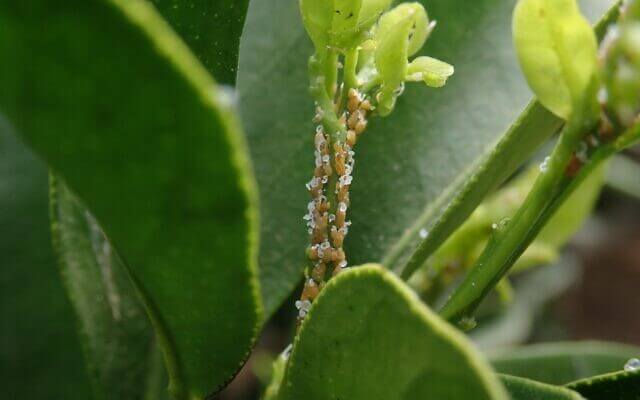
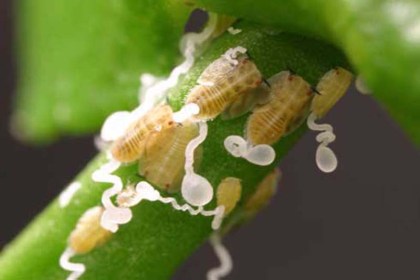
Diaphorina citri, known as the Asian citrus psyllid, is a small insect that belongs to the Psyllidae family. This insect goes through several stages from egg to adult. Adult females lay their eggs in the young shoots of citrus trees. The eggs hatch in about a week, giving rise to nymphs that go through five nymphal stages before becoming adults. The nymphs feed on the phloem of young leaves, causing the production of a sticky substance known as honeydew, which can encourage the growth of sooty molds. Adults are winged and can fly, thus facilitating the dispersal of the insect and the infection of new plants. This cycle can repeat several times a year, depending on environmental conditions, especially temperature and the availability of tender shoots on the host plants.
.png)
SYMPTOMS
The Asian citrus psyllid is a vector of huanglongbing (HLB), one of the most destructive diseases of orange trees. This insect, when feeding, transmits the bacteria Candidatus Liberibacter asiaticus, which causes HLB. The disease severely affects plant development and fruit quality, leading to significant loss of productivity.
- Leaves with asymmetrical mottling and yellowing.
- Young shoots with poor growth.
- Deformed and smaller fruits.
- Fruits with a bitter or metallic taste.
- Premature loss of fruits.
- Progressive death of branches and shoots.
- Presence of sooty molds due to the honeydew produced by the nymphs.


DEVELOPMENT CONDITIONS
Temperature:
25-28°C
Humidity:
60-80%

HOW IS IT SPREAD?
Insect vectors, infected plant grafts, infected plant material

HOW TO ELIMINATE IT?
Home treatments
There are no home treatments
Natural allies
Chemical treatments
There are no treatments for this disease. Treatments are directed at the insect vectors that transmit it. See insect treatments.
RECOMMENDED PRODUCTS TO ELIMINATE THE PEST
Sponsored link

Sponsored link


Sponsored link
Sponsored link
Sponsored link


Sponsored link
Sponsored link
Effective against all types of fungi

Sponsored link


Sponsored link
Sponsored link

Sponsored link


Sponsored link

PLANTAS REPELENTES

RECOMMENDATIONS
OTHER PESTS THAT MAY INTEREST YOU


DID YOU LIKE IT?
Now you can always have it on your mobile, without ads and totally FREE. TRY idMicrobe NOW!


