

Plantas decorativas de jardín y/o interior
How to recognize and combat mottling in decorative garden and/or indoor plants
Mottled
Fungus
Type:
Risk to the plant:
CRITICAL
Venturia inaequalis
Pathogen:
Moteado


WHO CAUSES IT?
Venturia inaequalis is an ascomycete fungus responsible for one of the most important diseases in fruit trees in temperate climates. It overwinters in the form of pseudothecia, sexual fruiting structures, in fallen leaves and pruning remains present on the ground. With the arrival of spring, humidity and mild temperatures favor the maturation of the asci, which release ascospores into the environment. These ascospores are transported by the wind to the young parts of the plants, where they germinate on moist tissues, penetrating mainly through the cuticle. Once the infection is established, the fungus develops subcuticular mycelium and forms conidia that will be dispersed again by splashes of rain or dew, generating new secondary infections throughout the season. This pattern of primary and secondary infection allows the fungus to multiply rapidly during the wet months, especially if environmental conditions remain favorable.
.png)
SYMPTOMS
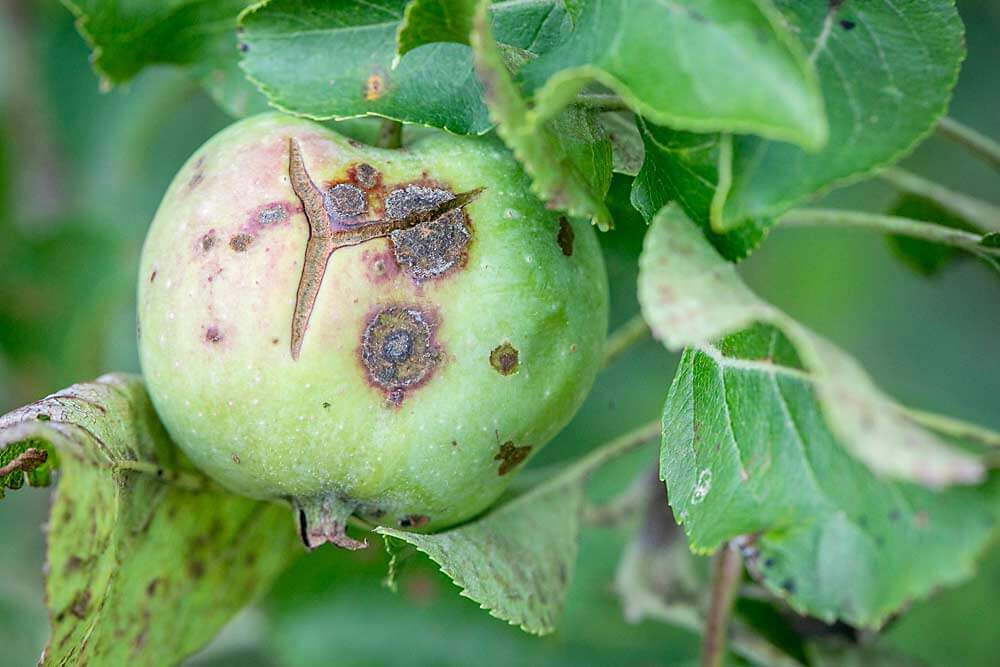
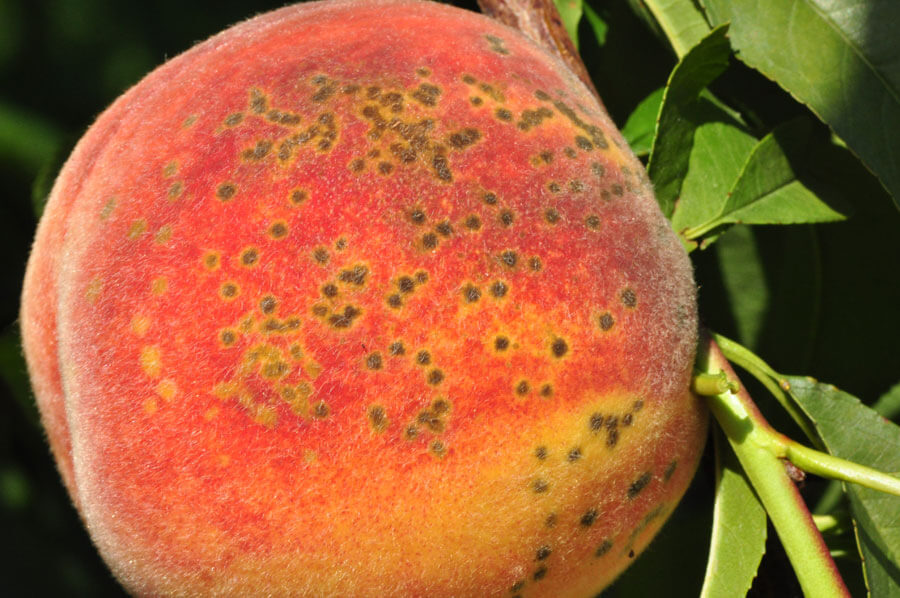
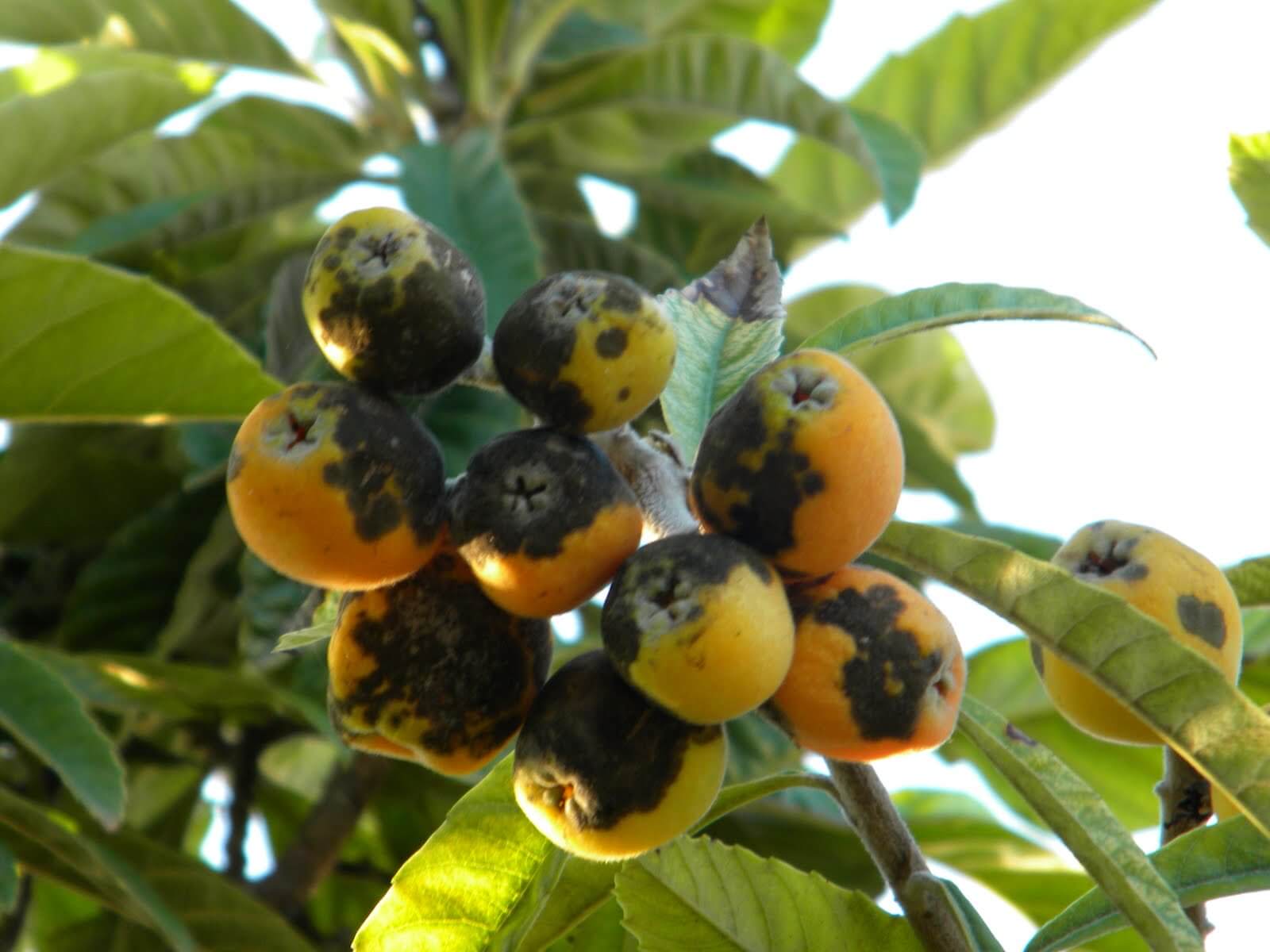
The mottling caused by Venturia inaequalis affects plants, particularly apple trees, and manifests itself on leaves, fruits and young shoots. The disease reduces the commercial quality of the fruit and can cause premature defoliation, negatively affecting the development of the plant and the production of the following year.
- Appearance of circular spots, olive green to black in color, with a velvety texture on young leaves
- Deformation and premature fall of the affected leaves
- Similar lesions on fruits, which then become corky and cracked
- Dark spots on petioles, young stems and flower calyxes
- Reduction in fruit size and commercially unattractive appearance
- Fruits with less resistance to transport and storage


DEVELOPMENT CONDITIONS
Temperature:
12 °C – 24 °C
Humidity:
85 % – 100 %

HOW IS IT SPREAD?
Ascospores from wind, Conidia from rain splashes, Infected fallen leaves, Contaminated pruning tools, Infected fruit or plant material

HOW TO ELIMINATE IT?
Home treatments
There are no home treatments
Natural allies
Chemical treatments
There are no treatments for this disease. Treatments are directed at the insect vectors that transmit it. See insect treatments.
RECOMMENDED PRODUCTS TO ELIMINATE THE PEST
Sponsored link
Sponsored link
Sponsored link


Sponsored link
Sponsored link
Effective against all types of fungi

Sponsored link


Sponsored link
Sponsored link

Sponsored link


Sponsored link
Sponsored link
Sponsored link


Sponsored link

PLANTAS REPELENTES

RECOMMENDATIONS
OTHER PESTS THAT MAY INTEREST YOU


DID YOU LIKE IT?
Now you can always have it on your mobile, without ads and totally FREE. TRY idMicrobe NOW!


