

Frutales de pepita
How to recognize and combat the San Jose scale in pome fruit trees
St. Joseph'S Louse
Insect
Type:
Risk to the plant:
HIGH
Quadraspidiotus Perniciosus
Pathogen:
Escamas


WHO CAUSES IT?
Quadraspidiotus perniciosus, known as the St. Joseph's louse, is a scale insect that affects a wide variety of plants, including pome fruit trees. This pathogen overwinters as larvae under scales on the bark of trees. In spring, when temperatures increase, the larvae become active and begin feeding, reaching maturity in approximately 4 to 6 weeks. Mature females produce large quantities of eggs under their scales, which hatch into mobile nymphs called "crawlers." These nymphs disperse throughout the tree and attach themselves to branches, leaves and fruits, where they develop new protective scales and continue feeding. The cycle repeats several times during the growing season, allowing San Jose louse populations to increase rapidly under favorable conditions.
.png)
SYMPTOMS
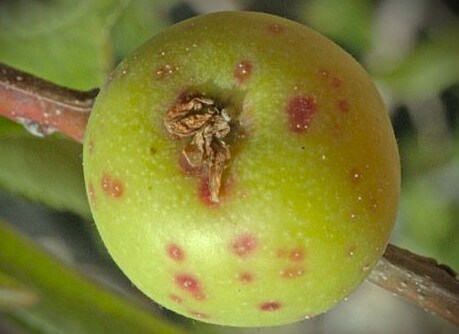
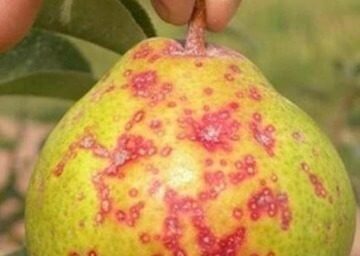
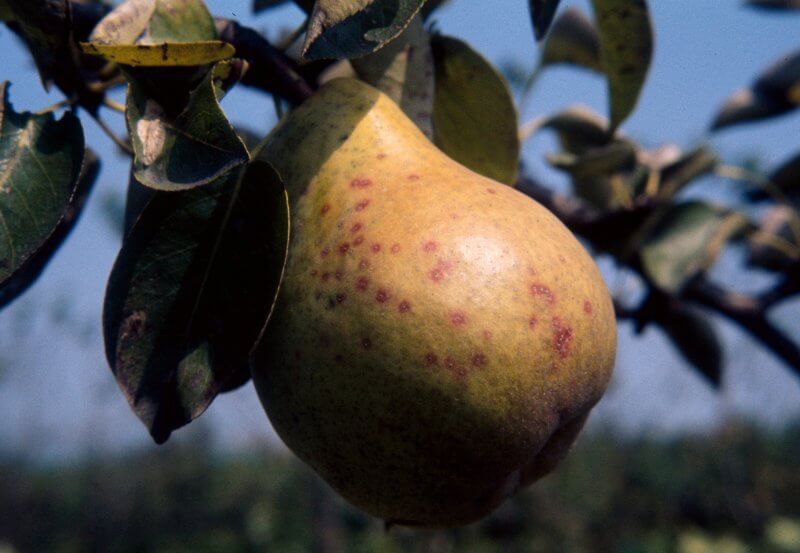
In pome fruit trees, the San José louse causes a disease that weakens the plants and significantly reduces fruit production. Insects feed by sucking sap, which causes direct damage to plant tissues and can lead to the death of branches and fruits. Additionally, San José louse infestation can cause fruits to become deformed and develop Taches, decreasing their commercial value.
- Red patches on the bark, branches and fruits.
- Yellowing and premature leaf fall.
- Regressive death of branches and young shoots.
- Deformation and premature fall of the fruits.
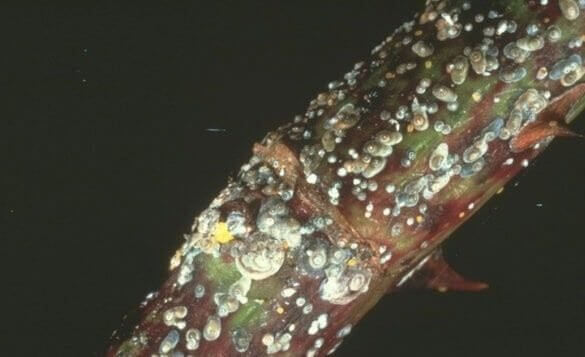
- Presence of small gray or black scales on the surface of the plants.
- General weakening of the tree, which reduces productivity.
- Increased susceptibility to other diseases and pests.


DEVELOPMENT CONDITIONS
Temperature:
20°C - 30°C
Humidity:
60% - 80%

HOW IS IT SPREAD?
Wind, Contaminated tools, Movement of infested plants, Direct contact between plants

HOW TO ELIMINATE IT?
Home treatments
There are no home treatments
Natural allies
Chemical treatments
There are no treatments for this disease. Treatments are directed at the insect vectors that transmit it. See insect treatments.
RECOMMENDED PRODUCTS TO ELIMINATE THE PEST
Sponsored link

Sponsored link


Sponsored link
Sponsored link
Sponsored link


Sponsored link
Sponsored link
Effective against all types of fungi

Sponsored link


Sponsored link
Sponsored link

Sponsored link


Sponsored link

PLANTAS REPELENTES

RECOMMENDATIONS
OTHER PESTS THAT MAY INTEREST YOU


DID YOU LIKE IT?
Now you can always have it on your mobile, without ads and totally FREE. TRY idMicrobe NOW!


