


Manzano
How to recognize and combat sooty mold disease in apple trees
Soot Disease
Fungus
Type:
Risk to the plant:
INTERMEDIATE
Gloeodes Pomigena, Phyllachora Pomigena
Pathogen:

Micosis/Hongos


WHO CAUSES IT?
Gloeodes pomigena or Phyllachora pomigena is a phytopathogenic fungus that causes the disease known as sooty disease in apple and other fruit trees. The fungus develops on leaves, branches and fruits, forming reproductive structures known as fruiting bodies. During its development, it produces spores that disperse through the air and can infect new plants.

SYMPTOMS
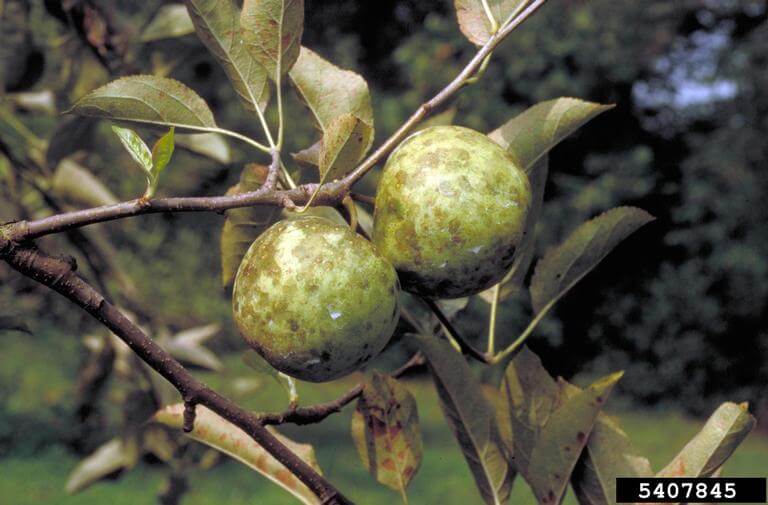
Sooty disease manifests itself with the appearance of dark or sooty Taches on the leaves, branches and fruits of the apple tree. These Taches can merge and give rise to large affected areas, which reduces the photosynthetic capacity of the plant and can negatively affect the quality of the fruits.
• Dark or sooty Taches on leaves, branches and fruits.
• Affected areas that may fuse together, causing significant damage.
• Reduction in the photosynthetic capacity of the plant.
• Reduction in the quality and quantity of the harvest.


DEVELOPMENT CONDITIONS
Temperature:
15°C - 25°C
Humidity:
60% - 80%

HOW IS IT SPREAD?
Air, contact with infected plants, contaminated tools.

HOW TO ELIMINATE IT?
Home treatments
There are no home treatments
Natural allies
Chemical treatments
There are no treatments for this disease. Treatments are directed at the insect vectors that transmit it. See insect treatments.
RECOMMENDED PRODUCTS TO ELIMINATE THE PEST





REPELLENT PLANTS

RECOMMENDATIONS
OTHER PESTS THAT MAY INTEREST YOU


DID YOU LIKE IT?
Now you can always have it on your mobile, without ads and totally FREE. TRY idMicrobe NOW!



Explore more tools
Services
Contact
Legal
©2023 by ZERIMAR S.A.R.L. All rights reserved