

Frutos
How to recognize and combat powdery mildew on fruit
Powdery mildew
Fungus
Type:
Risk to the plant:
HIGH
Podosphaera sp., Erysiphe sp.
Pathogen:
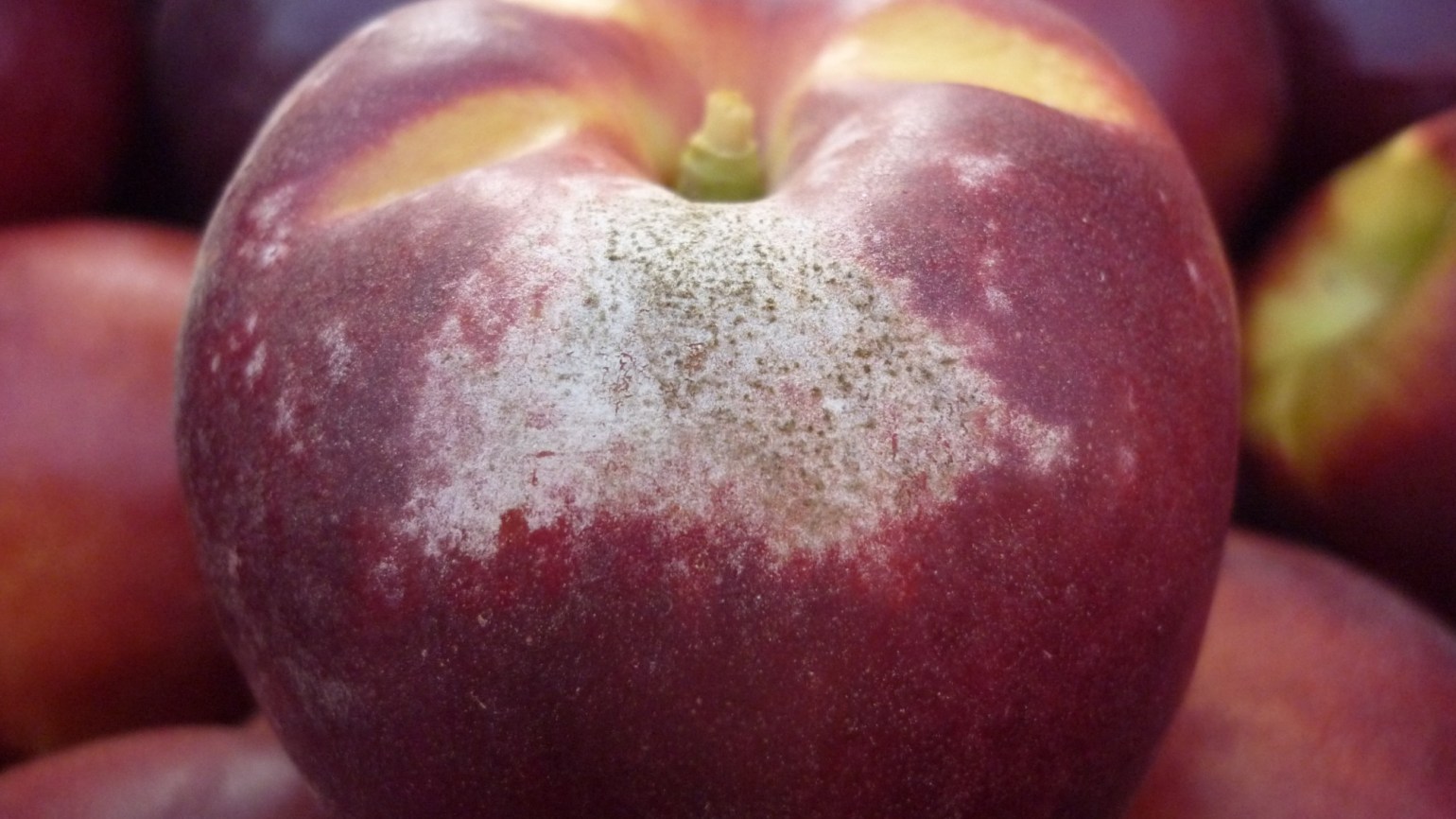
Oídio


WHO CAUSES IT?
Podosphaera sp. and Erysiphe sp. are phytopathogenic fungi belonging to the powdery mildew group, specialized in developing primarily on the surface of plant tissues. They are biotrophic organisms, meaning they require living tissue to obtain the nutrients they need and, in general, do not need to penetrate deeply into the tissues to develop. The hyphae grow on the plant surface and form specialized structures called appressoria, through which they establish contact with cells and develop haustoria that penetrate them to extract nutrients. Under favorable conditions, the fungus produces abundant mycelium and reproductive structures on the affected surface, responsible for the characteristic whitish, powdery appearance. Asexual reproduction is of great epidemiological importance, as numerous conidia are produced that detach easily and are transported by air currents to new tissues. These conidia can germinate rapidly when they encounter suitable temperature and humidity conditions, creating new points of infection. As colonies develop, new reproductive structures form, allowing for successive generations of the pathogen during the same favorable period. Furthermore, certain species can produce survival sexual structures, such as cleistothecia or chasmothecia, which contain ascospores and enable the fungus to survive during unfavorable periods. These structures can remain on plant debris or infected tissues and subsequently release spores capable of initiating new infections. The high production of conidia, their ease of airborne dispersal, and their ability to establish new colonies quickly allow these pathogens to spread rapidly when environmental conditions are favorable.
.png)
SYMPTOMS
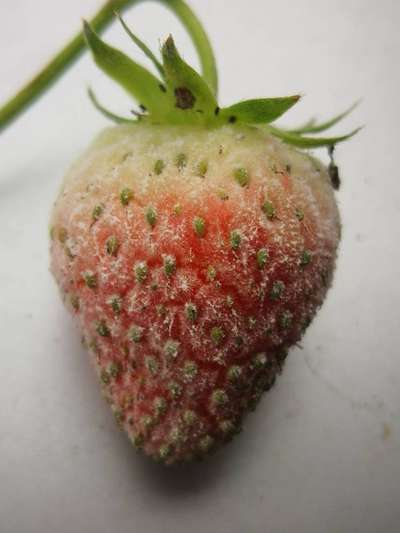
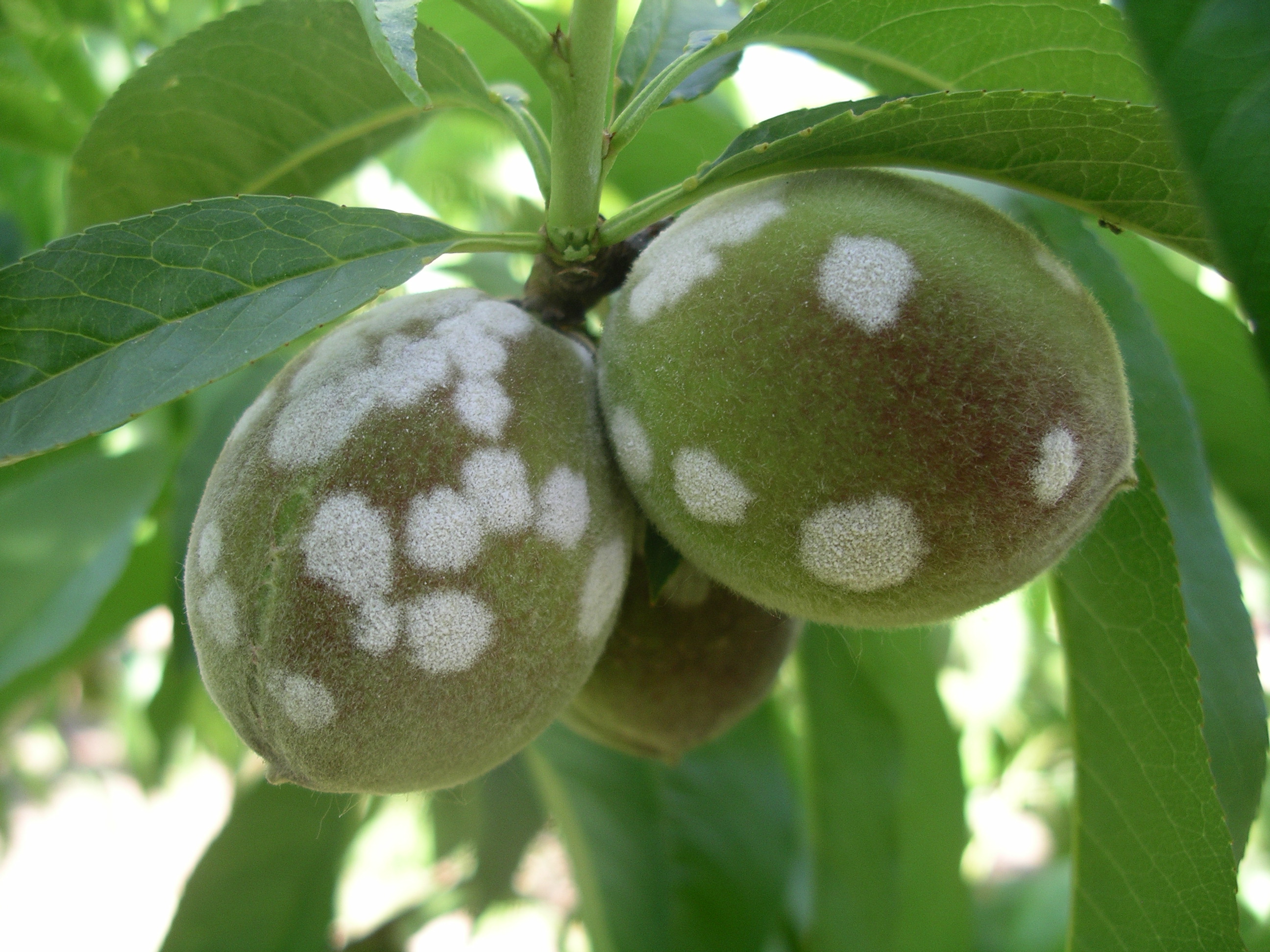
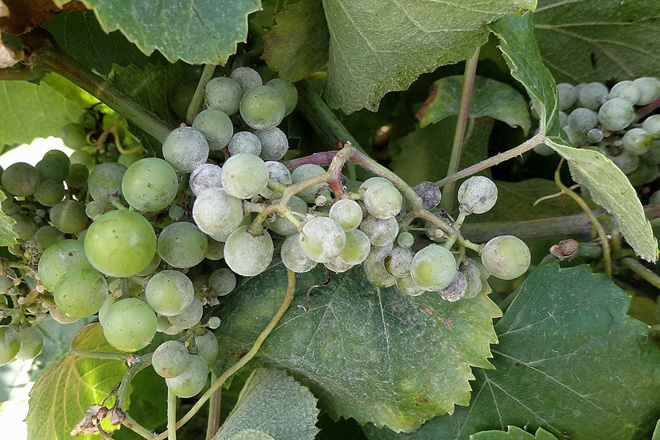
Powdery mildew causes a disease easily recognizable by the formation of a whitish, powdery, mealy coating on the surface of the fruit. The infection can begin with small, isolated colonies that subsequently increase in size and can eventually cover a significant portion of the surface. As the disease progresses, the affected tissues may exhibit developmental alterations, loss of commercial quality, and surface damage that contributes to fruit deterioration. In severe infestations, the infection can cause deformities, reduced growth, and uneven ripening, as well as considerably decreasing the commercial value of the harvest. In certain fruits, colonization during the early stages of development can cause permanent damage to the epidermis, while later infections may manifest primarily as whitish coatings and surface lesions.
• Appearance of whitish, powdery spots or colonies on the surface of the fruit.
• Formation of white or grayish mycelium that can progressively spread across the epidermis.
• Abundant presence of white powder due to spore production on affected tissues.
• Development of discolored, yellowish, or brownish areas around colonized zones.
• Fruit deformation or irregular growth when infection occurs during early stages of development.
• Formation of surface lesions, russeting, cracks, or epidermal alterations in certain crops and under certain conditions.
• Reduction in the visual and commercial quality of the fruit.
• Uneven ripening and reduced normal development when the infection is severe.
• Necrosis and tissue deterioration in severe infestations or when lesions persist for extended periods.
• Appearance of new colonies on nearby fruit due to the airborne dispersal of conidia.


DEVELOPMENT CONDITIONS
Temperature:
15-28 °C
Humidity:
60-90 %

HOW IS IT SPREAD?
Air, Conidia, Spores, Contact with infected tissues, Infected plant debris, Infected plant material

HOW TO ELIMINATE IT?
Home treatments
There are no home treatments
Natural allies
Chemical treatments
There are no treatments for this disease. Treatments are directed at the insect vectors that transmit it. See insect treatments.
RECOMMENDED PRODUCTS TO ELIMINATE THE PEST
Sponsored link

Sponsored link
Sponsored link


Sponsored link
Sponsored link
Effective against all types of fungi

Sponsored link


Sponsored link
Sponsored link

Sponsored link


Sponsored link
Sponsored link
Sponsored link


Sponsored link

REPELLENT PLANTS

RECOMMENDATIONS
OTHER PESTS THAT MAY INTEREST YOU


DID YOU LIKE IT?
Now you can always have it on your mobile, without ads and totally FREE. TRY idMicrobe NOW!


