

Frutos
How to recognize and combat black spot (Phyllosticta) on fruit
Black spot
Fungus
Type:
Risk to the plant:
HIGH
Phyllosticta sp.
Pathogen:
Hongos


WHO CAUSES IT?
Phyllosticta sp. is a genus of ascomycete fungi that includes numerous species associated with different crops and plants, some of which can significantly affect fruit. Species in this genus can behave as pathogens of living plant tissues and also develop on weakened or dead tissues, depending on the species and the crop affected. The fungus develops a mycelium composed of hyphae that colonize infected tissues and can form reproductive structures called pycnidia, within which numerous conidia are produced. These pycnidia usually develop within lesions and constitute an important source of inoculum. In some species, sexual structures such as pseudothecia can also be produced, which generate ascospores and can contribute to the dispersal and emergence of new infections. The pathogen can survive between favorable periods in affected fruits, plant debris, branches, leaves, and other infected tissues that remain in the crop or in the soil. When environmental conditions are favorable, the reproductive structures release conidia, especially in the presence of free water or high humidity. Conidia can be transported by raindrops, water splashes, and other short-distance dispersal mechanisms, reaching the surface of healthy fruit. Once deposited on susceptible tissue, conidia can germinate and form germ tubes that penetrate the tissues, especially where wounds, micro-fissures, or weakened areas are present. Prolonged moisture on the fruit surface favors germination and the establishment of the infection. After penetration, the fungus develops mycelium within the tissues and causes localized cell death, resulting in characteristic lesions. As the infection progresses, new pycnidia can form in the affected areas, where new conidia are produced that can cause secondary infections. In certain species, infections can remain latent for a period and become visible later, especially when the fruit ripens or is subjected to stress, mechanical damage, or favorable environmental conditions. The disease can become particularly important during storage and preservation, as some fruits may exhibit infections that are barely visible at harvest but progress subsequently. The amount of inoculum present, the susceptibility of the fruit, the presence of wounds, and the duration of periods of humidity are determining factors for the appearance and spread of the disease.
.png)
SYMPTOMS
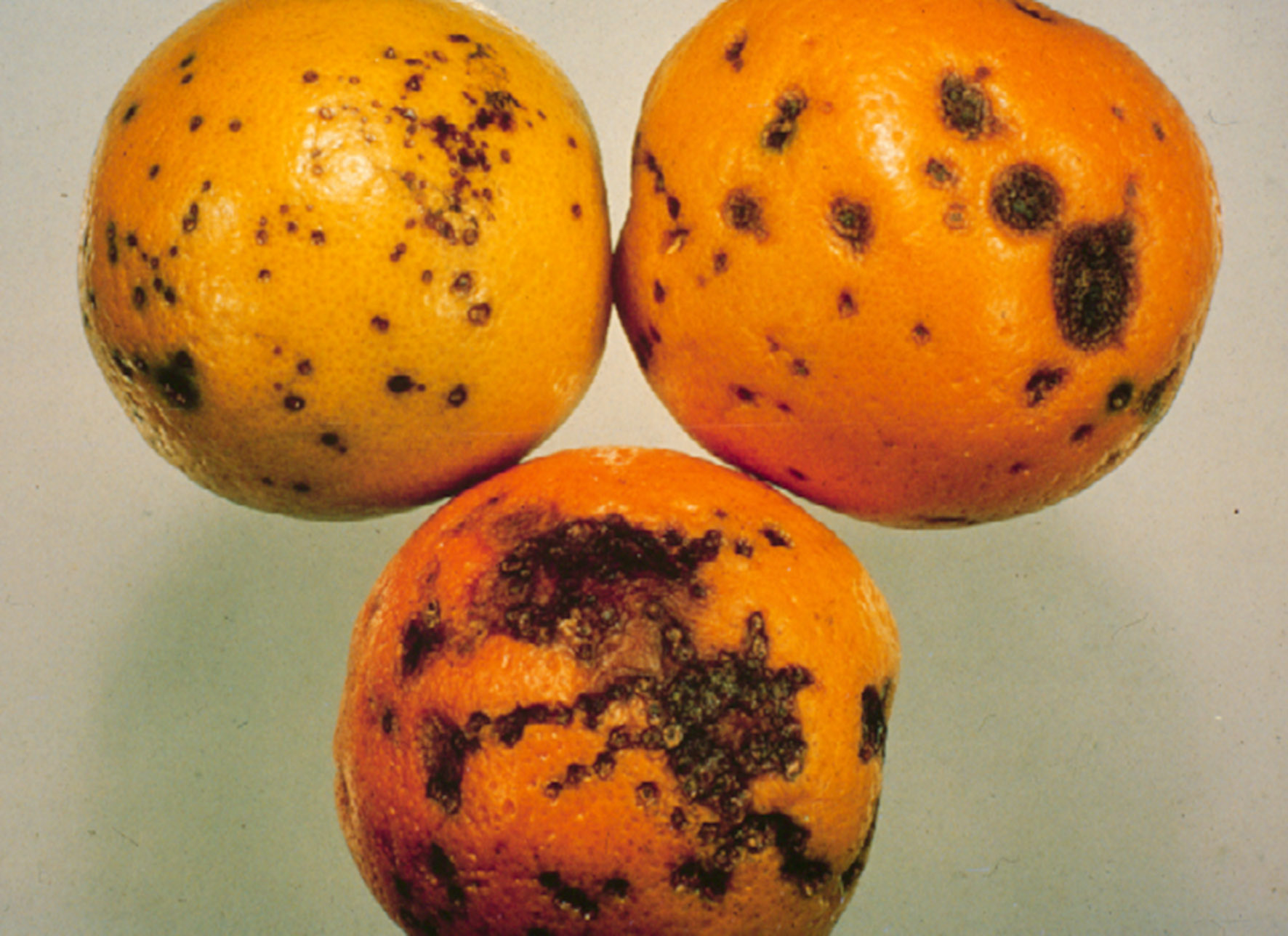
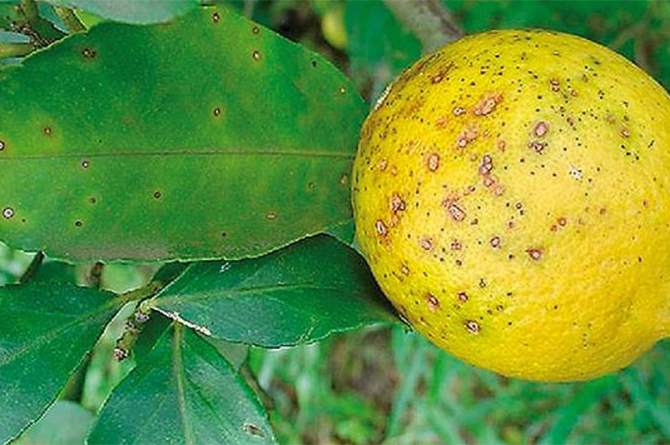
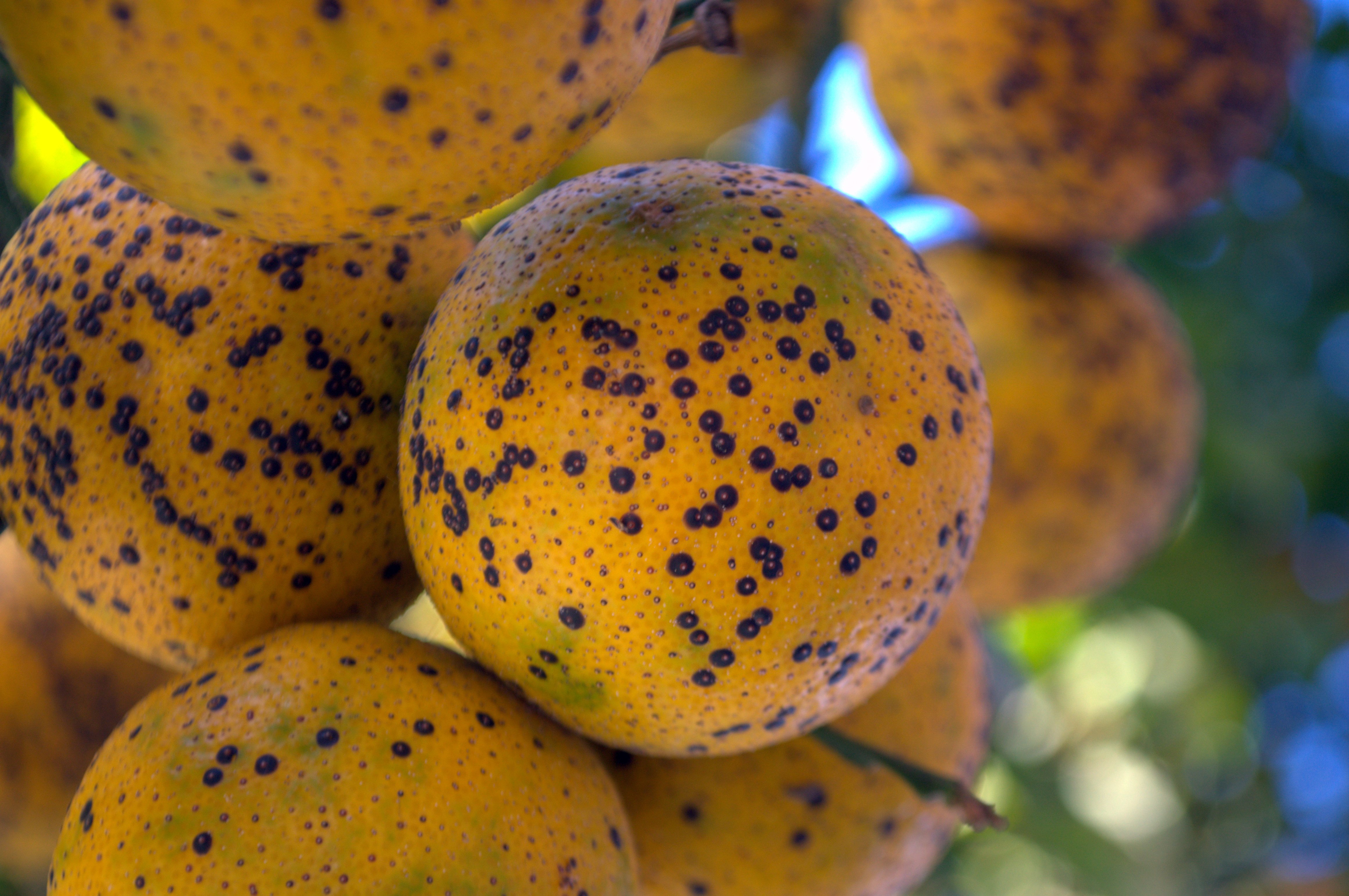
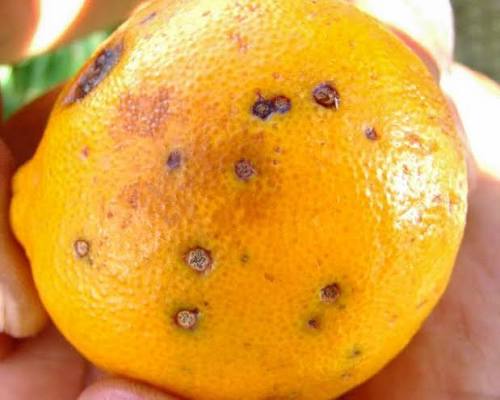
Black spot caused by Phyllosticta sp. can produce necrotic lesions on fruit that initially appear as small, circular or irregular discolored areas, later turning brown, dark, or black. The lesions may remain superficial or progress into the internal tissues, causing gradual deterioration and loss of quality. Depending on the Phyllosticta species and the affected fruit, the spots may have well-defined borders, sunken areas, and visible reproductive structures such as small black dots. These structures are primarily pycnidia and can be observed on the lesions when the disease is well-developed. High humidity favors the production and release of conidia and can accelerate the spread of the lesions. In advanced infections, several spots can merge and form large necrotic areas, leading to rot and loss of commercial value. Symptoms can appear during fruit development and continue to progress after harvest, especially when the fruit is stored under conditions that favor fungal activity. The disease can manifest itself through:
• Small, circular or irregular spots on the surface of the fruit.
• Appearance of brown, dark gray, or black lesions.
• Progressively sunken lesions.
• Well-defined borders around the spots on certain fruits.
• Gradual spread of the lesions into adjacent tissues.
• Formation of small black dots corresponding to the reproductive structures of the fungus.
• Appearance of pycnidia on the affected areas.
• Localized necrosis of the tissues.
• Merging of several lesions, forming extensive areas of necrotic tissue.
• Cracks or deterioration of the epidermis in advanced lesions.
• Fruit rot when the infection progresses into the internal tissues.
• Loss of firmness and altered texture.
• Progressive deterioration during storage.
• Appearance or intensification of symptoms after harvest. • Reduction in commercial quality and increase in the percentage of rejected fruit.


DEVELOPMENT CONDITIONS
Temperature:
20–28 °C
Humidity:
85–100 %

HOW IS IT SPREAD?
Conidia, ascospores, rain, water splashes, irrigation water, infected fruit, contaminated plant debris, contact between fruit, contaminated tools, agricultural machinery, contaminated harvesting boxes, workers' hands and clothing, contaminated plant material.

HOW TO ELIMINATE IT?
Home treatments
There are no home treatments
Natural allies
Chemical treatments
There are no treatments for this disease. Treatments are directed at the insect vectors that transmit it. See insect treatments.
RECOMMENDED PRODUCTS TO ELIMINATE THE PEST
Sponsored link

Sponsored link
Sponsored link


Sponsored link
Sponsored link
Effective against all types of fungi

Sponsored link


Sponsored link
Sponsored link

Sponsored link


Sponsored link
Sponsored link
Sponsored link


Sponsored link

REPELLENT PLANTS

RECOMMENDATIONS
OTHER PESTS THAT MAY INTEREST YOU


DID YOU LIKE IT?
Now you can always have it on your mobile, without ads and totally FREE. TRY idMicrobe NOW!


