

Frutos
How to recognize and combat spotted wing flies on fruit
Spotted-winged fly
Insect
Type:
Risk to the plant:
CRITICAL
Drosophila suzukii
Pathogen:
Moscas de la fruta


WHO CAUSES IT?
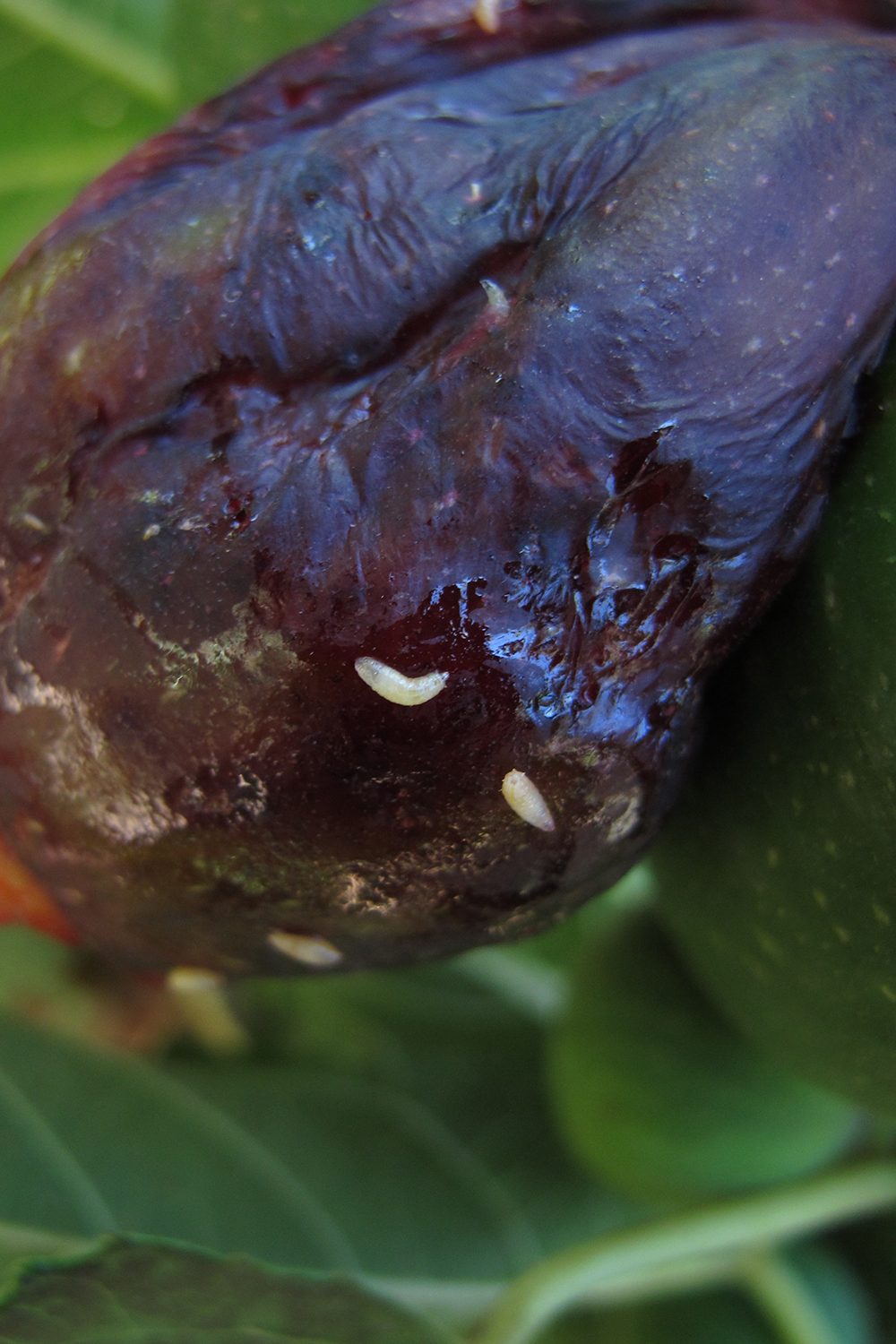
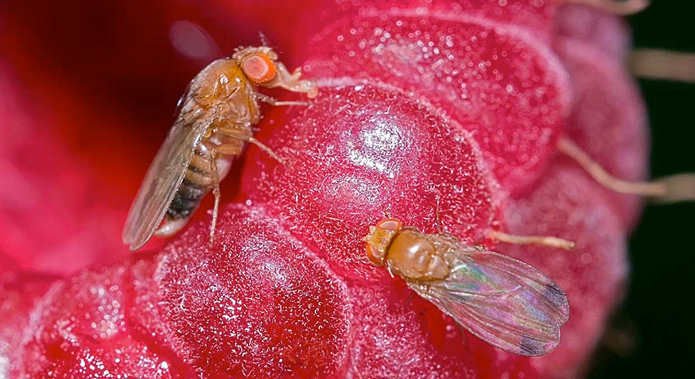
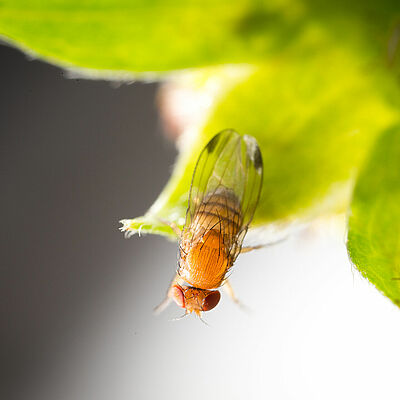
Drosophila suzukii, known as the spotted wing drosophila, is a species of fly in the family Drosophilidae that is particularly problematic in soft, thin-skinned fruit crops. Unlike many other Drosophila species, which typically colonize overripe or damaged fruit, female D. suzukii possess a serrated ovipositor that allows them to pierce the epidermis of healthy fruit that is still ripening. Adults are small, generally only a few millimeters in size, and males are characterized by dark spots on their wings, while females lack these spots. After fertilization, females seek out fruit that has reached an appropriate stage of ripeness and lay their eggs directly under the epidermis using their ovipositor. Small larvae hatch from the eggs and remain inside the fruit, feeding on the pulp. The larvae go through several stages as they consume and degrade the tissues, causing damage that can later facilitate the entry of secondary microorganisms. Once larval development is complete, pupae can form inside the fruit, on its surface, or in the nearby soil, depending on the conditions and the fruit's stage of ripening. A new generation of adults then emerges and can move to other fruits, continuing the infestation. Under favorable conditions, D. suzukii can complete a generation in a relatively short period and produce numerous generations during a single growing season. Moderate temperatures particularly favor its development, while extremely high temperatures can limit survival and reproduction. The continuous availability of susceptible fruits allows populations to remain active for extended periods. Adults can move between plants, plots, and nearby crops, especially when fruits are at different stages of ripening. Furthermore, infested fruits can facilitate the accidental dispersal of eggs, larvae, and pupae through harvesting, transport, and marketing. The pest can survive between production periods in protected shelters, nearby vegetation, and other suitable locations, depending on climatic conditions. The combination of high reproductive capacity, adult mobility, a large number of susceptible fruits, and the difficulty in reaching the larvae once they are protected inside the fruit makes D. suzukii a particularly difficult pest to manage.
.png)
SYMPTOMS
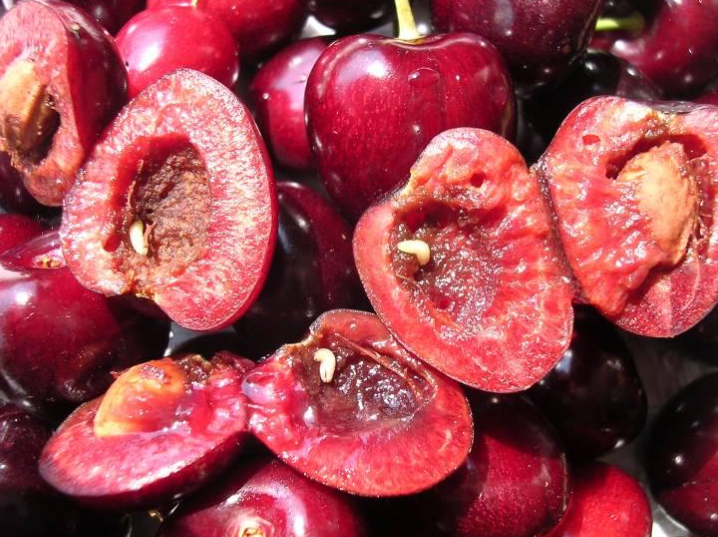
Drosophila suzukii causes direct damage to fruit as a result of egg-laying and larval feeding within the pulp. Females can pierce the epidermis of fruit that still has commercial value and deposit eggs below the surface. After hatching, the larvae begin feeding on the internal tissues, causing progressive pulp degradation. The first external signs may be small spots or oviposition marks, but the damage becomes more evident as larval development progresses. The affected area may soften, sink, and take on a damp or collapsed appearance. The wounds and tissue degradation also promote colonization by fungi and bacteria, potentially leading to secondary rots that accelerate deterioration. Affected fruit can rapidly lose firmness and commercial quality, especially after harvest. In severe infestations, a high proportion of fruit may become unmarketable. The pest can manifest itself through:
• Small oviposition marks or spots on the fruit's epidermis.
• Microscopic perforations made by the female's ovipositor.
• Presence of eggs under the epidermis.
• Presence of white or whitish larvae inside the fruit.
• Progressive softening of the pulp.
• Sinking and collapse of the affected area.
• Loss of firmness in the fruit.
• Exudation of liquids from the perforated areas.
• Appearance of damp and deteriorated areas.
• Progressive rotting around the galleries and feeding areas.
• Development of secondary infections caused by fungi and bacteria.
• Appearance of odors associated with decomposition in severely affected fruit.
• Premature fruit drop in certain crops.
• Accelerated deterioration after harvesting. • Loss of commercial quality and rejection of the fruit during selection and marketing.


DEVELOPMENT CONDITIONS
Temperature:
18–25 °C
Humidity:
60–90 %

HOW IS IT SPREAD?
Adult flight, movement between plants, movement between plots, infested fruit, eggs present in fruit, larvae present in fruit, pupae present in fruit, pupae present in the soil, transport of contaminated fruit, contaminated harvesting boxes, infested plant material, agricultural machinery, contaminated tools, transport of infested materials.

HOW TO ELIMINATE IT?
Home treatments
There are no home treatments
Natural allies
Chemical treatments
There are no treatments for this disease. Treatments are directed at the insect vectors that transmit it. See insect treatments.
RECOMMENDED PRODUCTS TO ELIMINATE THE PEST
Sponsored link

Sponsored link
Sponsored link


Sponsored link
Sponsored link
Effective against all types of fungi

Sponsored link


Sponsored link
Sponsored link

Sponsored link


Sponsored link
Sponsored link
Sponsored link


Sponsored link

REPELLENT PLANTS

RECOMMENDATIONS
OTHER PESTS THAT MAY INTEREST YOU


DID YOU LIKE IT?
Now you can always have it on your mobile, without ads and totally FREE. TRY idMicrobe NOW!


