top of page

Frutos

How to recognize and combat beetle pests in fruit

Beetles

Insect

Type:

Risk to the plant:

HIGH

Different species

Pathogen:
How to recognize and combat beetle pests in fruit

Escarabajos

CTA superior EN.webp
1709890758744.png

WHO CAUSES IT?

Plant-eating beetles comprise numerous species of Coleoptera capable of feeding on different parts of plants, including fruits. Depending on the species, they may belong to families such as Chrysomelidae, Curculionidae, Scarabaeidae, Nitidulidae, or Coccinellidae, although not all species in these groups are harmful. Adults typically feed directly on plant tissues, while larvae may develop in the soil, inside fruits, in roots, stems, or decaying plant matter, depending on the species. Females lay their eggs in suitable locations so that the larvae can find food immediately after hatching. After several larval stages, the larvae reach the pupal stage, and the adults subsequently emerge. Some species produce only one generation per year, while others can complete several generations when temperatures are favorable. Adults can move by flight between different plants and plots, facilitating the colonization of new crops. Some species can also survive unfavorable periods by taking refuge in the soil, plant debris, bark, organic matter, or other sheltered places. The activity of many beetles increases with moderate to high temperatures and the availability of food. Feeding injuries can appear on both young and mature fruit, and in addition to direct damage, these wounds can facilitate the entry of fungi and bacteria. The presence of ripe fruit, plant debris, and other food sources can encourage the persistence and reproduction of certain species within or around the crop.

1713099015053 (2).png

SYMPTOMS

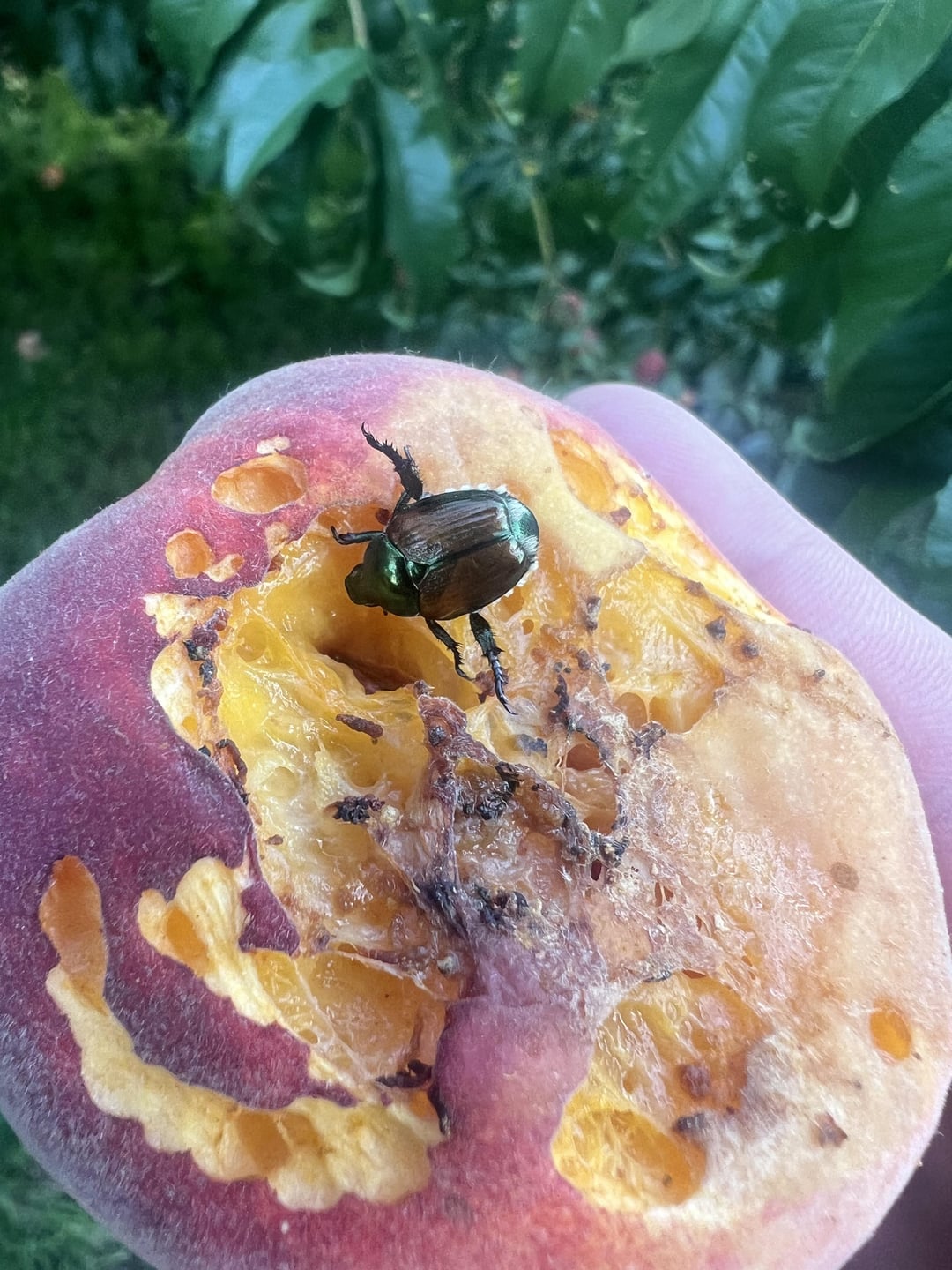
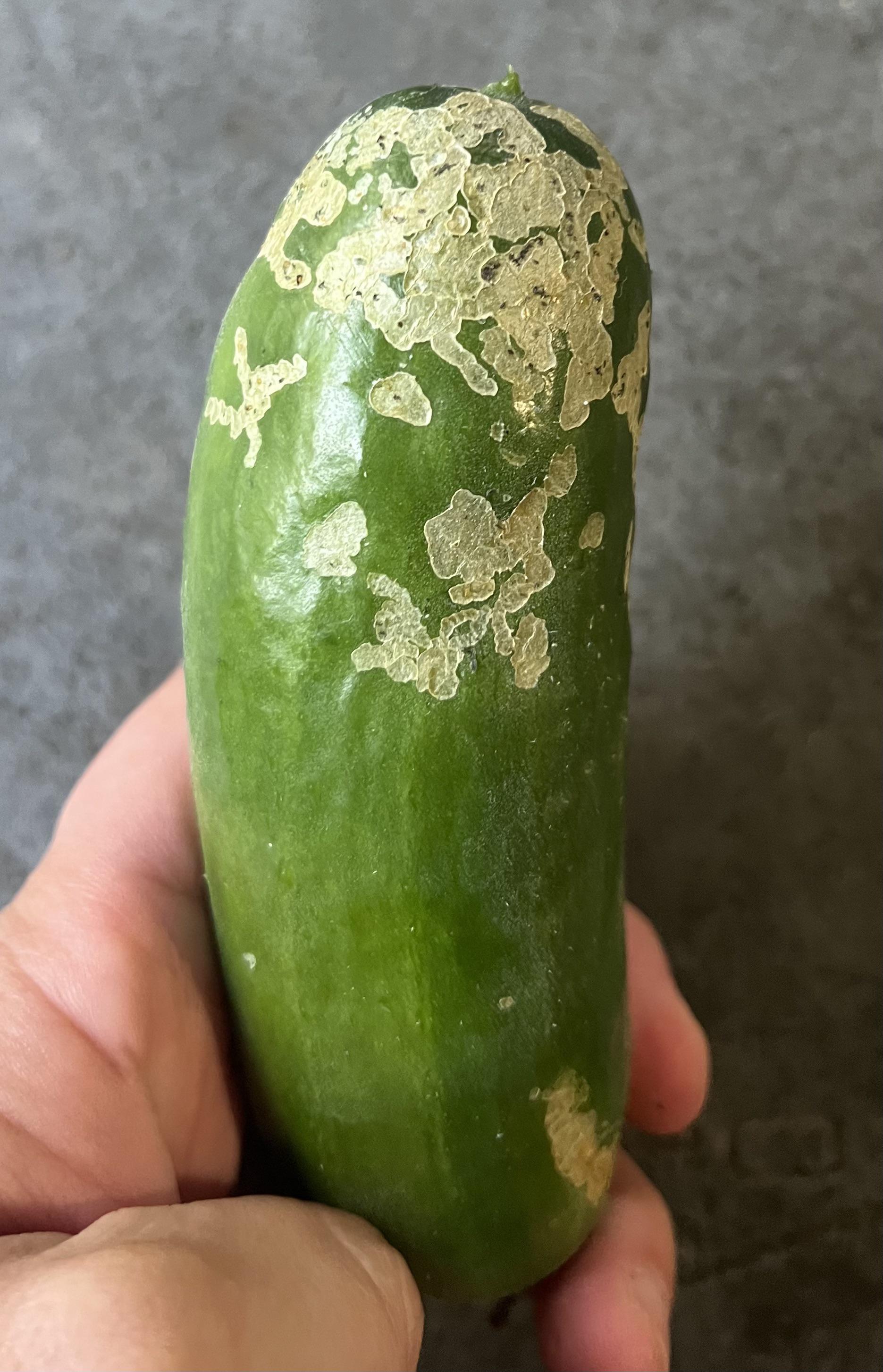
Beetles can cause direct damage to fruit through biting, perforation, and consumption of the epidermis and internal tissues. The severity of the damage depends on the species, the number of individuals present, and the stage of fruit development. Lesions can significantly reduce commercial quality, especially in fruit intended for fresh consumption. Wounds can also facilitate the entry of secondary microorganisms and promote rotting. In severe infestations, numerous damaged, deformed, or tissue-losing fruits may appear, leading to significant economic losses.

• Perforations and holes of varying sizes on the fruit surface.

• Biting and tissue loss in the epidermis.

• Appearance of gnawed or partially consumed areas.

• Sunken or irregular lesions around feeding points.

• Presence of scars and deformations during fruit growth.

• Appearance of brown or necrotic spots around the wounds.

• Loss of visual and commercial quality.

• Secondary rots caused by fungi or bacteria that penetrate through wounds.

• Premature fruit drop when damage is severe.

• Presence of larvae or galleries inside certain fruits, depending on the species.

• Reduction in the commercial value of the harvest.

Beetles in fruit: How to recognize and effectively treat them
Fruit damaged by beetles with holes and bites on the surface
Beetles: Symptoms, damage and solutions in fruit
CTA medio EN.webp
pronostica_edited.png

DEVELOPMENT CONDITIONS

Temperature:

20-30 °C

Humidity:

60-90 %

1709890758697.png

HOW IS IT SPREAD?

Adult flight, Movement between plants, Spontaneous vegetation, Infested plant material, Plant debris, Infested soil, Accidental transport of insects

1709890758673.png

HOW TO ELIMINATE IT?

Home treatments

BONE MEAL OR GROUND FISH SHELLS

RUSTY NAILS OR IRON SHAVINGS

BANANA PEELS

EPSOM SALTS (MAGNESIUM SULFATE)

SOLUTION WITH HOUSEHOLD BORAX

GROUND OR BOILED EGGSHELLS

COMPOST WITH ONION OR GARLIC SCRAPS

VEGETABLE COOKING WATER

WOOD ASH

WATER WITH VINEGAR OR LEMON (VERY DILUTED)

GARLIC INFUSION

USED COFFEE OR TEA

BANANA AND EGGSHELL INFUSION

POTATO OR LEGUME COOKING WATER

COMPOST FROM FRESH GREEN LEAVES

COMPOST OR WELL-AGED MANURE

DILUTED MILK (1:10)

BANANA TEA

LEAF COMPOST

NETTLE SLURRY

POTASSIUM SOAP AND NEEM OIL SOLUTION

POTASSIUM SOAP SOLUTION + NEEM OIL + DIATOMACEOUS EARTH

BAKING SODA AND NEUTRAL SOAP SOLUTION

GARLIC INFUSION WITH NEUTRAL SOAP

CHROMATIC OR ADHESIVE TRAPS

DILUTED MILK

HORSETAIL INFUSION

TRUNK WHITEWASHING

DIATOMACEOUS EARTH

WOOD ASH

NETTLE SLURRY

CUT THE AFFECTED BRANCHES AND APPLY CINNAMON

GARLIC AND CINNAMON INFUSION

INFUSION OF WORMWOOD, CHILI OR CHILLI

CLEAN THE AFFECTED AREA AND APPLY ASH PASTE WITH GARLIC OR CINNAMON

GARLIC AND MINT INFUSION

LIGHT TRAPS

APPLY CINNAMON POWDER

PITFALL TRAPS

CRUSHED EGG SHELLS

CLEAN AND SEAL THE WOUND WITH CLAY, CINNAMON AND GARLIC PASTE

GARLIC INFUSION

MATURE COMPOST

TRAPS WITH VINEGAR AND SOAP

SEAL HOLES WITH ASH PASTE AND CRUSHED GARLIC

VINEGAR AND BAKING SODA SOLUTION

ANT TRAP

TAPE TRAP

PHEROMONE TRAP

ALCOHOL TRAPS

FUNNEL TRAP

There are no home treatments

Natural allies

PREDATORY MITES

LADYBUGS

LACEWINGS

PARASITIC WASPS

HOVERFLIES OR PARASITIC FLIES

PREDATORY BUGS

There are no natural allies

Mycodiplosis oidii (predatory mosquito)

Chemical treatments

AGRICULTURAL SULFUR (POWDER OR SOLUBLE)

POTASSIUM FERTILIZERS

MAGNESIUM FERTILIZERS

BORON FERTILIZERS

CALCIUM FERTILIZERS

NITROGEN FERTILIZERS

PHOSPHORUS FERTILIZERS

IRON FERTILIZERS

SULFUR FERTILIZERS

NPK FERTILIZERS

There are no treatments for this disease. Treatments are directed at the insect vectors that transmit it. See insect treatments.

ABAMECTIN 0.0015% + PYRETHRINS 0.02%

RAPESEAL OIL

RAPESEAL OIL + PYRETHRINS

ORANGE OIL 6%

PARAFFIN OIL

ACETAMIPRID

ACETAMIPRID 0.005%

ACETAMIPRID 20%

SULFUR

COPPER 20%

COPPER 25%

COPPER 35%

COPPER 38%

COPPER 50%

COPPER 52%

DELTAMETHRIN 1.57%

DELTAMETHRIN 10%

DELTAMETHRIN 2.5%

DIFENOCONAZOLE 1.67%

ESFENVALERATE 2.5%

ESFENVALERATE 5%

100% GARLIC EXTRACT

PHENHEXAMIDE 50%

FLUPYRADIFURONE

FLUPIRADIFURONE 20%

FOSETIL-AL 80%

FERRIC PHOSPHATE

ALUMINUM PHOSPHIDE 56%

PHOSTIAZATE 10%

PHOSTIAZATE 15%

HEXITIAZOX 10%

POTASSIUM HYDROGEN CARBONATE

LAMBDA CYHALOTHRIN

LAMINARIN 4.5%

METALDEHYDE

PIRACLOSTROBIN 6.7% + BOSCALIDE 26.7%

PYRETHRINS

PYRIPROXIFEN 10%

POTASSIUM SALTS OF UNSATURATED FATTY ACIDS

SPINOSAD 0.024%

SPINOSAD 12%

SPINOSAD 48%

TAU-FLUVALINATE 24%

TETRACONAZOLE 10%

TETRACONAZOLE 12.5%

TETRACONAZOLE 4%

TRICHODERMA ASPERELLUM (STRAIN T34)

RECOMMENDED PRODUCTS TO ELIMINATE THE PEST

Sponsored link

Ecoworm Potassium Soap

Ecoworm Potassium Soap

Multi-purpose solution for insects. Effective against whiteflies, mites, thrips, leafhoppers, aphids and scale insects.

Sponsored link

Fruit Fly Traps

Fruit Fly Traps

Ready-to-use fruit fly trap with attractant.

Sponsored link

Liquid Copper Fungicide

Liquid Copper Fungicide

Copper fungicide for fungal diseases and plant diseases.

Sponsored link

Organic Seaweed Fertiliser

Organic Seaweed Fertiliser

Plant Food Ideal for All Plants, Rich in Additional Nutrients

Sponsored link

Fungus Fighter Plus | Fungicide for Plants

Fungus Fighter Plus | Fungicide for Plants

Broad-spectrum fungicide for effective control of fungal diseases in plants.

Sponsored link

Ultimate Bug Killer | Broad-Spectrum Insecticide

Ultimate Bug Killer | Broad-Spectrum Insecticide

Fast acting bug spray with up to 2 weeks protection, controls common garden pests

1714749024044.png

REPELLENT PLANTS

​

1709890758720.png

RECOMMENDATIONS

​

OTHER PESTS THAT MAY INTEREST YOU

THE MOST POPULAR

How to prepare homemade nettle slurry to eliminate whiteflies

How to use nettle slurry to eliminate whiteflies

How to prepare garlic infusion to eliminate fungus

How to use garlic infusion to eliminate fungus

Potassium soap to eliminate mites on plants

How to combat mites with potassium soap and neem oil

Home remedies to eliminate white mold on plants

5 home remedies to combat white mold

DID YOU LIKE IT?

Now you can always have it on your mobile, without ads and totally FREE. TRY idMicrobe NOW!

button_google_play_EN.png
boton_mobile_Version_EN.jpg
bottom of page