


Plantas decorativas de jardín y/o interior
How to recognize and combat green midges on decorative garden and/or indoor plants
Green leafhopper
Insect
Type:
Risk to the plant:
HIGH
Empoasca vitis
Pathogen:
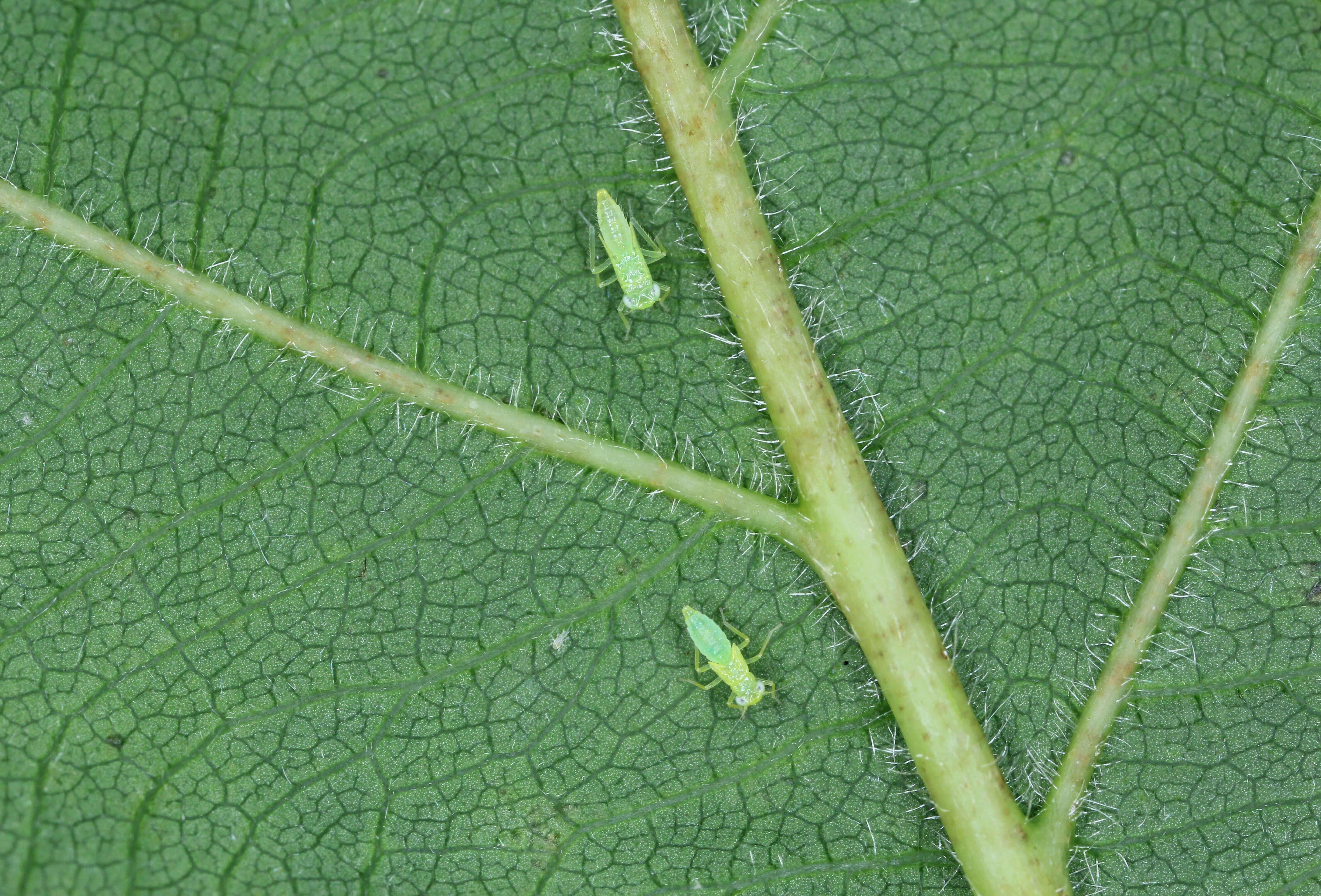
Mosquito verde


WHO CAUSES IT?
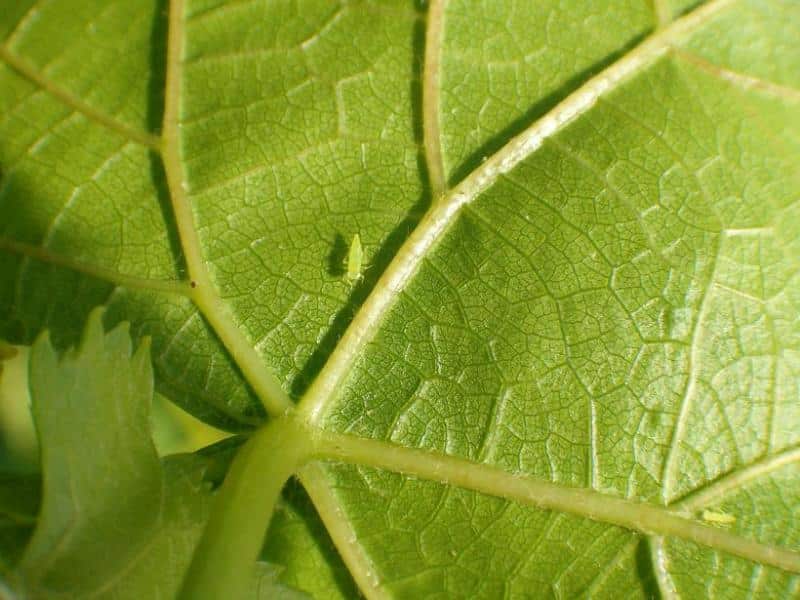
Empoasca vitis, commonly known as the green mosquito, is a small insect belonging to the Cicadellidae family. This pest is especially active during warm seasons and is characterized by its high mobility and colonization capacity. Adults have an elongated body, bright green, and have membranous wings that allow them to move quickly from one plant to another. After mating, females insert their eggs into tender plant tissues, preferably on the underside of young leaves. The nymphs emerge and go through several molts before reaching the adult stage. During its nymphal and adult phase, Empoasca vitis feeds on the phloem of the leaves, introducing its chopping-sucking mouthparts to suck sap. This feeding activity not only weakens the plants, but also causes significant physiological alteration. Generations follow one another quickly under favorable conditions, and can be completed in a few weeks. Furthermore, it is capable of hibernating as an adult in nearby spontaneous vegetation or in plant remains, which ensures its persistence in the agricultural environment.

SYMPTOMS
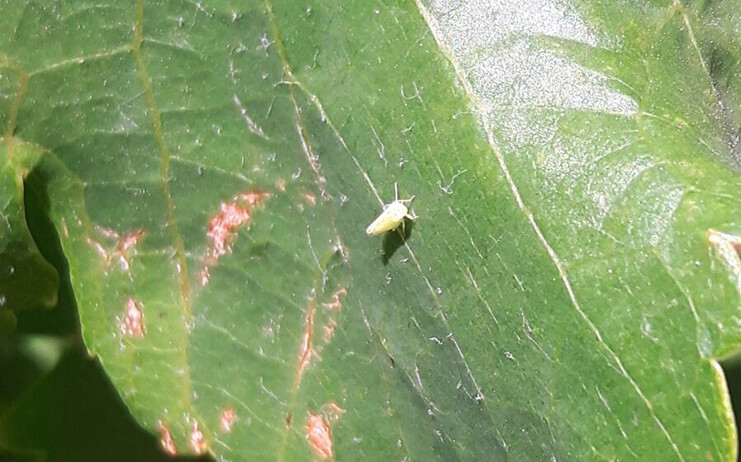
The green mosquito directly affects plants through its continuous feeding on young leaves, which triggers a series of physiological alterations known as phytotoxicity due to their bite. These alterations include the interruption of nutrient transport and the appearance of marginal chlorosis, reducing the photosynthetic capacity of the plant. Prolonged infestation can lead to general weakening of the plant, loss of vigor and a considerable decrease in yield.
- Downward curling of the edges of the leaves
- Progressive yellowing from the margins
- Stopping the growth of young shoots
- Marginal necrosis in adult leaves
- Presence of whitish spots due to bites
- Appearance of dry or burnt leaves
- Premature fall of affected leaves


DEVELOPMENT CONDITIONS
Temperature:
20 °C – 30 °C
Humidity:
60 % – 80 %

HOW IS IT SPREAD?
Wind, Movements of infested plants, Contact between plants, Contaminated tools, Spontaneous vegetation

HOW TO ELIMINATE IT?
Home treatments
There are no home treatments
Natural allies
Chemical treatments
There are no treatments for this disease. Treatments are directed at the insect vectors that transmit it. See insect treatments.
RECOMMENDED PRODUCTS TO ELIMINATE THE PEST





REPELLENT PLANTS

RECOMMENDATIONS
OTHER PESTS THAT MAY INTEREST YOU


DID YOU LIKE IT?
Now you can always have it on your mobile, without ads and totally FREE. TRY idMicrobe NOW!



Explore more tools
Services
Contact
Legal
©2023 by ZERIMAR S.A.R.L. All rights reserved