

Red Spider
Tetranychus Urticae
Pathogen:
Type:
Insect
Risk:
HIGH
Aguacate
Araña roja

WHO CAUSES IT?
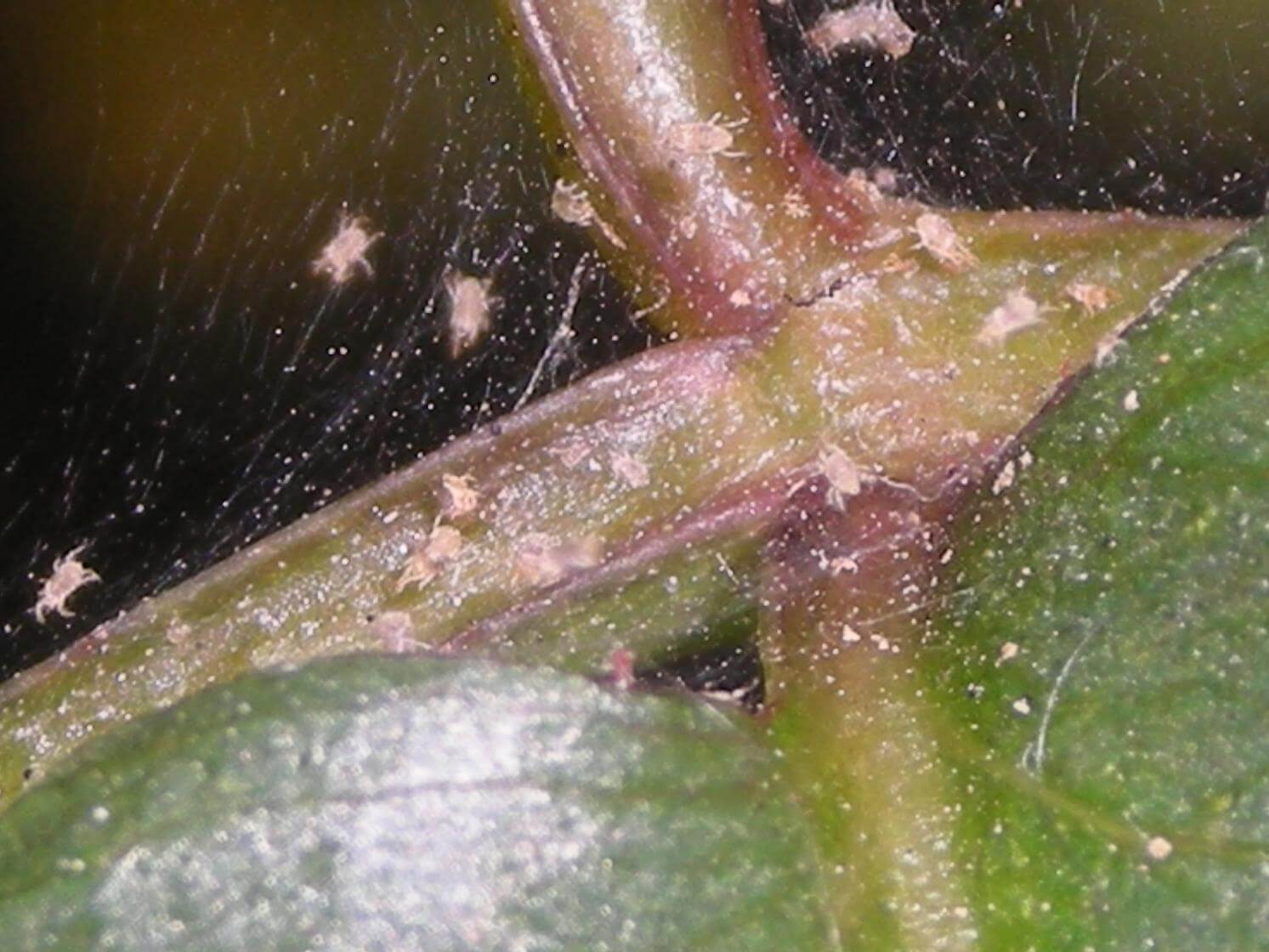
Tetranychus urticae, commonly known as the red spider, is a phytophagous mite that affects a wide range of plants, including avocado. This pathogen goes through several stages during its life. The eggs, round and tiny, are laid on the lower surface of the leaves. After hatching, larvae emerge that have six legs. Then, the larvae molt into protonymphs and from there to deutonymphs, both stages have eight legs. Finally, after another molt, they reach the adult phase. The entire cycle from egg to adult can be completed in one week under optimal conditions. Adults are very small, about 0.5 mm, and range in color from greenish-yellow to red. Females can lay hundreds of eggs during their lifetime, facilitating rapid proliferation under favorable conditions.
.png)
SYMPTOMS
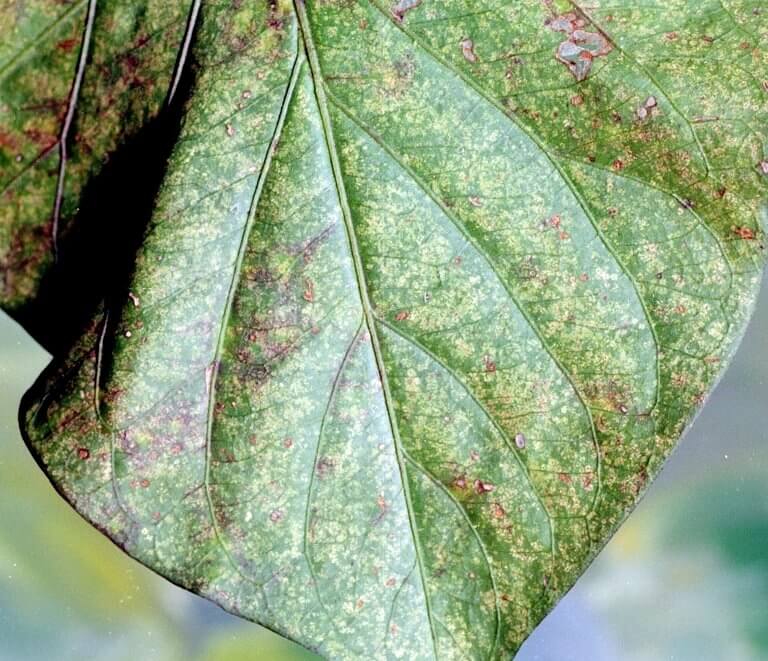
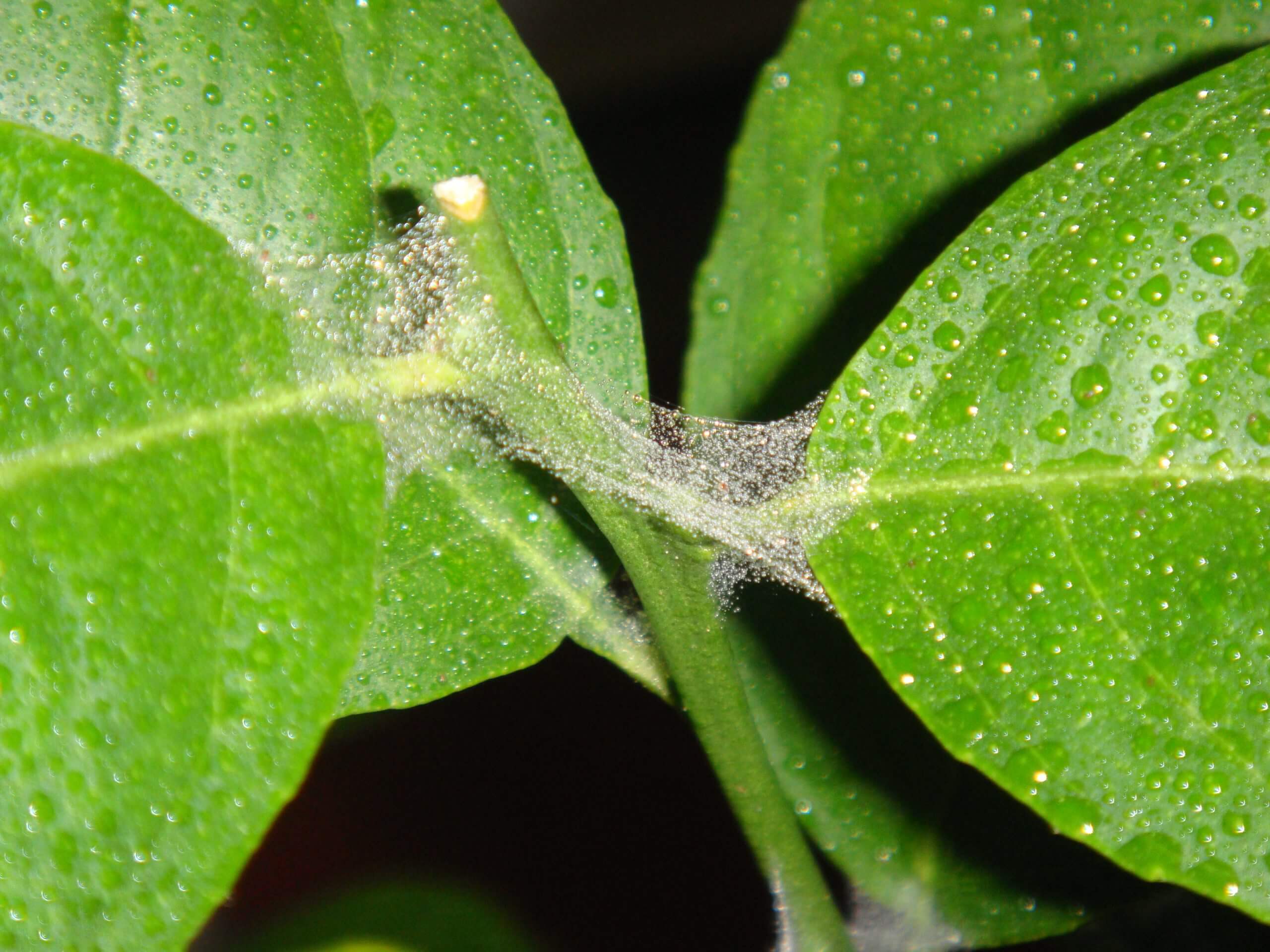
In avocado, the red spider causes a disease that manifests itself mainly in the foliage and can reduce the vitality of the tree and the quality of the fruit. Mites feed by sucking the cellular contents of leaves, which leads to discoloration and weakening of the leaves. Over time, the damage spreads, affecting photosynthesis and tree growth, and in severe infestations, it can result in defoliation.
- Discoloration and yellow Taches on the leaves
- Dry and brittle leaves
- Loss of vigor and reduced growth of the tree
- Leaf tissues with a bronze or silver appearance
- Premature defoliation in severe cases
- Lower quality and quantity of fruits


TEMPERATURE AND HUMIDITY
25-30°C
40-60%

TRANSMISSION PATHS
Wind, Direct contact between plants, Contaminated tools, Animal vectors, Transport of infected plant material
Do you want to remove this disease? Choose how you want to treat it.

TREATMENTS
Chemical treatment
• RAPE OIL 1.53% [AL] P/V
• RAPE OIL 848.24 g/l [EC] P/V
• ORANGE OIL 60g/L [ME] P/S
• PARAFFIN OIL (CAS [8042-47-5]) 54.6% [EW] P/V
• PARAFFIN OIL (CAS [8042-47-5]) 83% [EC] P/V
• PARAFFIN OIL (CAS [97862-82-3]) 80% [EC] P/V
• PARAFFIN OIL 83% [EC] P/V
• SULFUR 70% [SC] P/V
• SULFUR 72% [SC] P/V
• SULFUR 80% [DP] P/P
• SULFUR 80% [SC] P/V
• SULFUR 80% [WG] P/P
• SULFUR 80% [WP] P/P
• TAU-FLUVALINATE 24% [EW] P/V
Authorized treatments in organic farming
• RAPE OIL 1.53% [AL] P/V
• RAPE OIL 848.24 g/l [EC] P/V
• ORANGE OIL 60g/L [ME] P/S
• PARAFFIN OIL (CAS [8042-47-5]) 54.6% [EW] P/V
• PARAFFIN OIL (CAS [8042-47-5]) 83% [EC] P/V
• PARAFFIN OIL (CAS [97862-82-3]) 80% [EC] P/V
• PARAFFIN OIL 83% [EC] P/V
• SULFUR 70% [SC] P/V
• SULFUR 72% [SC] P/V
• SULFUR 80% [DP] P/P
• SULFUR 80% [SC] P/V
• SULFUR 80% [WG] P/P
• SULFUR 80% [WP] P/P
Biological control
• AMBLYSEIUS ANDERSONI (parasitoid and predatory mites)
• BEAUVERIA BASSIANA (STRAIN ATCC 74040) 2.3% (2.3X10E7 VIABLE SPORES/ML) [OD] P/V
• BEAUVERIA BASSIANA (GHA STRAIN) 10.7% (2.26X10E13 CONIDIAS/L) [OD] P/V
• BEAUVERIA BASSIANA (GHA STRAIN) 22% (4.4 x 10E10 CONIDIAS/G) [WP] P/P
• NEOSEIULUS CALIFORNICUS (parasitoid and predatory mites)
• PHYTOSEIULUS PERSIMILIS (parasitoid and predatory mites)
Recommendations
- Regularly monitor avocado leaves for the early presence of mites.
- Use horticultural oils and insecticidal soaps to reduce mite populations.
- Implement biological controls, introducing natural predators such as predatory mites (Phytoseiulus persimilis) and lacewings.
- Avoid excessive use of broad-spectrum insecticides that can eliminate the natural enemies of the red spider.
- Keep the garden free of weeds and plant debris that can serve as a refuge for mites.
- Apply adequate fertilizers and irrigation to keep trees healthy and less susceptible to infestations.
- Use vegetable covers or mulch to maintain soil moisture and reduce the spread of mites.
- Carry out appropriate pruning to improve air circulation and reduce relative humidity in the foliage.
Sponsored link
Sponsored link
Sponsored link


Sponsored link
Sponsored link
Sponsored link
Sponsored link


Sponsored link
Sponsored link
Effective against all types of fungi

Sponsored link
Sponsored link


Sponsored link
Sponsored link

Sponsored link
Sponsored link


Sponsored link
*The recommended treatments are still recommendations according to the databases of the authorities and at no time do they replace the guidelines established according to the legislation of each country
*The products shown are recommendations and are not our own products. As Amazon Associates, we earn revenue from purchases of recommended products.

TREATMENTS
Homemade treatments
There are no home treatments
Natural allies
Chemical treatments
There are no treatments for this disease. Treatments are directed at the insect vectors that transmit it. See insect treatments.

RECOMMENDATIONS

REPELLENT PLANTS
RECOMMENDED PRODUCTS TO ELIMINATE THIS PEST
Sponsored link
Sponsored link
Sponsored link
Sponsored link
Sponsored link
Sponsored link
Sponsored link
Sponsored link
Sponsored link
Effective against all types of fungi
Sponsored link
Sponsored link
Sponsored link
Sponsored link
Sponsored link
Sponsored link
Sponsored link
*The recommended treatments are still recommendations according to the databases of the authorities and at no time do they replace the guidelines established according to the legislation of each country
*The products shown are recommendations and are not our own products. As Amazon Associates, we earn revenue from purchases of recommended products.

Enjoy idMicrobe TOTALLY FREE, with no trial periods.


