

Mealybugs Or Scales
Mealybugs Or Scales
Pathogen:
Type:
Insect
Risk:
HIGH
Cactus
Cochinillas

WHO CAUSES IT?
Mealybugs are a group of insects that belong to the superfamily Coccoidea, with multiple species that affect various plants, including cacti. These insects have an initial phase in which adult females lay eggs in the protected parts of the cactus. Upon hatching, the nymphs, known as "crawlers", look for suitable places to feed, inserting their stylets into the plant tissue to suck the sap. Mealybugs go through several nymphal stages before reaching maturity. The males, in many species, are winged and live only a few days, dedicated exclusively to fertilizing the females. Adult females are generally immobile and may be covered with a protective waxy coating, which allows them to adhere firmly to the host plant. This waxy coating also protects them against adverse conditions and predators. Reproduction can be both sexual and asexual, depending on the species. Throughout their life, mealybugs can produce several generations per year, especially in warm climates, thus facilitating their rapid proliferation and extensive damage to affected plants.
.png)
SYMPTOMS
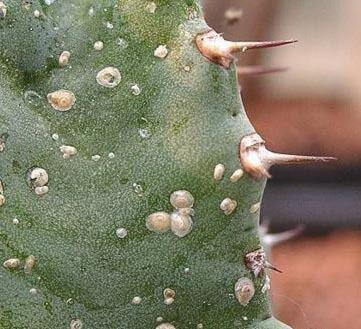
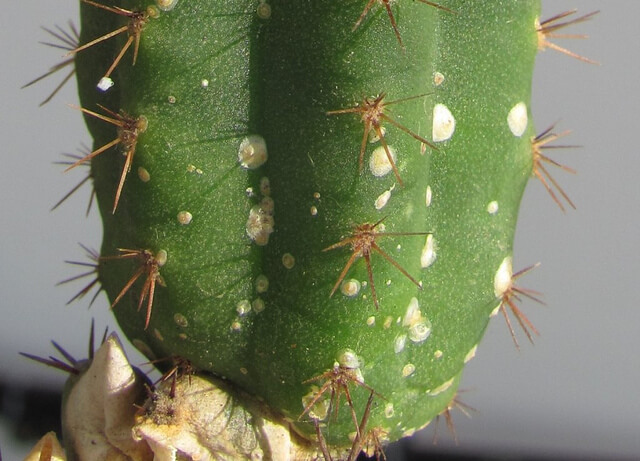
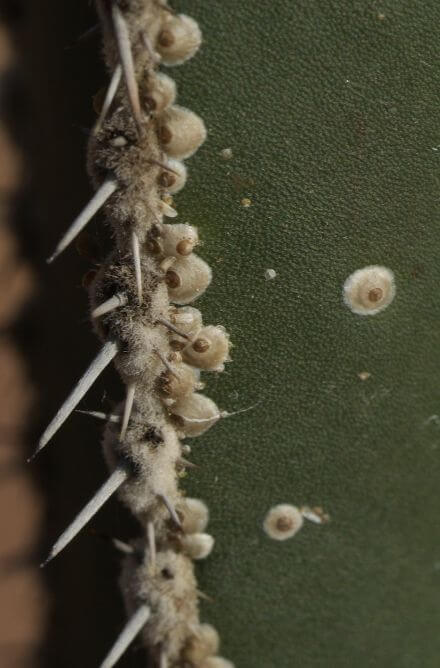
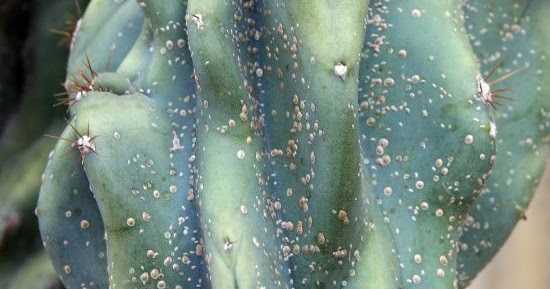
Mealybug infestation of cacti causes a disease known as mealybugs, which significantly weakens plants by sucking their sap, interfering with their ability to carry out photosynthesis and other vital processes. This attack can lead to reduced growth, chlorosis and, in severe cases, plant death. Mealybugs also excrete a sticky substance called honeydew, which can attract sooty fungi, adding more stress to the plant and further reducing its photosynthetic capacity.
- Presence of a white waxy substance on the surface of the cactus.
- Discoloration and yellowing of fabrics.
- Appearance of sticky honeydew on the surface of the cactus.
- Growth of sooty fungi on molasses.
- Loss of vigor and delay in growth.
- Death of the plant in serious infestations.


TEMPERATURE AND HUMIDITY
20°C a 30°C
60% a 80%

TRANSMISSION PATHS
Direct contact between plants, Wind, Contaminated tools, Vector animals, Movement of infested plants
Do you want to remove this disease? Choose how you want to treat it.

TREATMENTS
Chemical treatment
• ABAMECTIN 0.0015% + PYRETHRINS 0.02% [AL] P/V
• RAPESEAL OIL 0.825% + PYRETHRINS 0.018% [AL] P/V
• RAPE OIL 1.53% [AL] P/V
• RAPE OIL 1.69% ( ) [AL] P/V
• RAPE OIL 77.7% [EC] P/V
• RAPE OIL 848.24 g/l [EC] P/V
• ORANGE OIL 60g/L [ME] P/S
• PARAFFIN OIL (CAS [97862-82-3]) 40% [EW] P/V
• PARAFFIN OIL (CAS [97862-82-3]) 80% [EC] P/V
• ACETAMIPRID 0.005% [AL] P/V
• ACETAMIPRID 20% [SG] P/P
• ACETAMIPRID 20% [SP] P/P
• AZADIRACTIN 1% (AS AZADIRACTIN A) [EC] P/V
• Azadirachtin 2.6% (AS AZADIRACTIN A) [EC] P/V
• CYPERMETHRIN 5% [EC] P/V
• CYPERMETHRIN 50% [EC] P/V
• DELTAMETHRIN 1.57% [SC] P/V
• DELTAMETHRIN 2.5% [EC] P/V
• FLUPIRADIFURONE 0.008% [AL] P/V
• LAMBDA CYHALOTHRIN 5% [EG] P/P
• PYRIPROXIFEN 10% [EC] P/V
• POTASSIUM SALTS OF FATTY ACIDS C14-C20 48% [EW] P/V
• POTASSIUM SALTS OF VEGETABLE FATTY ACIDS 13.04% [SL] P/V
Authorized treatments in organic farming
• RAPESEAL OIL 0.825% + PYRETHRINS 0.018% [AL] P/V
• RAPE OIL 1.53% [AL] P/V
• RAPE OIL 1.69% ( ) [AL] P/V
• RAPE OIL 77.7% [EC] P/V
• RAPE OIL 848.24 g/l [EC] P/V
• ORANGE OIL 60g/L [ME] P/S
• PARAFFIN OIL (CAS [97862-82-3]) 40% [EW] P/V
• PARAFFIN OIL (CAS [97862-82-3]) 80% [EC] P/V
• AZADIRACTIN 1% (AS AZADIRACTIN A) [EC] P/V
• Azadirachtin 2.6% (AS AZADIRACTIN A) [EC] P/V
• LAMBDA CYHALOTHRIN 5% [EG] P/P
• POTASSIUM SALTS OF FATTY ACIDS C14-C20 48% [EW] P/V
• POTASSIUM SALTS OF VEGETABLE FATTY ACIDS 13.04% [SL] P/V
Biological control
• APHYTIS MELINUS (Parasitoid and predatory insects)
• CHRYSOPERLA CARNEA (Parasitoid and predatory insects)
• RHYZOBIUS LOPHANTHAE (Parasitoid and predatory insects)
Recommendations
- Regularly inspect cacti for the presence of scale insects and act quickly in case of infestation.
- Use a mild soap and water solution to wash the affected areas and remove the scale insects.
- Apply horticultural oils or specific insecticides recommended for controlling mealybugs, always following the manufacturer's instructions.
- Keep plants well nourished and in optimal health conditions to increase their resistance to pests.
- Introduce or encourage the presence of natural enemies of the mealybug, such as ladybugs or parasitoid wasps.
- Ensure good air circulation around the plants to reduce humidity and favorable conditions for mealybugs.
- Avoid excessive use of fertilizers with high nitrogen content, as they promote the growth of succulent tissues susceptible to infestations.
- Implement a crop rotation program and hygiene practices in the garden to prevent the reintroduction of mealybugs.
- Consider the use of physical barriers, such as netting, to protect plants from new infestations.
Sponsored link
Sponsored link


Sponsored link
Sponsored link
Sponsored link


Sponsored link
Sponsored link
Effective against all types of fungi

Sponsored link


Sponsored link
Sponsored link

Sponsored link


Sponsored link
*The recommended treatments are still recommendations according to the databases of the authorities and at no time do they replace the guidelines established according to the legislation of each country
*The products shown are recommendations and are not our own products. As Amazon Associates, we earn revenue from purchases of recommended products.

TREATMENTS
Homemade treatments
There are no home treatments
Natural allies
Chemical treatments
There are no treatments for this disease. Treatments are directed at the insect vectors that transmit it. See insect treatments.

RECOMMENDATIONS

REPELLENT PLANTS
RECOMMENDED PRODUCTS TO ELIMINATE THIS PEST
Sponsored link
Sponsored link
Sponsored link
Sponsored link
Sponsored link
Sponsored link
Sponsored link
Effective against all types of fungi
Sponsored link
Sponsored link
Sponsored link
Sponsored link
Sponsored link
*The recommended treatments are still recommendations according to the databases of the authorities and at no time do they replace the guidelines established according to the legislation of each country
*The products shown are recommendations and are not our own products. As Amazon Associates, we earn revenue from purchases of recommended products.

Enjoy idMicrobe TOTALLY FREE, with no trial periods.


