

Bold Or Sooty Mold
Fungal Complex
Pathogen:
Type:
Fungus
Risk:
MILD

Limonero
Fumagina o negrilla


WHO CAUSES IT?
Sooty mold is a fungal disease caused by several fungi of the genus Capnodium and other related genera. This fungus is not pathogenic itself, but develops as a black layer of sooty fungus on honeydew produced by sucking insects such as aphids, scale insects and whiteflies. Although sooty mold does not directly harm the plant, it can affect its health by blocking sunlight and reducing photosynthesis, leading to overall weakening.
.png)
SYMPTOMS
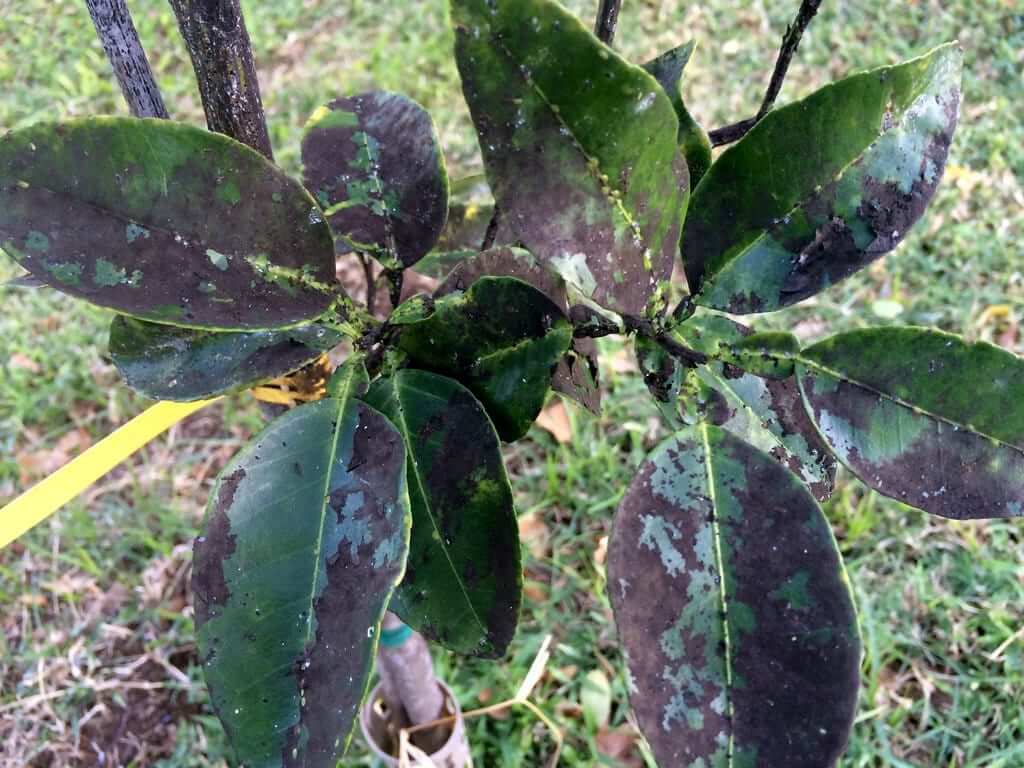
In citrus, sooty mold appears as a black, powdery coating that covers the leaves, shoots and fruits. This fungus develops on honeydew excreted by sucking insects that feed on plant sap, such as scale insects and aphids. Visible symptoms include leaves and fruits covered by a black, sticky coating, which can reduce the quality of the fruit and affect its marketability.


TEMPERATURE AND HUMIDITY
20°C - 30°C
70% - 90%

TRANSMISSION PATHS
Sucking insects, wind, direct contact with infected plants, human transportation, agricultural equipment.
Do you want to remove this disease? Choose how you want to treat it.

TREATMENTS
Chemical treatment
• SULFUR 80% [WG] P/P
• COPPER OXYCHLORIDE 35% (exp. in Cu) [WP] P/P
Authorized treatments in organic farming
• SULFUR 80% [WG] P/P
• COPPER OXYCHLORIDE 35% (exp. in Cu) [WP] P/P
Biological control
-
Recommendations
To prevent and control sooty mold in citrus, it is important to control the population of sucking insects, as they are the vectors of the fungus. Biological control methods can be used, such as the introduction of predatory insects, and specific insecticides can be applied when necessary. Additionally, it is important to keep the plant healthy through proper fertilization, regular pruning and controlled watering to avoid stress and reduce honeydew production.
Sponsored link
Sponsored link
Sponsored link


Sponsored link
Sponsored link
Sponsored link
Sponsored link


Sponsored link
Sponsored link
Effective against all types of fungi

Sponsored link
Sponsored link


Sponsored link
Sponsored link

Sponsored link
Sponsored link


Sponsored link
*The recommended treatments are still recommendations according to the databases of the authorities and at no time do they replace the guidelines established according to the legislation of each country
*The products shown are recommendations and are not our own products. As Amazon Associates, we earn revenue from purchases of recommended products.

TREATMENTS
Homemade treatments
There are no home treatments
Natural allies
Chemical treatments
There are no treatments for this disease. Treatments are directed at the insect vectors that transmit it. See insect treatments.

RECOMMENDATIONS

REPELLENT PLANTS
RECOMMENDED PRODUCTS TO ELIMINATE THIS PEST
Sponsored link
Sponsored link
Sponsored link
Sponsored link
Sponsored link
Sponsored link
Sponsored link
Sponsored link
Sponsored link
Effective against all types of fungi
Sponsored link
Sponsored link
Sponsored link
Sponsored link
Sponsored link
Sponsored link
Sponsored link
*The recommended treatments are still recommendations according to the databases of the authorities and at no time do they replace the guidelines established according to the legislation of each country
*The products shown are recommendations and are not our own products. As Amazon Associates, we earn revenue from purchases of recommended products.

Enjoy idMicrobe TOTALLY FREE, with no trial periods.


