

Potato Leaf Curl Virus
Potato Leafroll Virus (Plrv)
Pathogen:
Type:
Virus
Risk:
HIGH
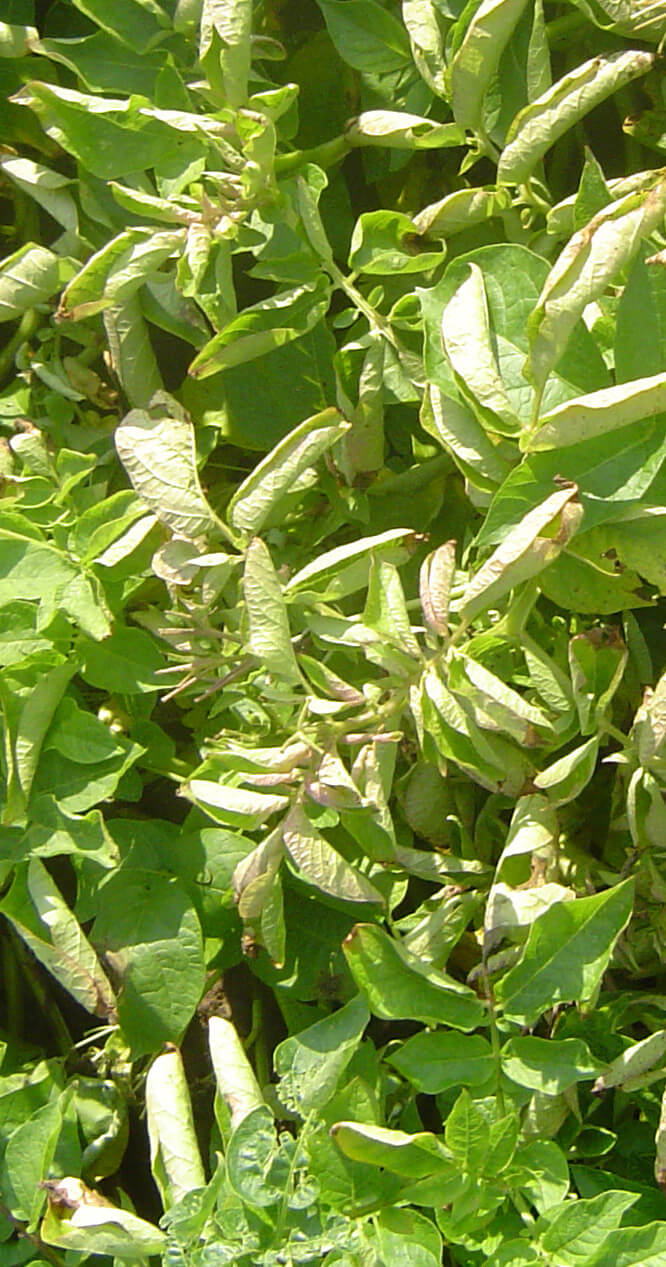
Patata
Virus
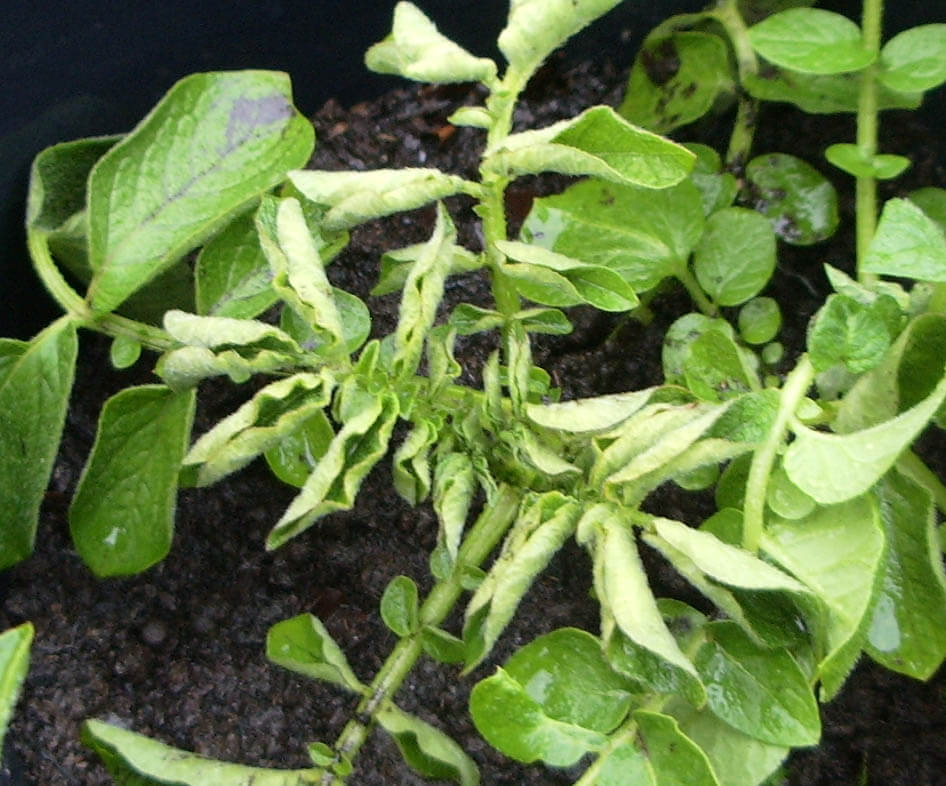

WHO CAUSES IT?
Potato leafroll virus (PLRV) is a virus that affects potato and other vegetable crops, causing the disease known as potato leafroll virus. The virus is transmitted mainly by the potato aphid (Myzus persicae) and other aphid vectors. Once the virus infects a plant, it spreads systematically through its tissues, leading to the manifestation of visible symptoms. The virus can also survive in infected tubers and potato plants that act as reservoirs.
.png)
SYMPTOMS
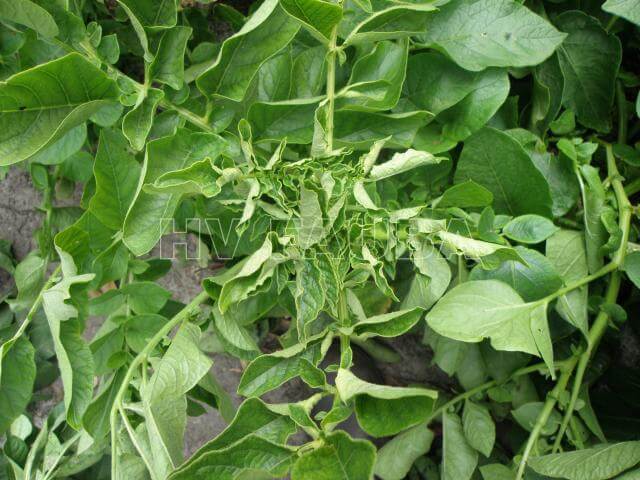
The disease caused by PLRV causes symptoms that affect both the development and production of the potato. Symptoms include upward curling of leaves, yellowing or reddening of leaves, and a reduction in plant growth and development. These symptoms reduce the productivity of the plant and the quality of the tubers.
• Upward curling of the leaves.
• Yellowing or redness of the leaves.
• Reduction in plant growth and development.
• Reduction in the quality and quantity of tubers.


TEMPERATURE AND HUMIDITY
15°C - 25°C
50% - 80%

TRANSMISSION PATHS
Aphid vectors, contact with infected tubers, infected plants.
Do you want to remove this disease? Choose how you want to treat it.

TREATMENTS
Chemical treatment
There are no effective treatments against viruses, the treatments are focused on combating the insect or vector carrying the virus (SEE AVAILABLE TREATMENTS AGAINST INSECTS)
Authorized treatments in organic farming
There are no effective treatments against viruses, the treatments are focused on combating the insect or vector carrying the virus (SEE AVAILABLE TREATMENTS AGAINST INSECTS)
Biological control
-
Recommendations
• Before considering the presence of the virus, it must be verified that the rolling of the leaves is not due to the presence of insects such as aphids, thrips or mites.
• Use potato varieties resistant or tolerant to PLRV.
• Control aphid vector populations using specific insecticides or biological methods.
• Carry out crop rotations to avoid the accumulation of vectors and viruses in the soil.
• Regularly inspect plants for early signs of infection and remove infected plants.
• Avoid reusing infected potato seeds and only use certified seeds.
• Apply integrated pest management measures to keep aphid populations under control.
Sponsored link
Sponsored link


Sponsored link
Sponsored link
Sponsored link


Sponsored link
Sponsored link
Effective against all types of fungi

Sponsored link


Sponsored link
Sponsored link

Sponsored link


Sponsored link
*The recommended treatments are still recommendations according to the databases of the authorities and at no time do they replace the guidelines established according to the legislation of each country
*The products shown are recommendations and are not our own products. As Amazon Associates, we earn revenue from purchases of recommended products.

TREATMENTS
Homemade treatments
There are no home treatments
Natural allies
Chemical treatments
There are no treatments for this disease. Treatments are directed at the insect vectors that transmit it. See insect treatments.

RECOMMENDATIONS

REPELLENT PLANTS
RECOMMENDED PRODUCTS TO ELIMINATE THIS PEST
Sponsored link
Sponsored link
Sponsored link
Sponsored link
Sponsored link
Sponsored link
Sponsored link
Effective against all types of fungi
Sponsored link
Sponsored link
Sponsored link
Sponsored link
Sponsored link
*The recommended treatments are still recommendations according to the databases of the authorities and at no time do they replace the guidelines established according to the legislation of each country
*The products shown are recommendations and are not our own products. As Amazon Associates, we earn revenue from purchases of recommended products.

Enjoy idMicrobe TOTALLY FREE, with no trial periods.


