

Corn Smut
Ustilago Maydis
Pathogen:
Type:
Fungus
Risk:
INTERMEDIATE
Maíz
Royas

WHO CAUSES IT?
Ustilago maydis is a basidiomycete fungus responsible for common corn smut. This pathogen begins as teliospores, which can survive in soil and plant debris for several years. When conditions are favorable, teliospores germinate and form basidiospores that infect young corn plants through wounds or stomata. Within the plant, the fungus grows intercellularly, forming a mass of mycelium that induces the formation of galls on various parts of the plant, such as leaves, stems, ears and roots. The galls fill with black spores (teliospores) that disperse when the galls break, thus completing the fungal cycle. This process can be repeated several times during the growing season if environmental conditions remain favorable.
.png)
SYMPTOMS
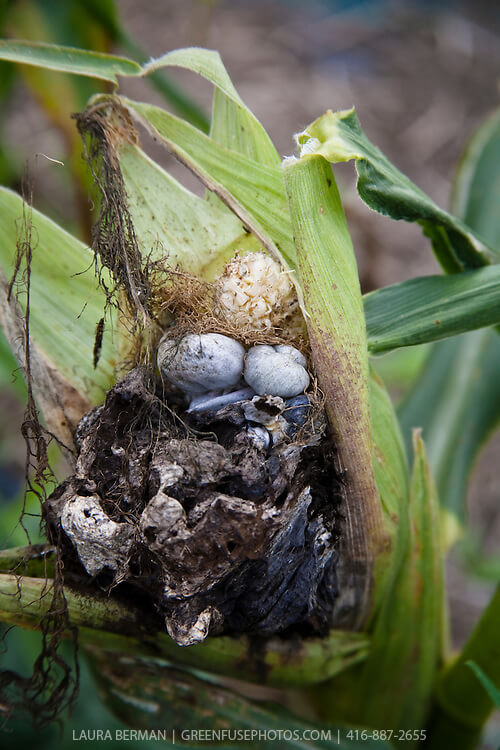
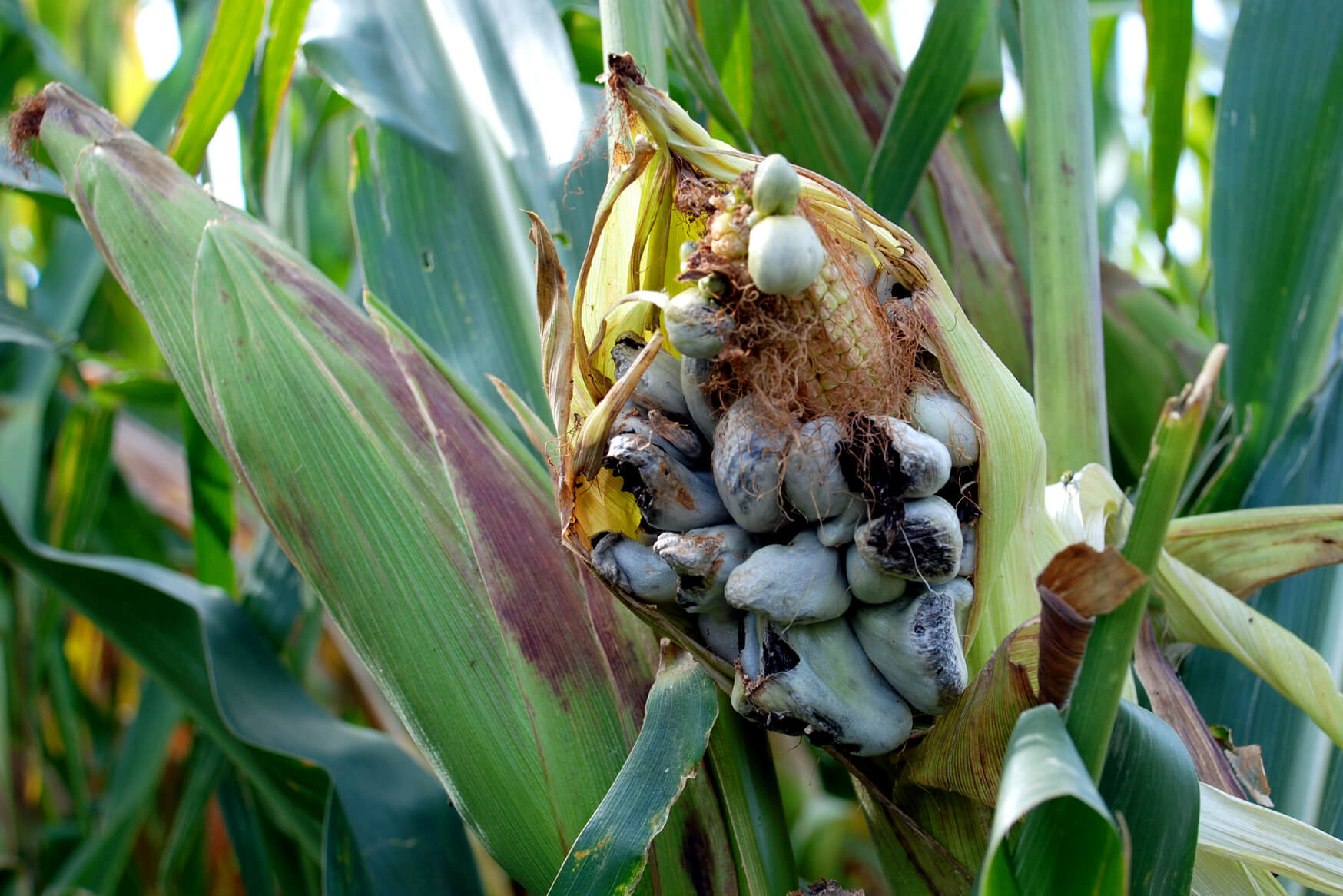
The disease known as common corn smut, caused by Ustilago maydis, affects corn, causing the formation of large grayish or silvery galls that eventually turn black due to the production of spores. These galls can appear anywhere on the plant, but are most common on the ears and leaves. Severe infection can weaken the plant and significantly reduce crop yield.
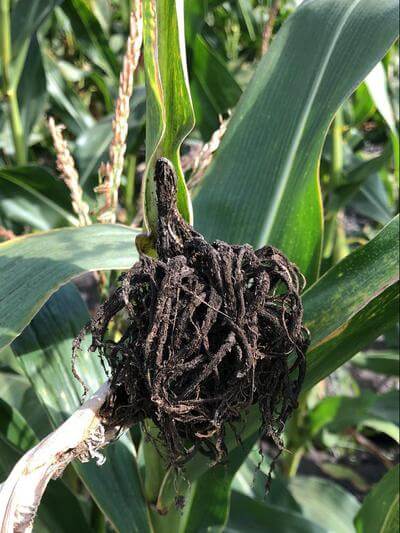
- Formation of grayish or silvery galls on leaves, stems, ears and roots.
- Transformation of the galls to a black color due to teliospores.
- Deformation of the ears and other affected parts of the plant.
- Reduction in crop yield due to loss of photosynthetic tissue.
- Loss of grain quality.
- Weakened and less vigorous plants.
- Increased susceptibility to other diseases and pests.
- Delay in the growth and development of infected plants.


TEMPERATURE AND HUMIDITY
20°C - 30°C
80% - 90%

TRANSMISSION PATHS
Teliospores in the soil, Remains of infected plants, Contaminated irrigation water, Agricultural tools, Wind, Insect vectors
Do you want to remove this disease? Choose how you want to treat it.

TREATMENTS
Chemical treatment
• TRITICONAZOLE 30% [FS] P/V
Authorized treatments in organic farming
-
Biological control
-
Recommendations
- Use corn varieties resistant to common smut, selected for their lower susceptibility to Ustilago maydis.
- Implement an appropriate crop rotation to reduce the accumulation of teliospores in the soil.
- Remove and destroy the remains of infected plants at the end of the season to reduce the source of inoculum.
- Avoid wounds on plants during agricultural management to minimize entry points for the fungus.
- Maintain adequate fertilization and soil management to ensure vigorous plants and less susceptible to infection.
- Apply preventive fungicide treatments in areas with a high historical incidence of the disease.
- Carry out constant monitoring of the crop for early detection of symptoms and implementation of control measures.
- Promote good soil drainage and avoid excess moisture that favors the development of the fungus.
Sponsored link
Sponsored link


Sponsored link
Sponsored link
Sponsored link


Sponsored link
Sponsored link
Effective against all types of fungi

Sponsored link


Sponsored link
Sponsored link

Sponsored link


Sponsored link
*The recommended treatments are still recommendations according to the databases of the authorities and at no time do they replace the guidelines established according to the legislation of each country
*The products shown are recommendations and are not our own products. As Amazon Associates, we earn revenue from purchases of recommended products.

TREATMENTS
Homemade treatments
There are no home treatments
Natural allies
Chemical treatments
There are no treatments for this disease. Treatments are directed at the insect vectors that transmit it. See insect treatments.

RECOMMENDATIONS

REPELLENT PLANTS
RECOMMENDED PRODUCTS TO ELIMINATE THIS PEST
Sponsored link
Sponsored link
Sponsored link
Sponsored link
Sponsored link
Sponsored link
Sponsored link
Effective against all types of fungi
Sponsored link
Sponsored link
Sponsored link
Sponsored link
Sponsored link
*The recommended treatments are still recommendations according to the databases of the authorities and at no time do they replace the guidelines established according to the legislation of each country
*The products shown are recommendations and are not our own products. As Amazon Associates, we earn revenue from purchases of recommended products.

Enjoy idMicrobe TOTALLY FREE, with no trial periods.


