

Pink Rot
Phytophthora Erythroseptica
Pathogen:
Type:
Oomycete
Risk:
INTERMEDIATE
Patata
Phytophthora

WHO CAUSES IT?
Phytophthora erythroseptica is an oomycete, often called water mold, that causes the disease known as pink rot in potato crops. This pathogen develops in humid soil conditions and moderate temperatures. It produces sporangia that can be dispersed through water and soil, infecting the roots and tubers of the potato. Once infection has started, the pathogen can survive in stored tubers and spread during the following growing season.
.png)
SYMPTOMS
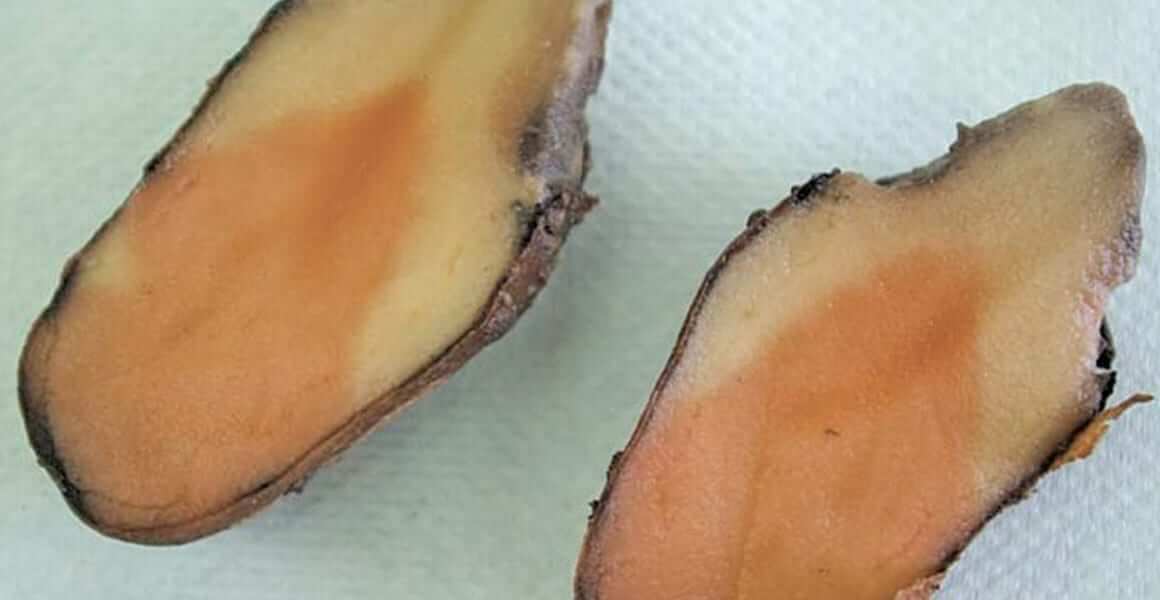
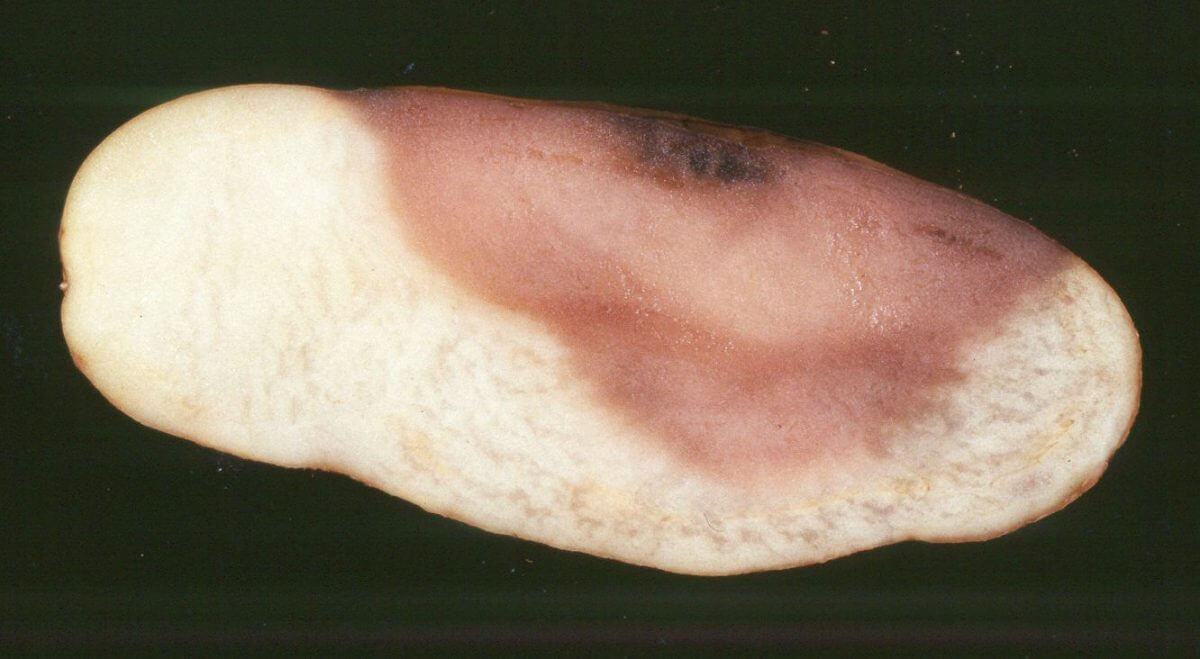
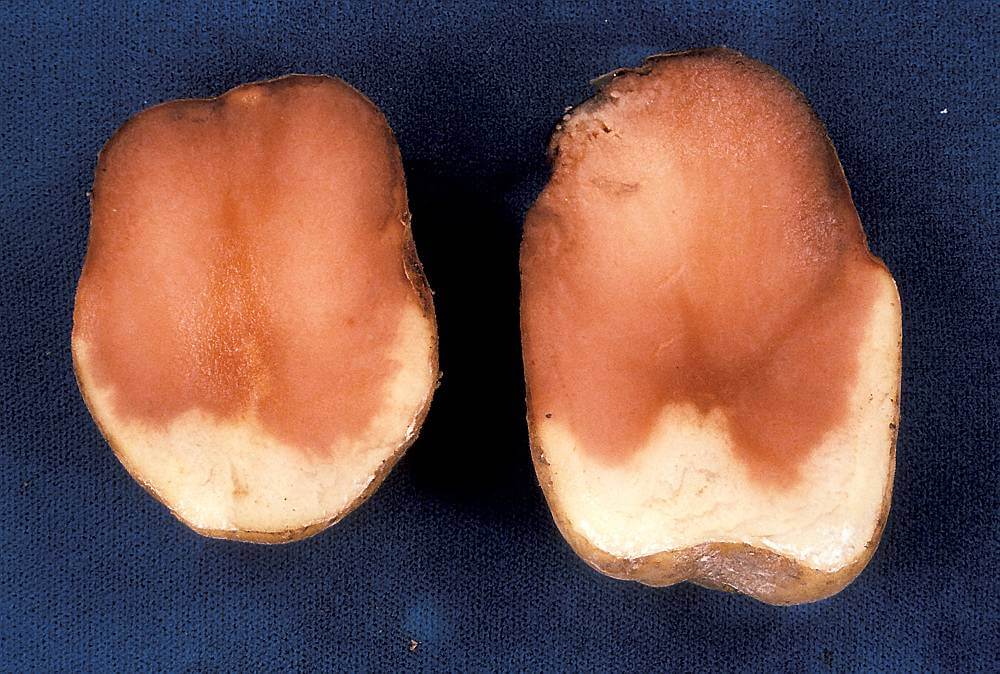
Pink rot produces symptoms mainly on potato tubers. Symptoms include pink Taches on the skin of the tubers, especially after being exposed to light or air. As the disease progresses, these Taches may turn brown and spread, causing the tubers to rot.
• Pink Taches on the skin of the tubers, which turn brown over time.
• Rotting of the tubers, causing tissue decomposition.
• Reduction in the quality and quantity of the harvest.


TEMPERATURE AND HUMIDITY
10°C - 25°C
70% - 100%

TRANSMISSION PATHS
Contaminated soil, contaminated irrigation water, contaminated growing tools, direct contact with infected plants or tubers.
Do you want to remove this disease? Choose how you want to treat it.

TREATMENTS
Chemical treatment
• POTASSIUM PHOSPHONATES 25.5% (Exp. as phosphorous acid) + AZOXYSTROBIN 6.25% [SC] P/V
• POTASSIUM PHOSPHONATES 51% (Exp. as phosphorous acid) [SL] P/V
• CUPRIC HYDROXIDE 50% (EXPR. IN CU) [WP] P/P
• METALAXIL 25% [WP] P/P
• COPPER OXYCHLORIDE 25% (EXPR. IN CU) [WG] P/P
• COPPER OXYCHLORIDE 30% (EXPR. IN CU) [WP] P/P
• COPPER OXYCHLORIDE 35% (exp. in Cu) [WG] P/P
• COPPER OXYCHLORIDE 38% (EXPR. IN CU) [SC] P/V
• COPPER OXYCHLORIDE 50% (EXPR. IN CU) [WG] P/P
• COPPER OXYCHLORIDE 52% (EXPR. IN CU) [SC] P/V
• CUPROCALCIC SULFATE 12.4% (EXPR. IN CU) [SC] P/V
• CUPROCALCIC SULFATE 20% (EXPR. IN CU) [WG] P/P
Authorized treatments in organic farming
• POTASSIUM PHOSPHONATES 51% (Exp. as phosphorous acid) [SL] P/V
• CUPRIC HYDROXIDE 50% (EXPR. IN CU) [WP] P/P
• COPPER OXYCHLORIDE 25% (EXPR. IN CU) [WG] P/P
• COPPER OXYCHLORIDE 30% (EXPR. IN CU) [WP] P/P
• COPPER OXYCHLORIDE 35% (exp. in Cu) [WG] P/P
• COPPER OXYCHLORIDE 38% (EXPR. IN CU) [SC] P/V
• COPPER OXYCHLORIDE 50% (EXPR. IN CU) [WG] P/P
• COPPER OXYCHLORIDE 52% (EXPR. IN CU) [SC] P/V
• CUPROCALCIC SULFATE 12.4% (EXPR. IN CU) [SC] P/V
• CUPROCALCIC SULFATE 20% (EXPR. IN CU) [WG] P/P
Biological control
• BACILLUS AMYLOLIQUEFACIENS subsp. plantarum (strain D747) 5% [SC] P/V
• TRICHODERMA ASPERELLUM (SCEA TV-1) 2.8% (1 X 10E10 CFU/KG) [WP] P/P
• TRICHODERMA ASPERELLUM (STRAIN T25) (1X10E8 CFU/G) 0.5% + TRICHODERMA ATROVIRIDE (STRAIN T11) (1X10E8 CFU/G) 0.5% [WG] P/P
Recommendations
• Use potato varieties resistant to Phytophthora erythroseptica.
• Avoid excess moisture in the soil through controlled irrigation and good drainage.
• Practice crop rotation to reduce the presence of sporangia in the soil.
• Apply specific fungicide treatments according to expert recommendations.
• Maintain good hygiene in cultivation and storage tools.
• Regularly monitor stored crops and tubers for early signs of the disease.
Sponsored link
Sponsored link


Sponsored link
Sponsored link
Sponsored link


Sponsored link
Sponsored link
Effective against all types of fungi

Sponsored link


Sponsored link
Sponsored link

Sponsored link


Sponsored link
*The recommended treatments are still recommendations according to the databases of the authorities and at no time do they replace the guidelines established according to the legislation of each country
*The products shown are recommendations and are not our own products. As Amazon Associates, we earn revenue from purchases of recommended products.

TREATMENTS
Homemade treatments
There are no home treatments
Natural allies
Chemical treatments
There are no treatments for this disease. Treatments are directed at the insect vectors that transmit it. See insect treatments.

RECOMMENDATIONS

REPELLENT PLANTS
RECOMMENDED PRODUCTS TO ELIMINATE THIS PEST
Sponsored link
Sponsored link
Sponsored link
Sponsored link
Sponsored link
Sponsored link
Sponsored link
Effective against all types of fungi
Sponsored link
Sponsored link
Sponsored link
Sponsored link
Sponsored link
*The recommended treatments are still recommendations according to the databases of the authorities and at no time do they replace the guidelines established according to the legislation of each country
*The products shown are recommendations and are not our own products. As Amazon Associates, we earn revenue from purchases of recommended products.

Enjoy idMicrobe TOTALLY FREE, with no trial periods.


