

Frambuesa
How to recognize and combat anthracnose in raspberries
Anthracnose
Fungus
Type:
Risk to the plant:
HIGH
Colletotrichum Sp.
Pathogen:
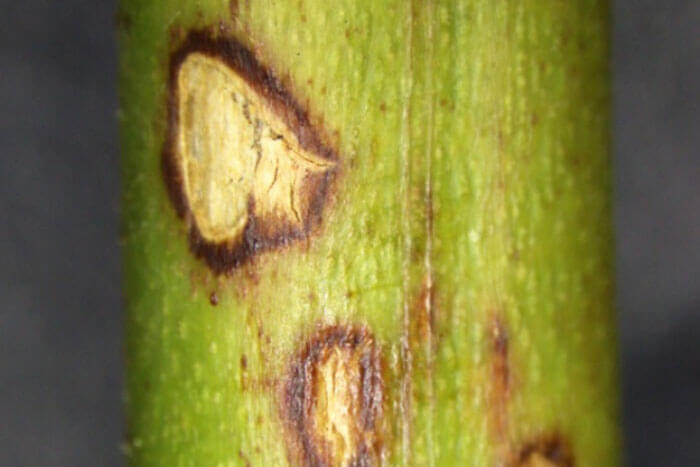
Antracnosis


WHO CAUSES IT?
Colletotrichum sp. is a genus of ascomycetous fungi known to cause anthracnose in various plants, including raspberries. Colletotrichum fungi develop spores known as conidia in structures called acervuli, which appear on the surface of infected tissues. These spores are dispersed primarily by splashing water and, upon landing on a susceptible surface, germinate and produce a germ tube that penetrates the plant cuticle. Once inside, the fungus forms a subcuticular mycelium that spreads and extracts nutrients from the host plant. Under conditions of high humidity, the acervuli produce conidia that perpetuate the infection through new sporulations. Furthermore, the pathogen can survive in plant debris and soil for long periods, emerging again when conditions are favorable.
.png)
SYMPTOMS
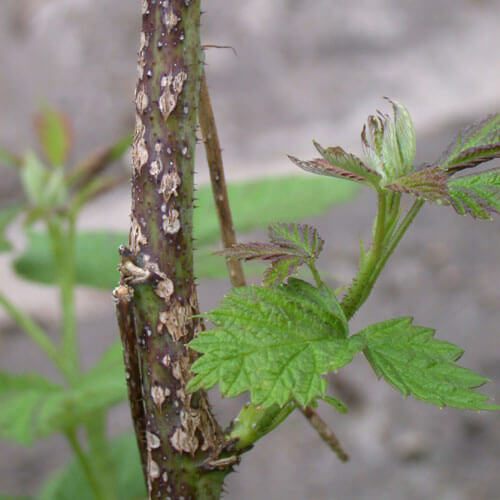
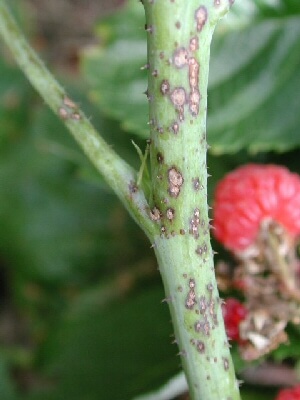
Raspberry anthracnose caused by Colletotrichum sp. It manifests itself mainly in the leaves, stems, flowers and fruits of the plant, seriously affecting its development and production. The first symptoms are usually small dark Taches on the leaves, which expand and fuse, causing extensive necrosis. Depressed and elongated lesions appear on the stems, which can cause the affected branches to wither. Infected fruits develop black, sunken Taches, which eventually decay them.
- Dark Taches on the leaves that expand and merge.
- Extensive necrosis in leaves.
- Depressed and elongated lesions on the stems.
- Withering of affected branches.
- Black and sunken Taches on the fruits.
- Decomposition of infected fruits.


DEVELOPMENT CONDITIONS
Temperature:
20°C - 28°C
Humidity:
80% - 100%

HOW IS IT SPREAD?
Irrigation water, rain splashes, contaminated tools, infected plant remains, infected seeds, vector insects

HOW TO ELIMINATE IT?
Home treatments
There are no home treatments
Natural allies
Chemical treatments
There are no treatments for this disease. Treatments are directed at the insect vectors that transmit it. See insect treatments.
RECOMMENDED PRODUCTS TO ELIMINATE THE PEST
Sponsored link
Sponsored link


Sponsored link
Sponsored link
Sponsored link


Sponsored link
Sponsored link
Effective against all types of fungi

Sponsored link


Sponsored link
Sponsored link

Sponsored link


Sponsored link

REPELLENT PLANTS

RECOMMENDATIONS
OTHER PESTS THAT MAY INTEREST YOU


DID YOU LIKE IT?
All this and much more, just a click away. TRY idMicrobe NOW!


