


Symptoms, treatments and recommendations for treating codling moth
Carpocapsa
Cydia Pomonella
Pathogen:
Type:
Insect
Risk:
CRITICAL
Melocotón, durazno o nectarina
Polillas

WHO CAUSES IT?
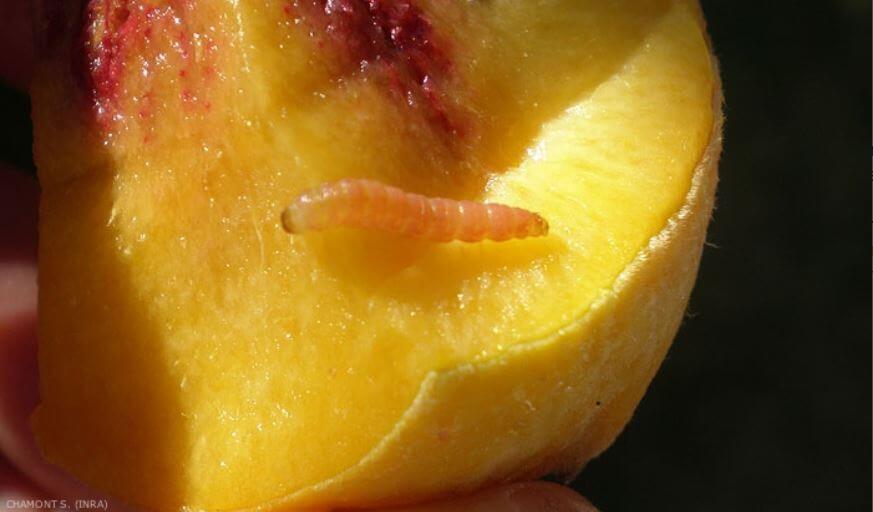
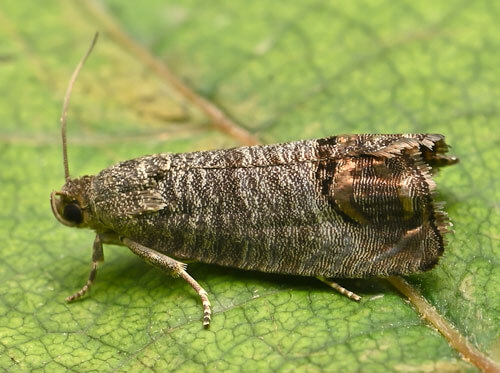
Cydia pomonella, known as the apple tree moth, is a lepidopteran of the Tortricidae family. Adults have a wingspan of about 18 mm and have dark gray forewings with wavy lines and a dark brown spot near the edge. Females lay their eggs individually on the surface of the fruits or leaves of peaches, peaches or nectarines. The eggs are white and oval, hatching between 6 and 10 days after being laid. The young larvae, white in color with a black head, quickly penetrate the fruits to feed on the pulp and seeds, causing severe damage. After feeding and developing through five larval stages, the mature larvae emerge from the fruit and pupate in the bark of trees or in the soil in a silk cocoon. This process may take several weeks, depending on weather conditions. In warm climates, Cydia pomonella can have two to three generations per year, increasing its ability to cause significant damage.

SYMPTOMS
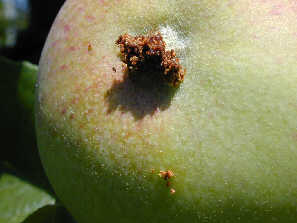
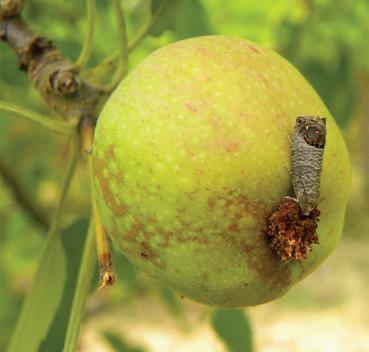
Codling moth causes significant damage to peaches, peaches and nectarines, affecting both the quality and quantity of the harvest. The larvae bore into the fruits to feed, which leads to the formation of tunnels and cavities filled with excrement and pulp remains.
- Small holes on the surface of the fruit.
- Presence of excrement and sawdust around the holes.
- Internal damage to the fruits, with visible tunnels.
- Premature fall of affected fruits.
- Reduction in the commercial value of the fruits.
- Greater susceptibility to secondary infections due to fungi and bacteria.


TEMPERATURE AND HUMIDITY
20-30°C
60-80%

TRANSMISSION ROUTES
Wind, movement of infected fruits, contaminated agricultural tools, nursery material, direct contact between plants
Do you want to remove this disease? Choose how you want to treat it.

TREATMENTS
Chemical treatments
• ACETAMIPRID 20% [SL] P/V
• CHLORANTRANILIPROL 20% [SC] P/V
• CHLORANTRANILIPROLE 5.17% [SC] P/V
• DELTAMETHRIN 1.5% [EW] P/V
• DELTAMETHRIN 1.57% [SC] P/V
• DELTAMETHRIN 10% [EC] P/V
• DELTAMETHRIN 2.5% [EC] P/V
• DELTAMETHRIN 2.5% [EW] P/V
• ESFENVALERATO 5% [EW] P/V
• LAMBDA CYHALOTHRIN 1.5% [CS] P/V
• LAMBDA CYHALOTHRIN 10% [CS] P/V
• LAMBDA CYHALOTHRIN 2.5% [WG] P/P
• LAMBDA CYHALOTHRIN 5% [EG] P/P
• SPINETORAM 25% [WG] P/P
• SPINOSAD 48% [SC] P/V
• CYDIA POMONELLA ATTRACTANT (Cairomonal attractant)
• Cydia pomonella (Pheromone)
Treatments allowed in organic farming
• LAMBDA CYHALOTHRIN 1.5% [CS] P/V
• LAMBDA CYHALOTHRIN 10% [CS] P/V
• LAMBDA CYHALOTHRIN 2.5% [WG] P/P
• LAMBDA CYHALOTHRIN 5% [EG] P/P
• SPINOSAD 48% [SC] P/V
• CYDIA POMONELLA ATTRACTANT (Cairomonal attractant)
• Cydia pomonella (Pheromone)
Biological treatments
• BACILLUS THURINGIENSIS AIZAWAI 50% [WG] P/P
• BACILLUS THURINGIENSIS KURSTAKI (ABTS-351 strain, 640 g/kg) (32 MILLION CLU/g) 64% [WP] P/P
• BACILLUS THURINGIENSIS KURSTAKI (ABTS-351 strain) (32 MILLION CLU/g) 54% (540 g/kg) [WG] P/P
• BACILLUS THURINGIENSIS KURSTAKI (ABTS-351 strain) (32 MILLION CLU/g) 54% [WG] P/P
• BACILLUS THURINGIENSIS KURSTAKI (ABTS-351 strain) 54[WG] P/P
• BACILLUS THURINGIENSIS KURSTAKI (STRAIN PB 54) (16x10E6 I.U./G) 8% [WP] P/P
• BACILLUS THURINGIENSIS KURSTAKI (STRAIN PB 54) (16x10E6 IU/G) 9.74% [SC] P/V
• BACILLUS THURINGIENSIS KURSTAKI (STRAIN PB 54) 32% (32 MILLION IU/G) [WP] P/P
• BACILLUS THURINGIENSIS KURSTAKI (Strain SA-11) 85% (32 MILLION IU/G) [WG] P/P
• CYDIA POMONELLA GRANULOVIRUS (MEXICAN ISOLATE) 90.9% (1X10e13 GRANULES/L) [SC] P/V
• CYDIA POMONELLA GRANULOVIRUS (R5 ISOLATE) 90.9% (1 X 10E13 GV/L) [SC] P/V
• CYDIA POMONELLA GRANULOVIRUS (CpGV V22) (3 X 10E13 GRANULES/L) 52% [SC] P/V
• STEINERNEMA FELTIAE (Parasitoid and predatory nematodes)
Recommendations
- Regularly monitor the crop with pheromone traps to detect the presence of adults.
- Release natural enemies such as Trichogramma spp. for biological pest control.
- Apply selective insecticides at critical moments in the pest's life cycle.
- Maintain good field hygiene, eliminating fallen fruits and pruning remains.
- Use protective nets around trees to prevent oviposition.
- Promote the use of varieties that are resistant or less susceptible to infestation.
- Implement crop rotation to interrupt the life cycle of the pest.
- Use sexual confusion treatments with pheromones to reduce mating.
- Promote a favorable environment for natural predators by diversifying plants in the field.
- Avoid excessive use of insecticides to avoid damaging the pest's natural enemies.





*The recommended treatments are recommendations based on the authorities' databases and in no way replace the guidelines established by the legislation of each country.
*Products shown are recommendations and not our own products. As Amazon Associates, we earn revenue from purchases of recommended products.

TREATMENTS
Homemade remedies
There are no home treatments
Natural allies
Chemical treatments
There are no treatments for this disease. Treatments are directed at the insect vectors that transmit it. See insect treatments.

RECOMMENDATIONS

REPELLENT PLANTS
EFFECTIVE PRODUCTS TO ELIMINATE THIS DISEASE
*The recommended treatments are recommendations based on the authorities' databases and in no way replace the guidelines established by the legislation of each country.
*Products shown are recommendations and not our own products. As Amazon Associates, we earn revenue from purchases of recommended products.



Explore more tools
Services
Contact
Legal
©2023 por ZeriMar Laboratoire. Todos los derechos reservados.