


Symptoms, treatments, and recommendations for treating downy mildew
Downy Mildew
Peronospora Sparsa
Pathogen:
Type:
Oomycete
Risk:
INTERMEDIATE

Mora
Mildiu
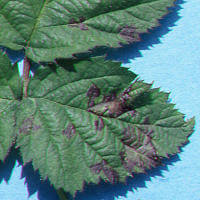

WHO CAUSES IT?
Peronospora sparsa is an oomycete fungus that causes the disease known as downy mildew in blackberry crops. This disease can cause significant damage to blackberry crops, affecting both the quality and yield of the fruit. The fungus mainly infects the leaves, stems and fruits of the plant, spreading rapidly in conditions of high humidity and moderate temperatures.

SYMPTOMS
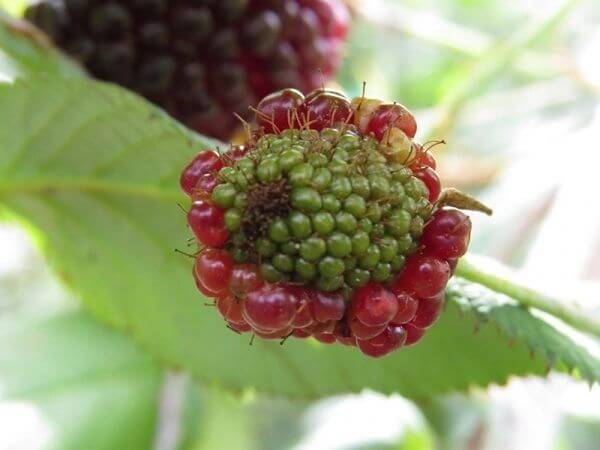
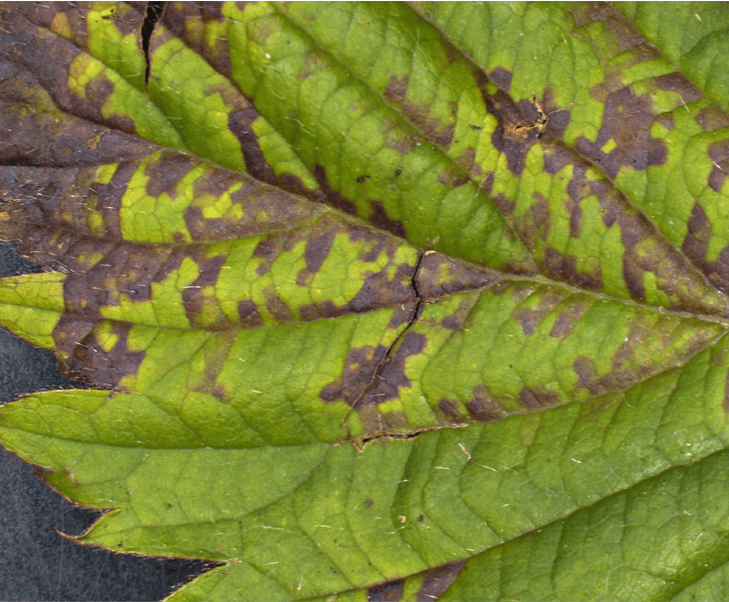
In blackberry crops, Peronospora sparsa causes a series of characteristic symptoms. These include the formation of yellow Taches on the leaves, which may be covered with white or grayish mycelium. Over time, these Taches can enlarge and merge, causing discoloration and wilting of the leaves. In addition, watery lesions can be observed on the stems and fruits, which may eventually rot if the infection is severe.


TEMPERATURE AND HUMIDITY
15°C - 25°C
80%

TRANSMISSION ROUTES
Wind, rain, infected plant material, contact between plants.
Do you want to remove this disease? Choose how you want to treat it.

TREATMENTS
Chemical treatments
• ORANGE OIL 60g/L [ME] P/S
• POTASSIUM PHOSPHONATES 51% (Exp. as phosphorous acid) [SL] P/V
• LAMINARIN 4.5% [SL] P/S
• COPPER OXYCHLORIDE 35% (exp. in Cu) [WG] P/P
• CUPROCALCIC SULFATE 12.4% (EXPR. IN CU) [SC] P/V
Treatments allowed in organic farming
• ORANGE OIL 60g/L [ME] P/S
• LAMINARIN 4.5% [SL] P/S
• COPPER OXYCHLORIDE 35% (exp. in Cu) [WG] P/P
• CUPROCALCIC SULFATE 12.4% (EXPR. IN CU) [SC] P/V
Biological treatments
-
Recommendations
To prevent and control downy mildew in blackberry crops, it is recommended to implement integrated pest management practices. This includes selecting resistant varieties, removing infected plant debris, controlling weeds, and using preventative fungicides. Additionally, it is important to maintain good air circulation around the plants to reduce humidity and avoid overwatering.





*The recommended treatments are recommendations based on the authorities' databases and in no way replace the guidelines established by the legislation of each country.
*Products shown are recommendations and not our own products. As Amazon Associates, we earn revenue from purchases of recommended products.

TREATMENTS
Homemade remedies
There are no home treatments
Natural allies
Chemical treatments
There are no treatments for this disease. Treatments are directed at the insect vectors that transmit it. See insect treatments.

RECOMMENDATIONS

REPELLENT PLANTS
EFFECTIVE PRODUCTS TO ELIMINATE THIS DISEASE
*The recommended treatments are recommendations based on the authorities' databases and in no way replace the guidelines established by the legislation of each country.
*Products shown are recommendations and not our own products. As Amazon Associates, we earn revenue from purchases of recommended products.



Explore more tools
Services
Contact
Legal
©2023 por ZeriMar Laboratoire. Todos los derechos reservados.