


Symptoms, treatments, and recommendations for treating cottony whitefly
Cottony Whitefly
Aleurothrixus Floccosus
Pathogen:
Type:
Insect
Risk:
MILD
Cítricos
Mosca blanca

WHO CAUSES IT?
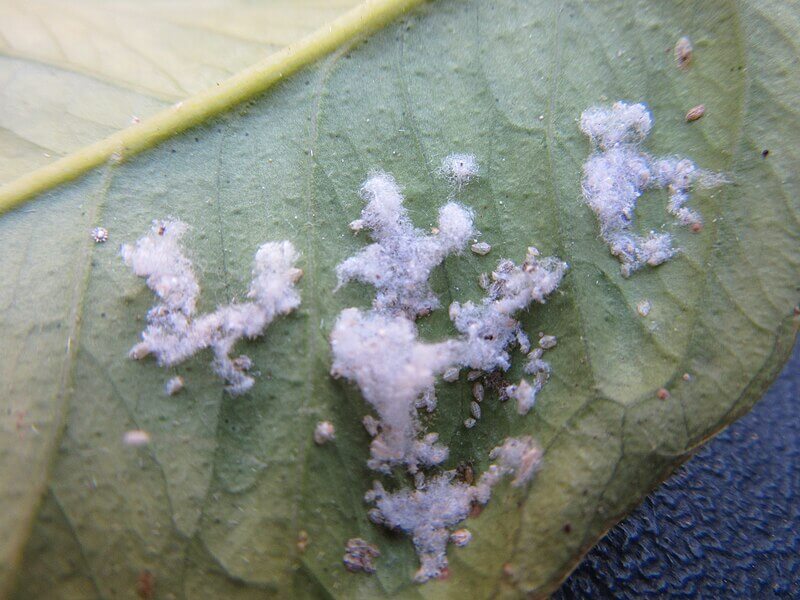
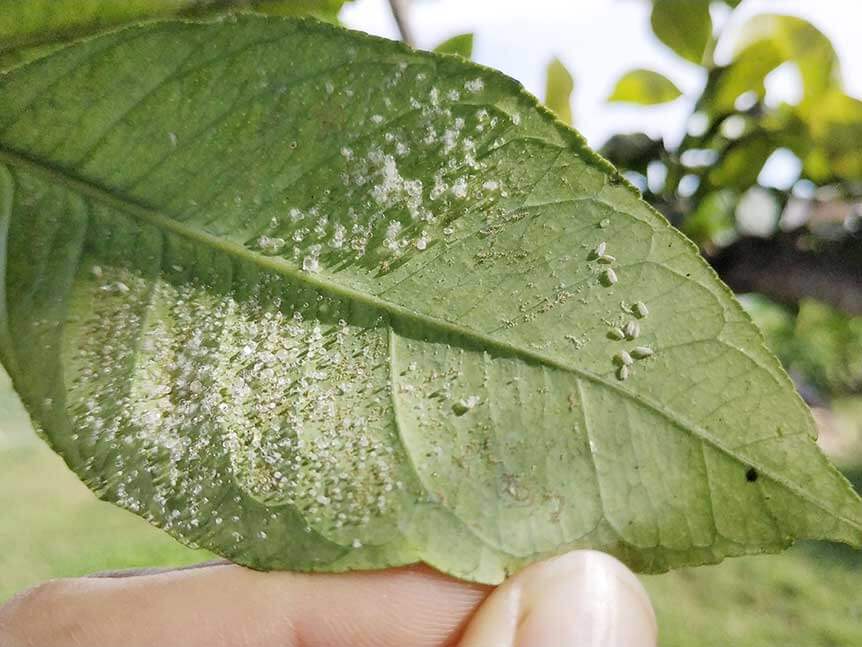
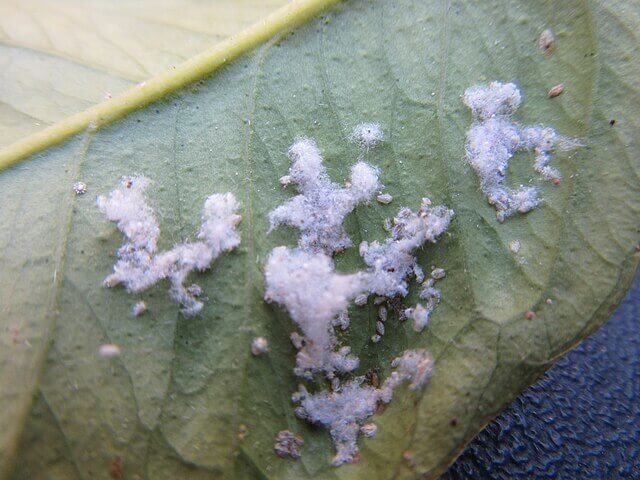
The cottony whitefly, also known as Bemisia tabaci, is a sucking insect that belongs to the Aleyrodidae family. It is characterized by its small body and powdery appearance due to a waxy coating on its surface. These insects feed on plant sap, causing direct damage and secreting honeydew that attracts sooty mold fungi, affecting plant photosynthesis.

SYMPTOMS
In citrus, the cottony whitefly can cause significant damage by feeding on the sap of leaves, shoots and fruits, causing yellowing, general weakening of the plant and reduced fruit production. The honeydew secreted by these insects can promote the growth of sooty mold fungi.
• Yellowing of the leaves.
• Loss of vigor and general weakening of the plant.
• Reduction in fruit production and quality.
• Presence of honeydew on the leaves, shoots and fruits.
• Appearance of black mold fungi in the affected parts.


TEMPERATURE AND HUMIDITY
20°C - 30°C
50% - 80%

TRANSMISSION ROUTES
Flight, direct contact, transport of plant material, wind.
Do you want to remove this disease? Choose how you want to treat it.

TREATMENTS
Chemical treatments
• ORANGE OIL 6% [SL] P/V
• ORANGE OIL 60g/L [ME] P/S
• PARAFFIN OIL (CAS [64742-46-7]) 79% [EC] P/V
• PARAFFIN OIL (CAS [64742-46-7]) 80% [EC] P/V
• PARAFFIN OIL (CAS [8042-47-5]) 54.6% [EW] P/V
• PARAFFIN OIL (CAS [8042-47-5]) 79% [EC] P/V
• PARAFFIN OIL (CAS [8042-47-5]) 83% [EC] P/V
• Paraffin oil 65.4% [EW] P/V
• PARAFFIN OIL 81.7% [EC] P/V
• PARAFFIN OIL 83% [EC] P/V
• ACETAMIPRID 20% [SL] P/V
• AZADIRACTIN 1% (AS AZADIRACTIN A) [EC] P/V
• Azadirachtin 2.6% (AS AZADIRACTIN A) [EC] P/V
• DELTAMETHRIN 1.5% [EW] P/V
• DELTAMETHRIN 1.57% [SC] P/V
• DELTAMETHRIN 10% [EC] P/V
• DELTAMETHRIN 2.5% [EC] P/V
• PHENPIROXIMATE 5.12% [SC] P/V
• LAMBDA CYHALOTHRIN 1.5% [CS] P/V
• LAMBDA CYHALOTHRIN 10% [CS] P/V
• LAMBDA CYHALOTHRIN 2.5% [WG] P/P
• MALTODEXTRIN 47.6% [SL] P/V
• Pyrethrins 12.9 g/l [EC] P/V
• PYRETHRINS 4.65% (as pyrethrum extract) [EC] P/V
• PYRIDABEN 10% [SC] P/V
• PYRIPROXIFEN 10% [EC] P/V
• POTASSIUM SALTS OF FATTY ACIDS C14-C20 48% [EW] P/V
• SPIROTETRAMAT 10% [SC] P/V
• SPIROTETRAMAT 15% [OD] P/V
• ADHESIVE TRAPS
• CHROMATIC TRAPS
Treatments allowed in organic farming
• ORANGE OIL 6% [SL] P/V
• ORANGE OIL 60g/L [ME] P/S
• PARAFFIN OIL (CAS [64742-46-7]) 79% [EC] P/V
• PARAFFIN OIL (CAS [64742-46-7]) 80% [EC] P/V
• PARAFFIN OIL (CAS [8042-47-5]) 54.6% [EW] P/V
• PARAFFIN OIL (CAS [8042-47-5]) 79% [EC] P/V
• PARAFFIN OIL (CAS [8042-47-5]) 83% [EC] P/V
• Paraffin oil 65.4% [EW] P/V
• PARAFFIN OIL 81.7% [EC] P/V
• PARAFFIN OIL 83% [EC] P/V
• AZADIRACTIN 1% (AS AZADIRACTIN A) [EC] P/V
• Azadirachtin 2.6% (AS AZADIRACTIN A) [EC] P/V
• LAMBDA CYHALOTHRIN 1.5% [CS] P/V
• LAMBDA CYHALOTHRIN 10% [CS] P/V
• LAMBDA CYHALOTHRIN 2.5% [WG] P/P
• Pyrethrins 12.9 g/l [EC] P/V
• PYRETHRINS 4.65% (as pyrethrum extract) [EC] P/V
• PYRIDABEN 10% [SC] P/V
• POTASSIUM SALTS OF FATTY ACIDS C14-C20 48% [EW] P/V
• ADHESIVE TRAPS
• CHROMATIC TRAPS
Biological treatments
• AKANTHOMYCES MUSCARIUS (strain Ve6) 14.8%
• AMBLYDROMALUS LIMONICUS
• AMBLYSEIUS SWIRSKII
• ENCARSIA FORMOSA
• ERETMOCERUS EREMICUS
• HETERORHABDITIS BACTERIOPHORA
• ISARIA FUMOSOROSEA (Apopka 97 strain) 20% [WG] P/P
• Lecanicillium muscarium (Strain Ve6) (1x10E10 spores/g) 14.8% [WG] P/P
• PAECILOMYCES FUMOSOROSEUS (STRAIN FE 9901) 18% (2 X 10 E9 CFU/G) [WP] P/P
• METARHIZIUM BRUNNEUM strain Ma 43 10.5% [OD] P/V
• BEAUVERIA BASSIANA (STRAIN ATCC 74040) 2.3% (2.3X10E7 VIABLE SPORES/ML) [OD] P/V
• BEAUVERIA BASSIANA (GHA STRAIN) 10.7% (2.26X10E13 CONIDIAS/L) [OD] P/V
• BEAUVERIA BASSIANA (GHA STRAIN) 22% (4.4 x 10E10 CONIDIAS/G) [WP] P/P
• BEAUVERIA BASSIANA strain PPRI 5339 8% (8 X 10E12 CFU/L) [OD] P/P
• CHRYSOPERLA CARNEA
• CORDYCEPS FUMOSOROSEA (strain FE 9901) 18%
• DELPHASTUS CATALINAE
• TRANSEIUS MONTDORIENSIS
Recommendations
• Regular inspection of plants to detect early infestations.
• Use of sticky traps to monitor the presence of whiteflies.
• Application of specific insecticides to control populations.
• Introduction of natural enemies such as parasitoid wasps and ladybugs.
• Avoid continued use of the same insecticides to prevent resistance.





*The recommended treatments are recommendations based on the authorities' databases and in no way replace the guidelines established by the legislation of each country.
*Products shown are recommendations and not our own products. As Amazon Associates, we earn revenue from purchases of recommended products.

TREATMENTS
Homemade remedies
There are no home treatments
Natural allies
Chemical treatments
There are no treatments for this disease. Treatments are directed at the insect vectors that transmit it. See insect treatments.

RECOMMENDATIONS

REPELLENT PLANTS
EFFECTIVE PRODUCTS TO ELIMINATE THIS DISEASE
*The recommended treatments are recommendations based on the authorities' databases and in no way replace the guidelines established by the legislation of each country.
*Products shown are recommendations and not our own products. As Amazon Associates, we earn revenue from purchases of recommended products.



Explore more tools
Services
Contact
Legal
©2023 por ZeriMar Laboratoire. Todos los derechos reservados.