


Symptoms, treatments, and recommendations for treating leaf dwarf virus
Leaf Dwarf Virus
Onion Yellow Dwarf Virus (Oydv)
Pathogen:
Type:
Virus
Risk:
HIGH
Cebolla
Virus


WHO CAUSES IT?
Onion Yellow Dwarf Virus (OYDV) is a phytopathogenic virus that affects onion crops, causing the disease known as leaf dwarf virus. The virus is a member of the genus Potyvirus and is characterized by its ability to infect multiple varieties of onion and other related crops. It is mainly transmitted by aphids, sap-sucking insects, which spread the virus from one plant to another. OYDV can persist in host plants and can infect both commercial crops and wild plants.

SYMPTOMS
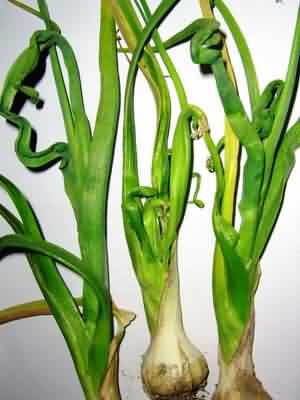
Onion leaf stunt virus causes a number of symptoms, including yellowing and curling of the leaves. The bulbs may be small and misshapen, and the overall growth of the plant is affected, reducing its size and vigor.
• Yellowing of the leaves and yellow bands along them.
• Curling and narrowing of the leaves.
• Small, deformed and poor quality bulbs.
• Significant reduction in the productivity and quality of the harvest.


TEMPERATURE AND HUMIDITY
20 ºC - 30°C
60% - 80%

TRANSMISSION ROUTES
Aphids, infected propagation material.
Do you want to remove this disease? Choose how you want to treat it.

TREATMENTS
Chemical treatments
There are no effective treatments against viruses, the treatments are focused on combating the insect or vector carrying the virus (SEE AVAILABLE TREATMENTS AGAINST INSECTS)
Treatments allowed in organic farming
There are no effective treatments against viruses, the treatments are focused on combating the insect or vector carrying the virus (SEE AVAILABLE TREATMENTS AGAINST INSECTS)
Biological treatments
-
Recommendations
The control and prevention of this disease requires comprehensive management that includes cultural practices and the use of resistant varieties.
• Use onion varieties that are resistant or tolerant to the virus.
• Control aphid populations to limit virus transmission.
• Rotate crops to reduce the presence of host plants for the virus.
• Disinfect cultivation tools to avoid transmission between plants.
• Maintain a regular monitoring program to detect the disease early.
• Avoid prolonged storage of infected bulbs.





*The recommended treatments are recommendations based on the authorities' databases and in no way replace the guidelines established by the legislation of each country.
*Products shown are recommendations and not our own products. As Amazon Associates, we earn revenue from purchases of recommended products.

TREATMENTS
Homemade remedies
There are no home treatments
Natural allies
Chemical treatments
There are no treatments for this disease. Treatments are directed at the insect vectors that transmit it. See insect treatments.

RECOMMENDATIONS

REPELLENT PLANTS
EFFECTIVE PRODUCTS TO ELIMINATE THIS DISEASE
*The recommended treatments are recommendations based on the authorities' databases and in no way replace the guidelines established by the legislation of each country.
*Products shown are recommendations and not our own products. As Amazon Associates, we earn revenue from purchases of recommended products.



Explore more tools
Services
Contact
Legal
©2023 por ZeriMar Laboratoire. Todos los derechos reservados.