


Symptoms, treatments and recommendations for treating white tip of onions
White Tip Of Onion
Phytophthora Porri
Pathogen:
Type:
Oomycete
Risk:
CRITICAL
Cebolla
Phytophthora

WHO CAUSES IT?
Phytophthora porri is an oomycete that causes the disease known as onion white tip. This pathogen is characterized by producing sporangia that become mobile zoospores, which can swim in soil water in search of roots of susceptible plants to infect. It can also produce oospores, which are resistance structures that survive in unfavorable conditions in the soil or in plant remains. Phytophthora porri can proliferate in cool, moist conditions, causing rapid and widespread infection of onions.

SYMPTOMS
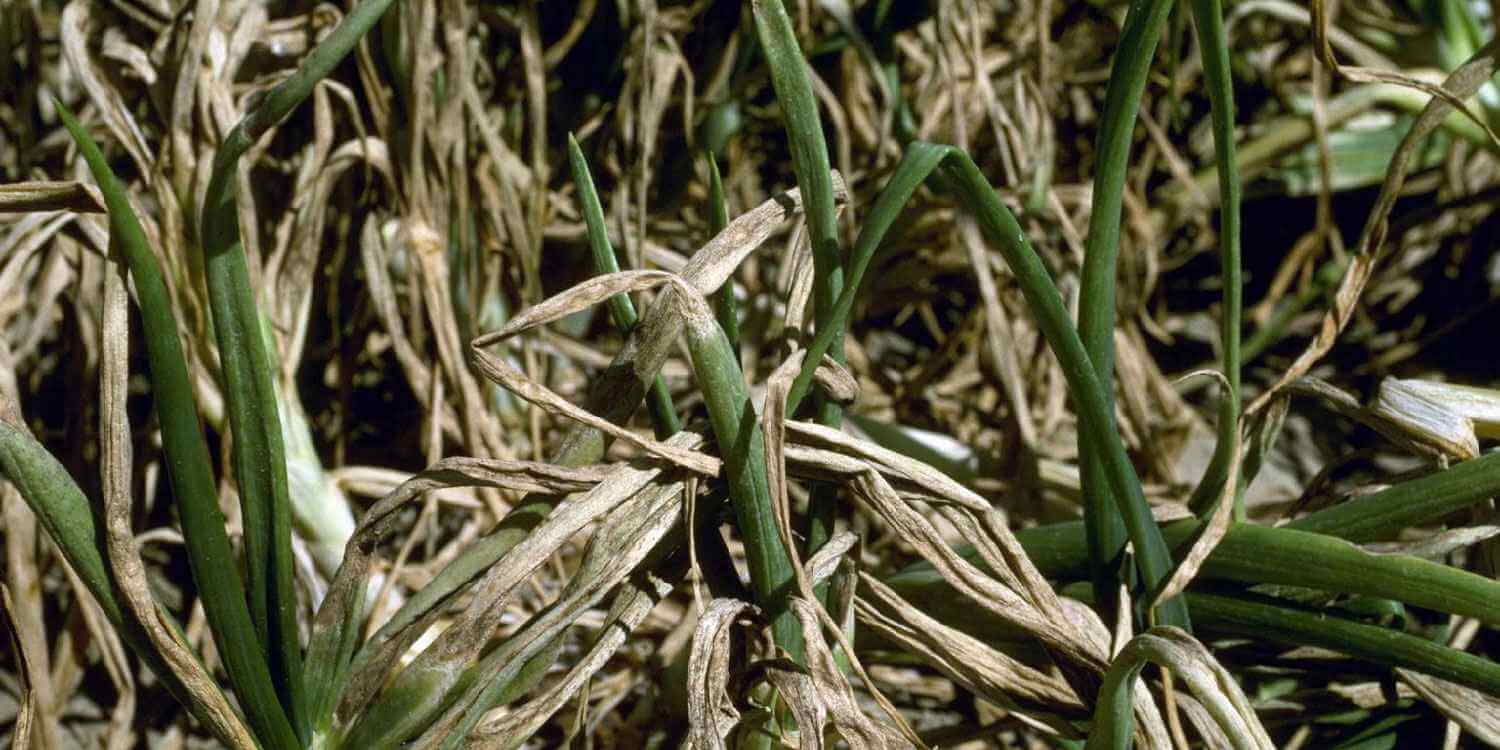
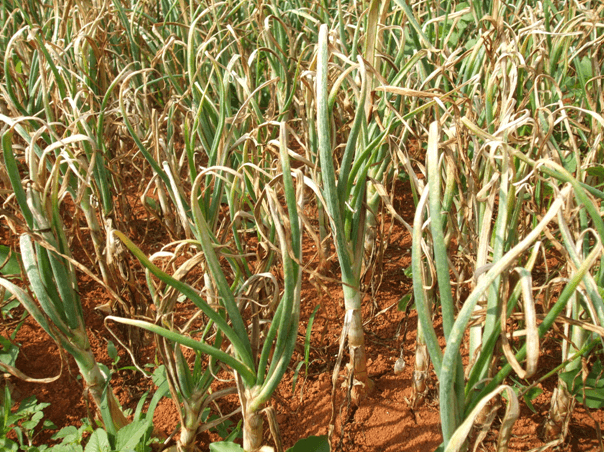
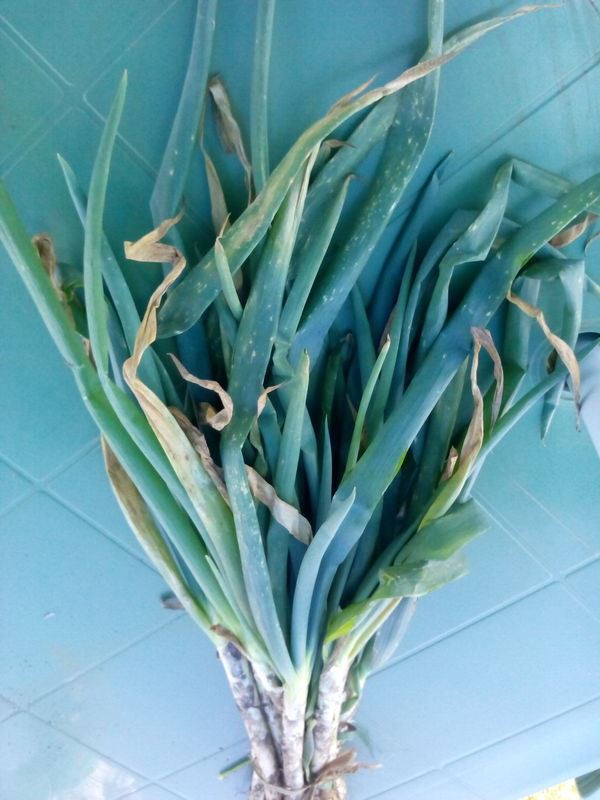
This fungus causes the formation of small light-colored dots on the leaf. The Taches increase rapidly in size when there is humidity and cold (< 15º C). The lesions are basically located on the upper half of the leaf, often surrounded by what is sometimes a moist area of considerable size and green color. After some time, the affected areas and the tips of the leaves wither. White color on the tips of the leaves is a typical characteristic of a Phytophthora infection. This fungus can cause rot when the crop is stored.
• Chlorotic or whitish Taches on the leaves, especially at the tip.
• Necrotic lesions that may extend to the base of the leaves.
• Plant rot and general weakness.
• Reduction in the quality and quantity of the harvest.


TEMPERATURE AND HUMIDITY
15 ºC - 25ºC
80% - 100%

TRANSMISSION ROUTES
Water, soil, remains of infected plants.
Do you want to remove this disease? Choose how you want to treat it.

TREATMENTS
Chemical treatments
• AZOXISTROBIN 25% [SC] P/V
• CUPRIC HYDROXIDE 20% (EXPR. IN CU) [WG] P/P
• CUPRIC HYDROXIDE 25% (EXPR. IN CU) [WG] P/P
• COPPER OXYCHLORIDE 38% (EXPR. IN CU) [SC] P/V
• COPPER OXYCHLORIDE 50% (EXPR. IN CU) [WP] P/P
• PIRACLOSTROBIN 6.7% + BOSCALIDE 26.7% ( ) [WG] P/P
• CUPROCALCIC SULFATE 20% (EXPR. IN CU) [WP] P/P
• CUPROCALCIC SULFATE 20% [WP] P/P
Treatments allowed in organic farming
• CUPRIC HYDROXIDE 20% (EXPR. IN CU) [WG] P/P
• CUPRIC HYDROXIDE 25% (EXPR. IN CU) [WG] P/P
• COPPER OXYCHLORIDE 38% (EXPR. IN CU) [SC] P/V
• COPPER OXYCHLORIDE 50% (EXPR. IN CU) [WP] P/P
• CUPROCALCIC SULFATE 20% (EXPR. IN CU) [WP] P/P
• CUPROCALCIC SULFATE 20% [WP] P/P
Biological treatments
-
Recommendations
• Maintain good irrigation management to avoid excess water in the field.
• Practice crop rotation to reduce pathogen pressure in the soil.
• Use onion varieties resistant or tolerant to Phytophthora porri.
• Improve soil drainage to avoid water accumulation.
• Eliminate and destroy infected plants and plant residues.
• Apply specific fungicides according to local recommendations.
• Carry out regular monitoring to detect the disease in time.





*The recommended treatments are recommendations based on the authorities' databases and in no way replace the guidelines established by the legislation of each country.
*Products shown are recommendations and not our own products. As Amazon Associates, we earn revenue from purchases of recommended products.

TREATMENTS
Homemade remedies
There are no home treatments
Natural allies
Chemical treatments
There are no treatments for this disease. Treatments are directed at the insect vectors that transmit it. See insect treatments.

RECOMMENDATIONS

REPELLENT PLANTS
EFFECTIVE PRODUCTS TO ELIMINATE THIS DISEASE
*The recommended treatments are recommendations based on the authorities' databases and in no way replace the guidelines established by the legislation of each country.
*Products shown are recommendations and not our own products. As Amazon Associates, we earn revenue from purchases of recommended products.



Explore more tools
Services
Contact
Legal
©2023 por ZeriMar Laboratoire. Todos los derechos reservados.