


Symptoms, treatments, and recommendations for treating ear rot
Cob Rot
Fusarium Spp. (Giberella Spp.)
Pathogen:
Type:
Fungus
Risk:
HIGH

Maíz
Fusariosis

WHO CAUSES IT?
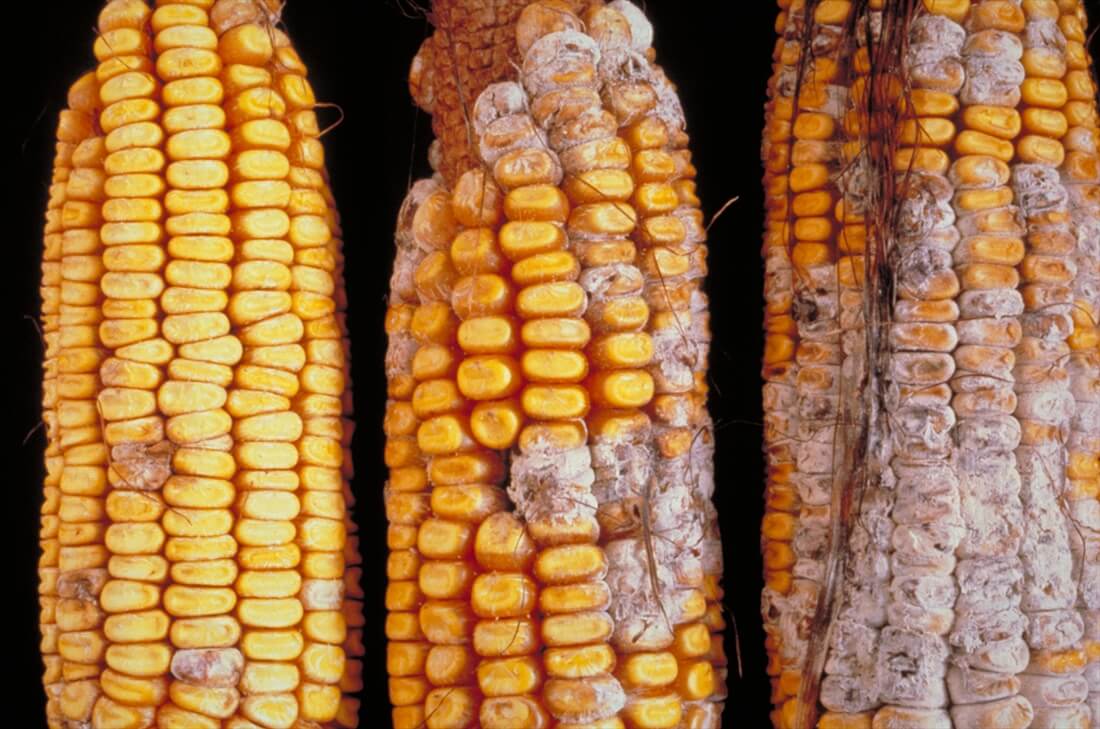
Fusarium spp. (Giberella spp.) is a group of fungi that cause ear rot in corn. These pathogens have a sexual phase (Giberella) and an asexual phase (Fusarium), which allows them great flexibility and persistence in different environments. Fungi survive in crop remains and soil as chlamydospores, which are resistant structures. When environmental conditions are favorable, such as the presence of humidity and moderate temperatures, chlamydospores germinate and produce mycelium, which can directly infect the roots and stems of corn. The mycelium spreads through the plant tissue, producing conidial spores that are dispersed by wind, water, and agricultural tools. Spores can infect the plant during flowering, penetrating through wounds caused by insects or mechanical conditions. At the end of the growing cycle, the fungus once again forms resistant structures to survive during the winter and thus begin the cycle again in the following season.

SYMPTOMS
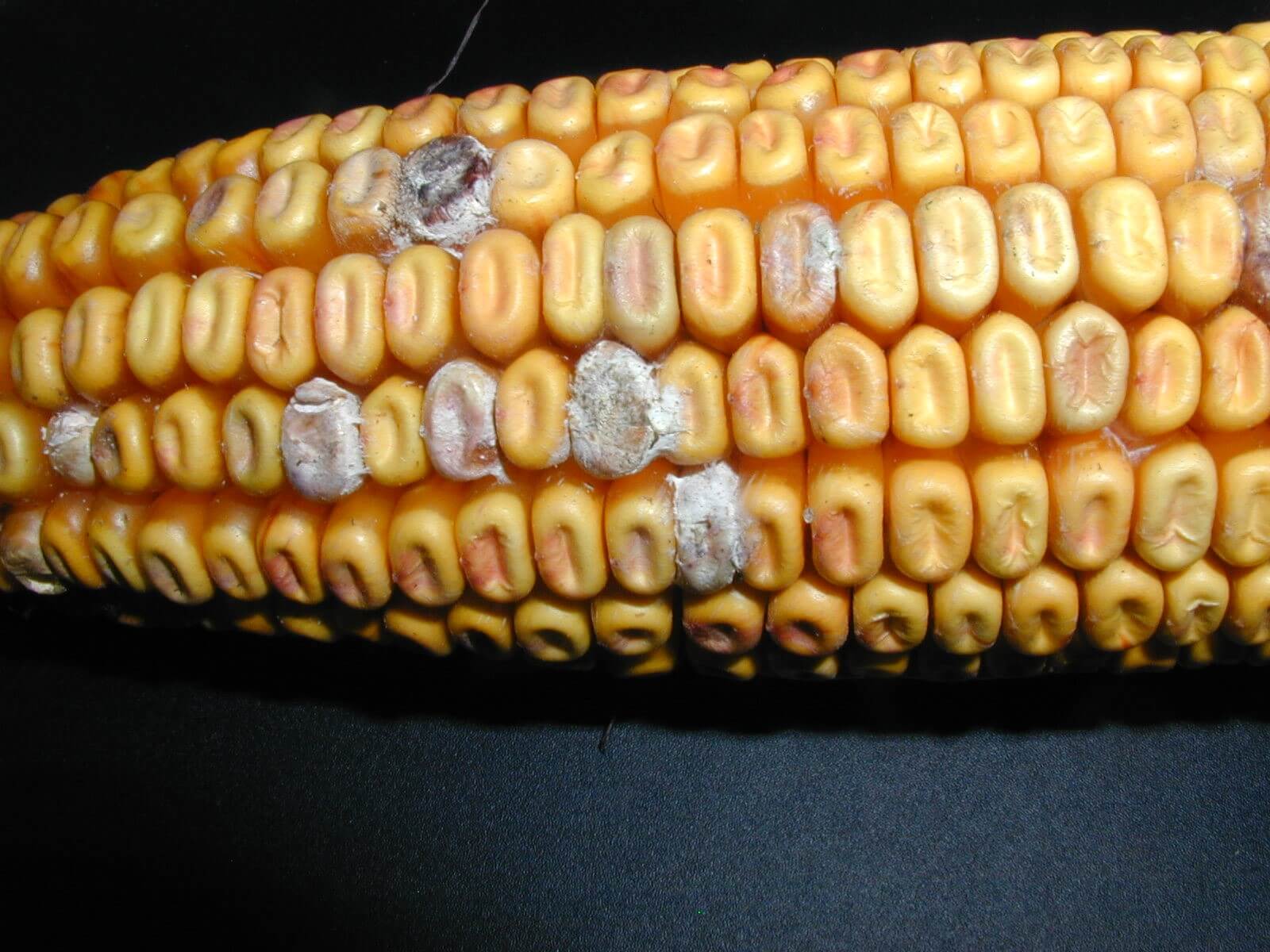
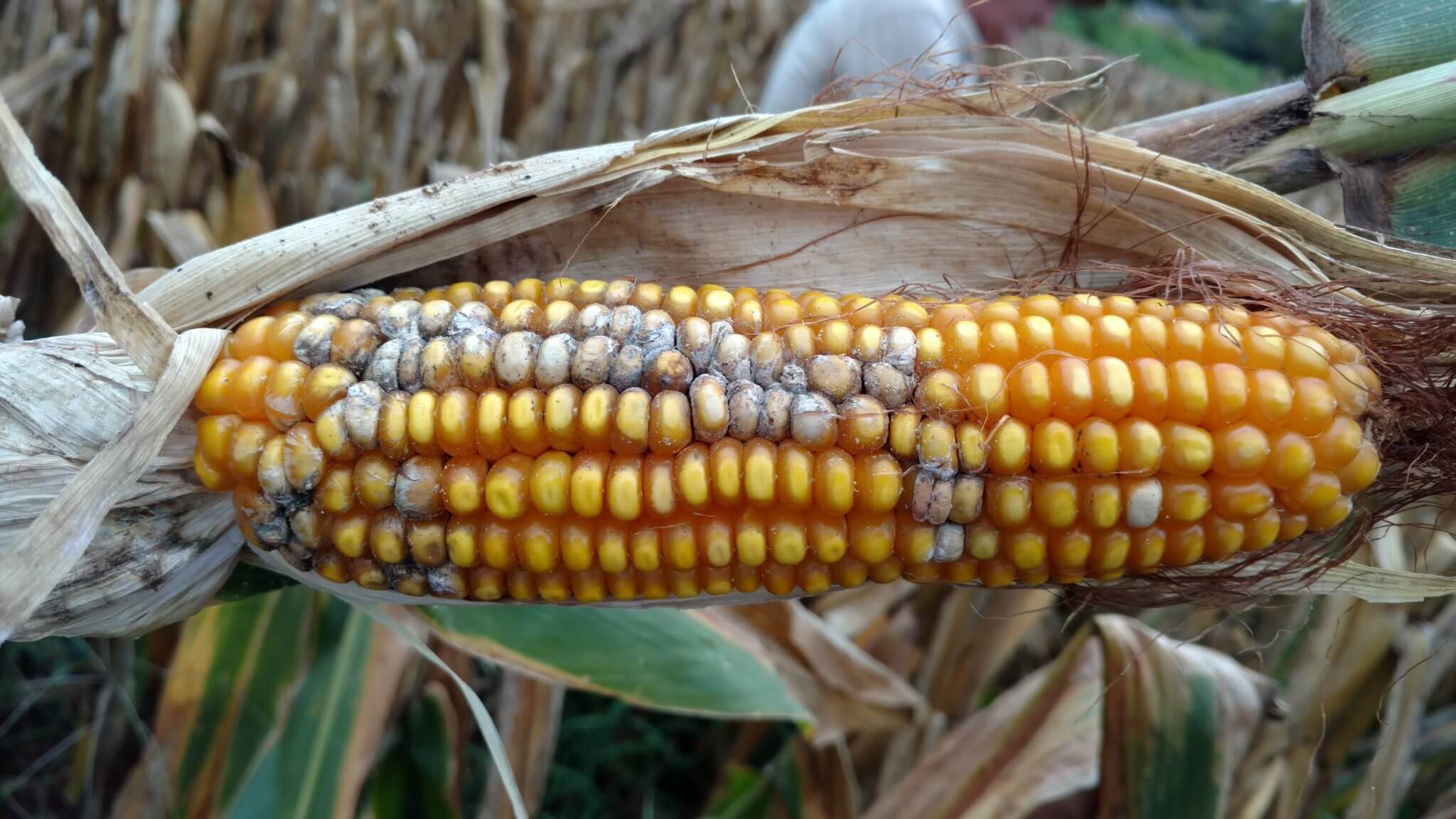
Ear rot in corn is a disease that primarily affects the ears and is characterized by visible decay and significantly reduced yield. Symptoms of this disease include:
- Soft rot on the ears
- Presence of white or pink mycelium in the grains
- Discoloration and shrinkage of grains
- Formation of sclerotia on the ears
- Bad smell on the affected ears
- General weakening of the plant


TEMPERATURE AND HUMIDITY
20°C - 30°C
70% - 90%

TRANSMISSION ROUTES
Contaminated soil, infected crop residues, contaminated seeds, agricultural tools, irrigation water, wind
Do you want to remove this disease? Choose how you want to treat it.

TREATMENTS
Chemical treatments
• AZOXISTROBIN 25% [SC] P/V
• POTASSIUM HYDROGEN CARBONATE 85% [SG] P/P
Treatments allowed in organic farming
• POTASSIUM HYDROGEN CARBONATE 85% [SG] P/P
Biological treatments
• TRICHODERMA ASPERELLUM (STRAIN T25) (1X10E8 CFU/G) 0.5% + TRICHODERMA ATROVIRIDE (STRAIN T11) (1X10E8 CFU/G) 0.5% [WG] P/P
Recommendations
- Use certified seeds treated with fungicides to reduce the initial presence of the pathogen.
- Implement crop rotations with species not susceptible to Fusarium to reduce the accumulation of the pathogen in the soil.
- Improve soil drainage to avoid excessive humidity conditions that favor the development of the fungus.
- Apply specific fungicides during the critical stages of the crop, following technical recommendations.
- Carry out constant monitoring of the crop for early detection of symptoms and apply timely control measures.
- Remove and destroy infected crop residues to reduce the source of inoculum.
- Avoid excessive use of nitrogen in fertilization, as it can favor Fusarium infection.
- Implement tillage practices that favor the decomposition of plant residues and reduce the survival of the fungus in the soil.
- Use Fusarium-resistant corn varieties when available.
- Control insect pests that can cause wounds on plants, facilitating the entry of the fungus.





*The recommended treatments are recommendations based on the authorities' databases and in no way replace the guidelines established by the legislation of each country.
*Products shown are recommendations and not our own products. As Amazon Associates, we earn revenue from purchases of recommended products.

TREATMENTS
Homemade remedies
There are no home treatments
Natural allies
Chemical treatments
There are no treatments for this disease. Treatments are directed at the insect vectors that transmit it. See insect treatments.

RECOMMENDATIONS

REPELLENT PLANTS
EFFECTIVE PRODUCTS TO ELIMINATE THIS DISEASE
*The recommended treatments are recommendations based on the authorities' databases and in no way replace the guidelines established by the legislation of each country.
*Products shown are recommendations and not our own products. As Amazon Associates, we earn revenue from purchases of recommended products.



Explore more tools
Services
Contact
Legal
©2023 por ZeriMar Laboratoire. Todos los derechos reservados.