


Symptoms, treatments, and recommendations for treating leaf blight
Leaf Blight Or Leaf Spot
Alternaria Cucumerina
Pathogen:
Type:
Fungus
Risk:
HIGH
Calabaza
Alternariosis

WHO CAUSES IT?
Alternaria cucumerina is a phytopathogenic fungus that affects various cucurbits, including pumpkin. This fungus spreads primarily through conidial spores that are released into the environment and carried by wind, rainwater, and contaminated agricultural tools. Spores germinate in the presence of adequate humidity and temperatures, penetrating plant tissues through stomata, wounds or directly through the cuticle. Once inside the plant tissue, the fungus develops mycelium that spreads, producing new spores that can infect other parts of the plant or nearby plants. Alternaria cucumerina can survive on plant remains in the soil and on infected seeds, which facilitates its perpetuation and dispersal. Under favorable conditions of high humidity and moderate to warm temperatures, the fungus can complete its infectious cycle rapidly, causing severe epidemics.

SYMPTOMS
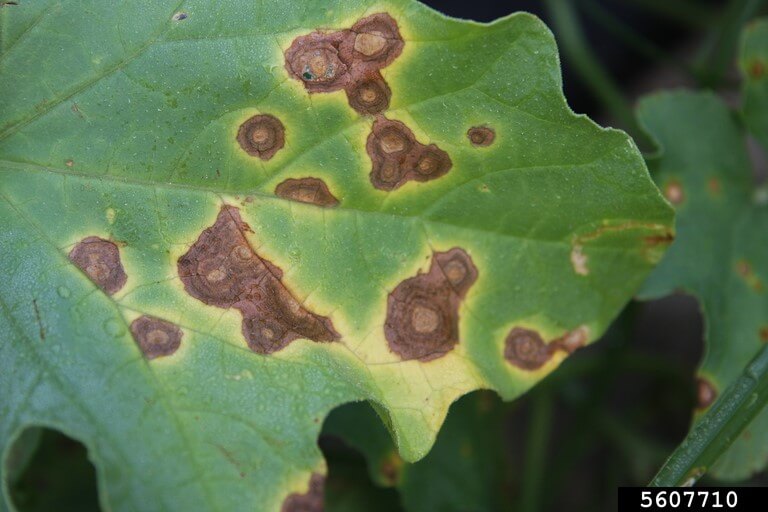
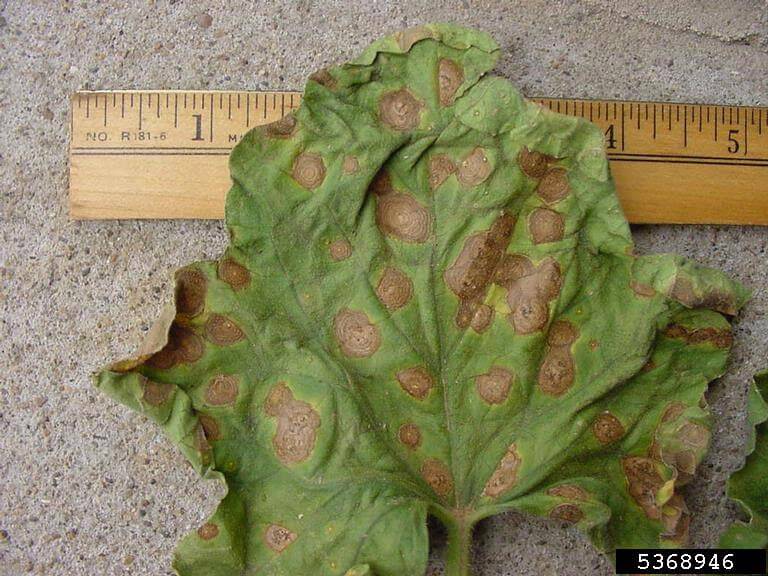
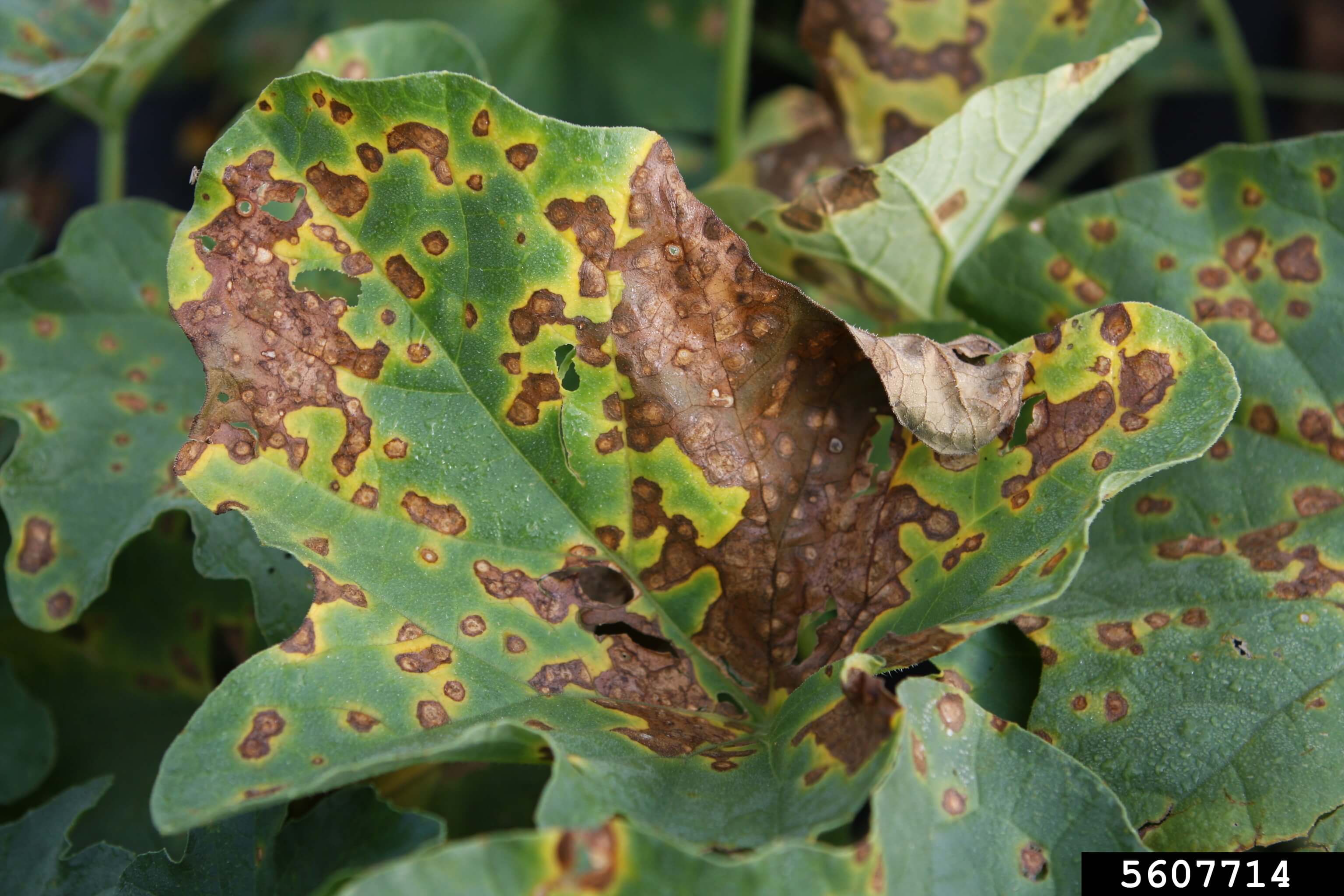
The disease known as leaf blight or leaf spot, caused by Alternaria cucumerina, is highly harmful to pumpkins. This fungus causes the appearance of necrotic Taches on the leaves, which reduces the photosynthetic capacity of the plant and can lead to premature defoliation. Severe infections result in general weakening of the plant, affecting growth and fruit production.
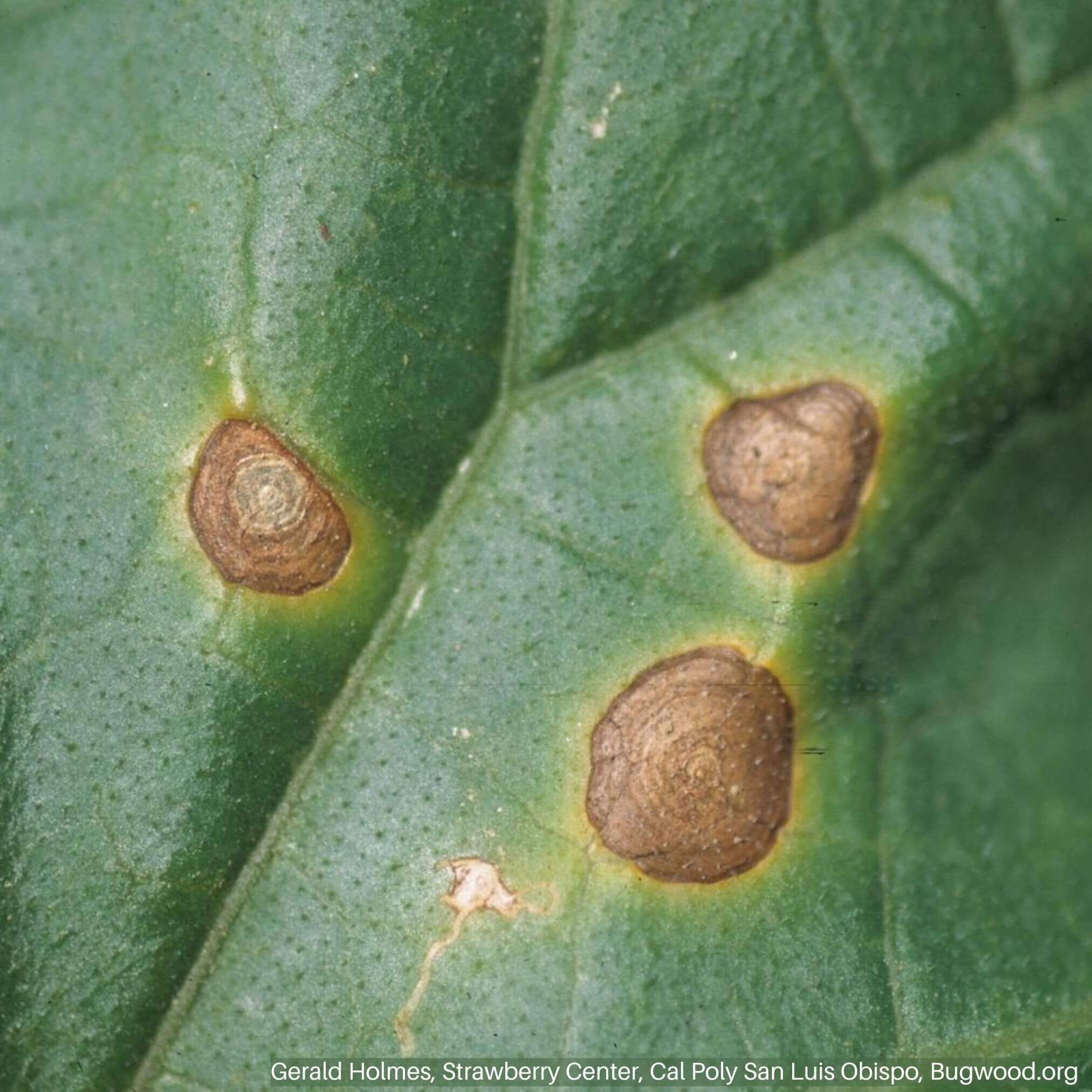
- Brown to black Taches on the leaves, surrounded by a yellow halo
- Circular lesions with concentric rings on the leaves
- Premature defoliation
- Reduction in the size and quality of the fruits
- Lesions on stems and petioles
- Decrease in plant vigor


TEMPERATURE AND HUMIDITY
20°C - 30°C
70% - 90%

TRANSMISSION ROUTES
Wind, rainwater, contaminated agricultural tools, infected seeds, contact with infected plants
Do you want to remove this disease? Choose how you want to treat it.

TREATMENTS
Chemical treatments
• CUPRIC HYDROXIDE 13.6% (EXPR. IN CU) + COPPER OXYCHLORIDE 13.6% (EXPR. IN CU) [SC] P/V
• COPPER OXYCHLORIDE 30% (EXPR. IN CU) [WP] P/P
• COPPER OXYCHLORIDE 35% (EXPR. IN CU) [WG] P/P
• COPPER OXYCHLORIDE 37.5% (EXPR. IN CU) [WG] P/P
• COPPER OXYCHLORIDE 38% (EXPR. IN CU) [SC] P/V
• COPPER OXYCHLORIDE 50% (EXPR. IN CU) [WG] P/P
• COPPER OXYCHLORIDE 50% (EXPR. IN CU) [WP] P/P
• COPPER OXYCHLORIDE 52% (EXPR. IN CU) [SC] P/V
• CUPROUS OXIDE 75% (EXPR. IN CU) [WG] P/P
• CUPROCALCIC SULFATE 20% (EXPR. IN CU) [WG] P/P
• CUPROCALCIC SULFATE 20% (EXPR. IN CU) [WP] P/P
• CUPROCALCIC SULFATE 20% (EXPR. IN CU) [WG] P/P
• CUPROCALCIC SULFATE 20% [WP] P/P
• TRIBASIC COPPER SULFATE 19% (EXPR. IN CU) [SC] P/V
• TRIBASIC COPPER SULFATE 40% (EXPR. IN CU) [WG] P/P
Treatments allowed in organic farming
• CUPRIC HYDROXIDE 13.6% (EXPR. IN CU) + COPPER OXYCHLORIDE 13.6% (EXPR. IN CU) [SC] P/V
• COPPER OXYCHLORIDE 30% (EXPR. IN CU) [WP] P/P
• COPPER OXYCHLORIDE 35% (EXPR. IN CU) [WG] P/P
• COPPER OXYCHLORIDE 37.5% (EXPR. IN CU) [WG] P/P
• COPPER OXYCHLORIDE 38% (EXPR. IN CU) [SC] P/V
• COPPER OXYCHLORIDE 50% (EXPR. IN CU) [WG] P/P
• COPPER OXYCHLORIDE 50% (EXPR. IN CU) [WP] P/P
• COPPER OXYCHLORIDE 52% (EXPR. IN CU) [SC] P/V
• CUPROUS OXIDE 75% (EXPR. IN CU) [WG] P/P
• CUPROCALCIC SULFATE 20% (EXPR. IN CU) [WG] P/P
• CUPROCALCIC SULFATE 20% (EXPR. IN CU) [WP] P/P
• CUPROCALCIC SULFATE 20% (EXPR. IN CU) [WG] P/P
• CUPROCALCIC SULFATE 20% [WP] P/P
• TRIBASIC COPPER SULFATE 19% (EXPR. IN CU) [SC] P/V
• TRIBASIC COPPER SULFATE 40% (EXPR. IN CU) [WG] P/P
Biological treatments
-
Recommendations
- Use certified, pathogen-free seeds to avoid the introduction of the fungus.
- Implement crop rotation with non-host plants to reduce the accumulation of the fungus in the soil.
- Remove and destroy the remains of infected plants at the end of the season to reduce inoculum.
- Maintain adequate separation between plants to facilitate air circulation and reduce humidity.
- Apply preventive and curative fungicides according to specific recommendations for pumpkin cultivation.
- Avoid sprinkler irrigation that increases foliar humidity and favors spore germination.
- Regularly monitor crops to detect disease symptoms early and take immediate action.
- Implement integrated management practices that include the use of resistant varieties if available.
- Clean and disinfect agricultural tools and equipment to prevent the spread of the fungus.





*The recommended treatments are recommendations based on the authorities' databases and in no way replace the guidelines established by the legislation of each country.
*Products shown are recommendations and not our own products. As Amazon Associates, we earn revenue from purchases of recommended products.

TREATMENTS
Homemade remedies
There are no home treatments
Natural allies
Chemical treatments
There are no treatments for this disease. Treatments are directed at the insect vectors that transmit it. See insect treatments.

RECOMMENDATIONS

REPELLENT PLANTS
EFFECTIVE PRODUCTS TO ELIMINATE THIS DISEASE
*The recommended treatments are recommendations based on the authorities' databases and in no way replace the guidelines established by the legislation of each country.
*Products shown are recommendations and not our own products. As Amazon Associates, we earn revenue from purchases of recommended products.



Explore more tools
Services
Contact
Legal
©2023 por ZeriMar Laboratoire. Todos los derechos reservados.