

Plantas decorativas de jardín y/o interior
How to recognize and combat cankers on decorative garden and/or indoor plants
Canker
Fungi and bacteria
Type:
Risk to the plant:
HIGH
Fungi and bacteria
Pathogen:
Cancros


WHO CAUSES IT?
Cankers on plants can be caused by various phytopathogenic fungi and bacteria. Among the most common fungi involved are *Nectria spp.*, *Cytospora spp.* and *Botryosphaeria spp.*, while among the bacteria *Pseudomonas syringae* and *Erwinia amylovora* stand out. These organisms establish themselves in woody tissues through wounds, prunings or natural fissures. Once they penetrate, they begin to multiply locally, affecting living cells and destroying tissues by releasing toxins or degradative enzymes. Fungi usually form resistance structures such as spores, which remain viable for long periods in plant remains or soil. When environmental conditions are favorable—temperate temperatures and high humidity—these structures germinate and produce mycelium that expands through the internal tissues, causing necrosis. In the case of bacteria, they spread quickly through splashes of water or contaminated tools, colonizing vascular tissues and causing cell collapse. The infection is perpetuated with new cycles of spread from active or latent cankers.
.png)
SYMPTOMS
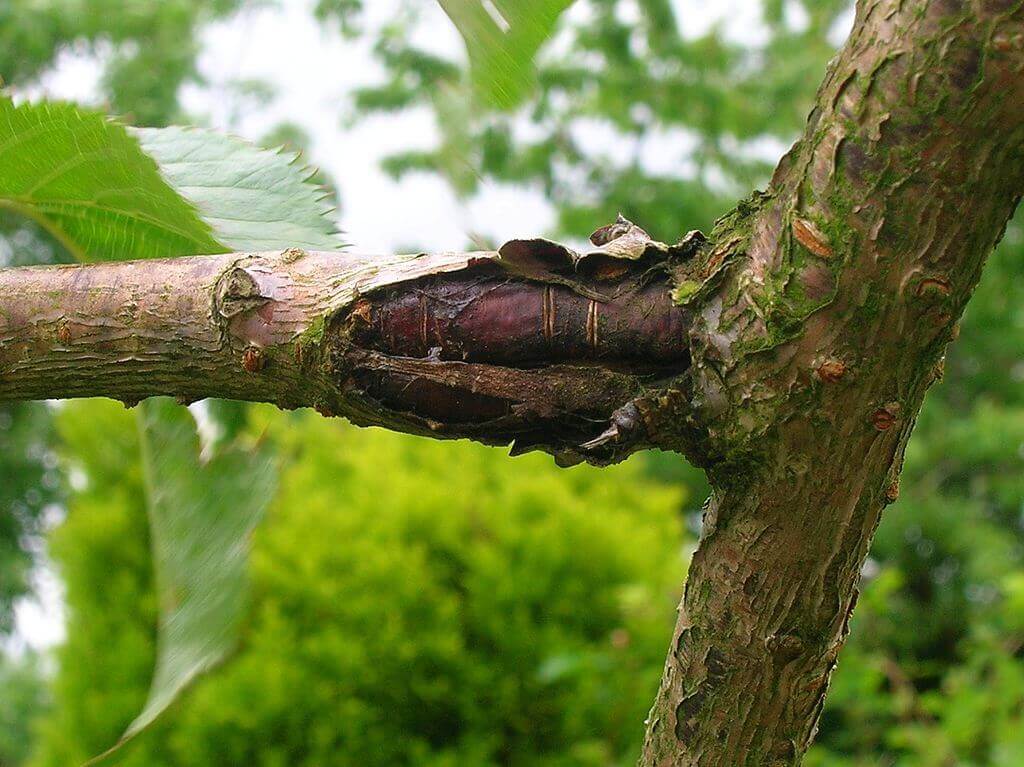
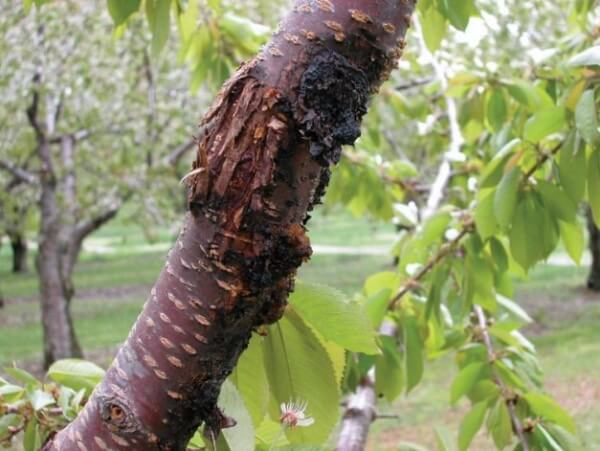
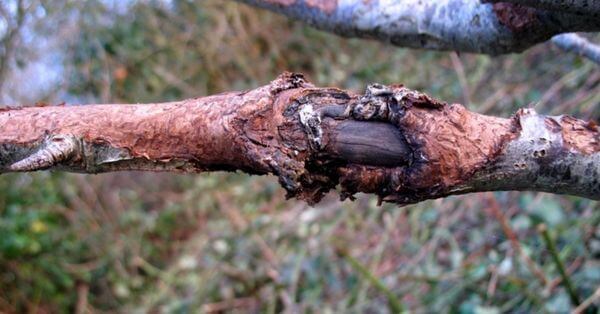
The disease that these fungi and bacteria cause in plants manifests itself mainly in branches, trunks and stems. The pathology is characterized by the formation of sunken, dark lesions with defined edges, known as cankers, which interrupt the flow of sap and progressively weaken the structure of the plant. These lesions usually expand in a circular or elongated shape, causing cracking of the bark and resinous or watery exudations. In advanced cases, the affected tissue becomes completely necrotic, causing the dieback of branches and, if the canker surrounds the main stem, it can cause the total death of the plant.
Dark spots on the stem or branches, gummy or watery exudates, longitudinal cracks in the bark, dieback of branches, general decay of the plant, bulges or deformations in affected areas, detachment of the bark, reduction in vegetative vigor.


DEVELOPMENT CONDITIONS
Temperature:
18°C – 28°C
Humidity:
70% – 95%

HOW IS IT SPREAD?
Rain, wind, contaminated tools, vector insects, contact between plants, irrigation water, infected pruning remains

HOW TO ELIMINATE IT?
Home treatments
There are no home treatments
Natural allies
Chemical treatments
There are no treatments for this disease. Treatments are directed at the insect vectors that transmit it. See insect treatments.
RECOMMENDED PRODUCTS TO ELIMINATE THE PEST
Sponsored link
Sponsored link


Sponsored link
Sponsored link
Sponsored link


Sponsored link
Sponsored link
Effective against all types of fungi

Sponsored link


Sponsored link
Sponsored link

Sponsored link


Sponsored link

REPELLENT PLANTS

RECOMMENDATIONS
OTHER PESTS THAT MAY INTEREST YOU


DID YOU LIKE IT?
Now you can always have it on your mobile, without ads and totally FREE. TRY idMicrobe NOW!


