


Mora
How to recognize and combat purple rust in blackberries
Violet Rust
Fungus
Type:
Risk to the plant:
HIGH
Phragmidium Violaceum
Pathogen:
Royas


WHO CAUSES IT?
The pathogen Phragmidium violaceum is a fungus that causes the disease known as violet rust in blackberries. This fungus belongs to the Phragmidiaceae family and is characterized by its complexity and diversity in terms of spore formation and infection of its host. In the spring, the spores germinate and produce specialized structures called uridiniums on young blackberry leaves. These uridiniums release uridiniospore spores that are capable of infecting other leaves and spreading the disease. During the summer, the fungus continues to develop and produces telia, which are durable structures containing teliospores. These teliospores are able to survive adverse environmental conditions and, when the following spring arrives, they germinate to release basidiospores that initiate new infections. The infection cycle is completed when these basidiospores infect the blackberry leaves, allowing the fungus to perpetuate its presence in the crop.
.png)
SYMPTOMS
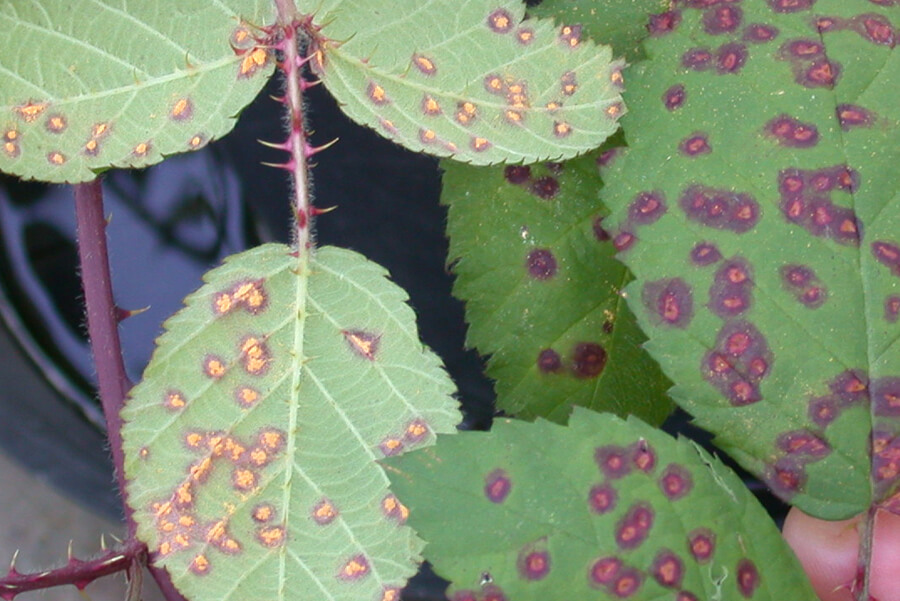
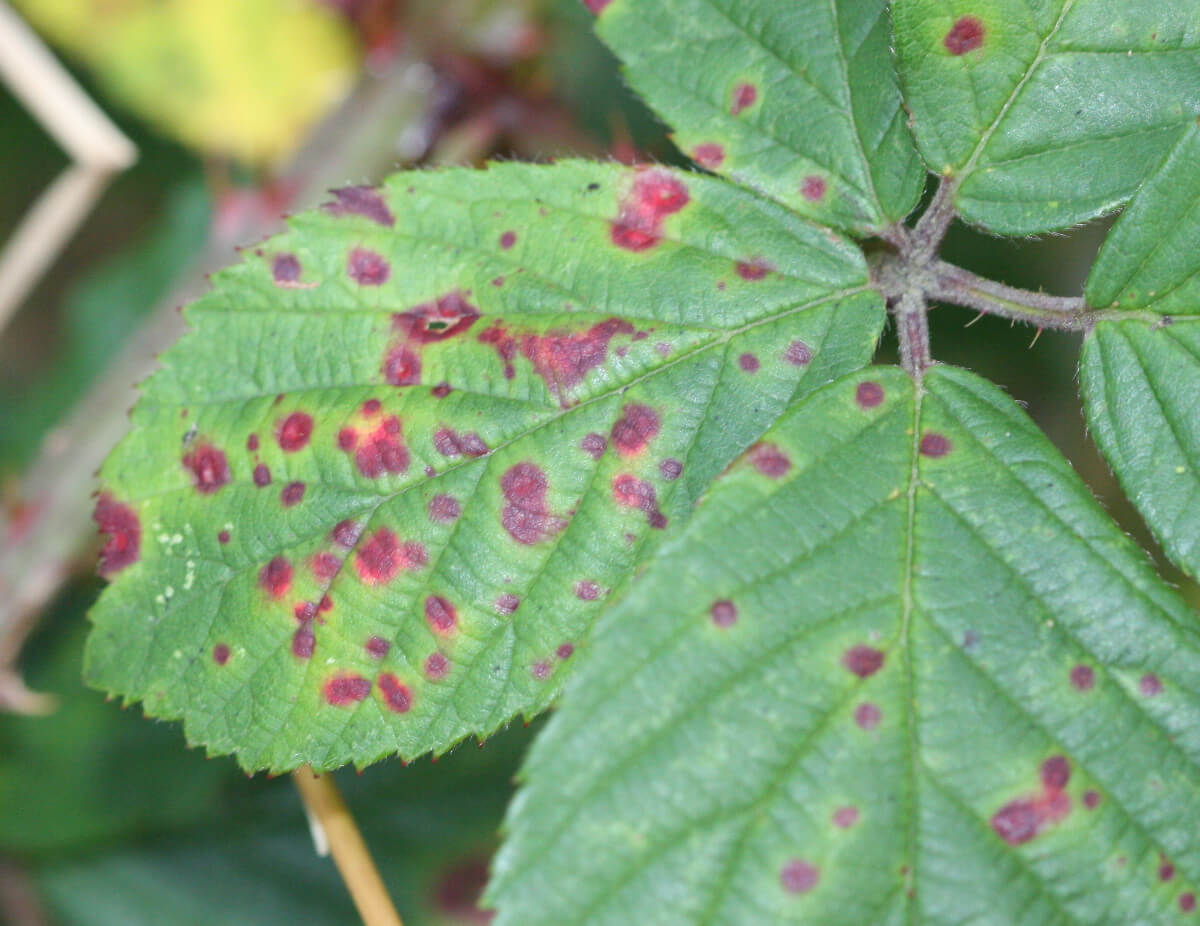
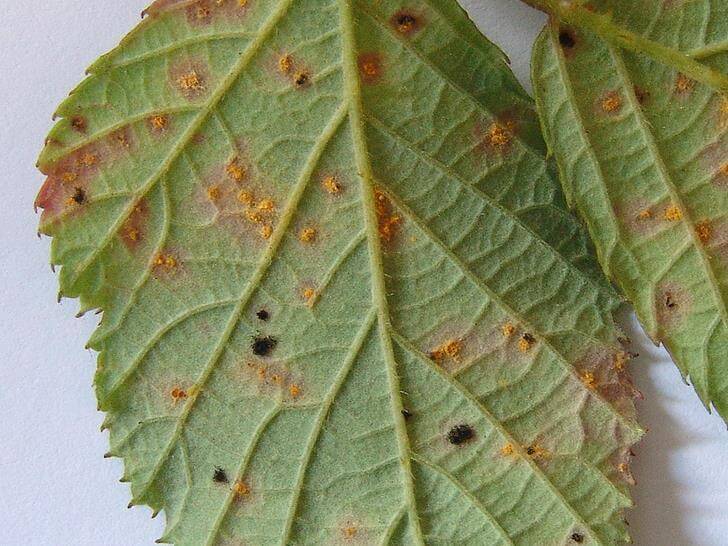
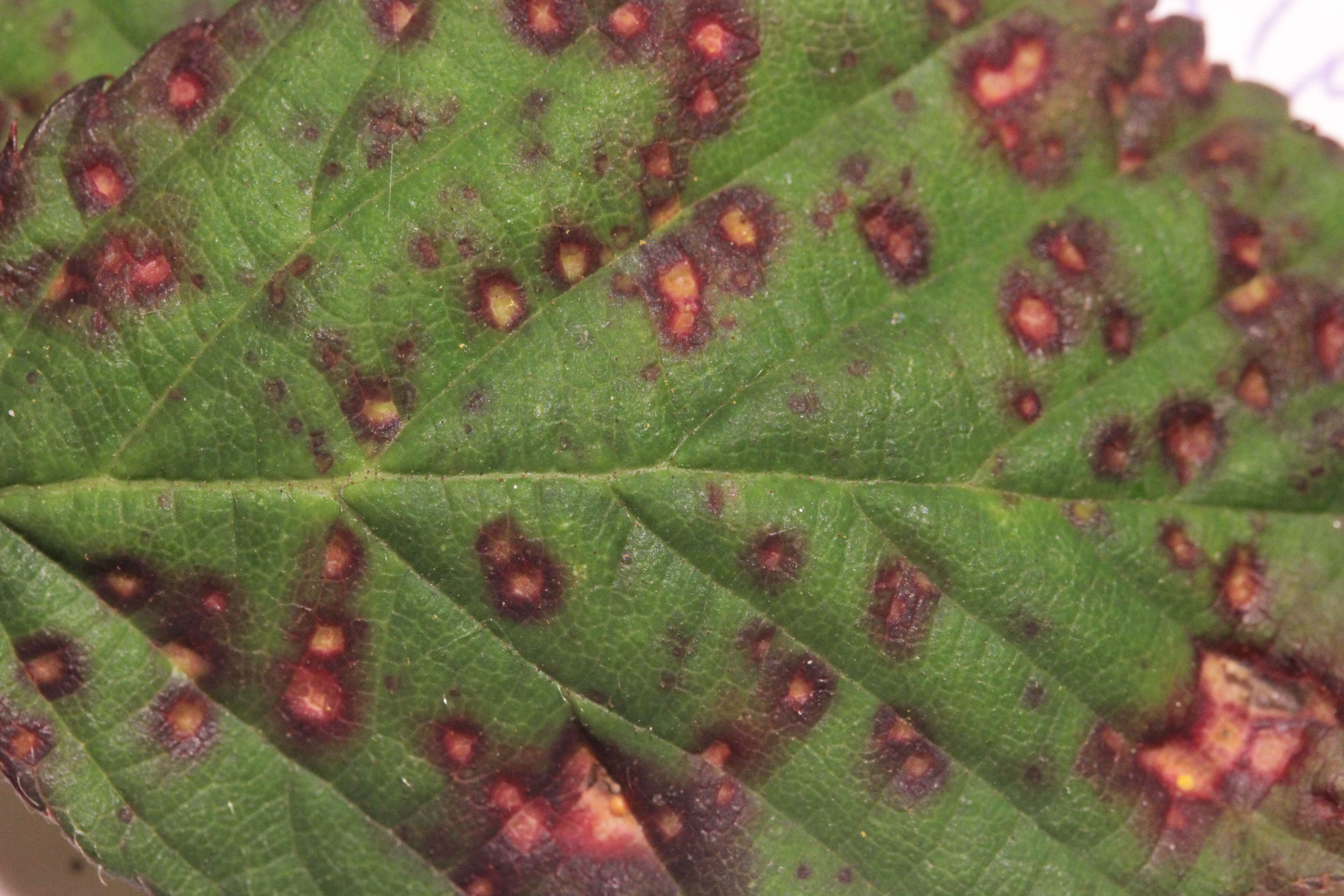
Violet rust affects blackberries, causing several symptoms that can seriously compromise the health and productivity of the plant. The initial infection manifests itself as small yellow Taches on the surface of the leaves, which later develop into dark purple pustules on the underside of the leaves. These pustules are masses of fungal spores that can be spread by wind and rain. Over time, infected leaves may show signs of chlorosis, turning brown and dropping prematurely, reducing the plant's ability to photosynthesize and negatively affecting fruit development. Symptoms include:
- Yellow Taches on the surface of the leaves.
- Dark violet pustules on the underside of the leaves.
- Chlorosis and yellowing of the leaves.
- Withering and premature fall of leaves.
- Reduction in plant vigor and growth.
- Decrease in the production and quality of the fruits.


DEVELOPMENT CONDITIONS
Temperature:
15°C - 25°C
Humidity:
80% - 100%

HOW IS IT SPREAD?
Wind, rainwater, contaminated tools, contact between plants, spores carried by insects

HOW TO ELIMINATE IT?
Home treatments
There are no home treatments
Natural allies
Chemical treatments
There are no treatments for this disease. Treatments are directed at the insect vectors that transmit it. See insect treatments.
RECOMMENDED PRODUCTS TO ELIMINATE THE PEST

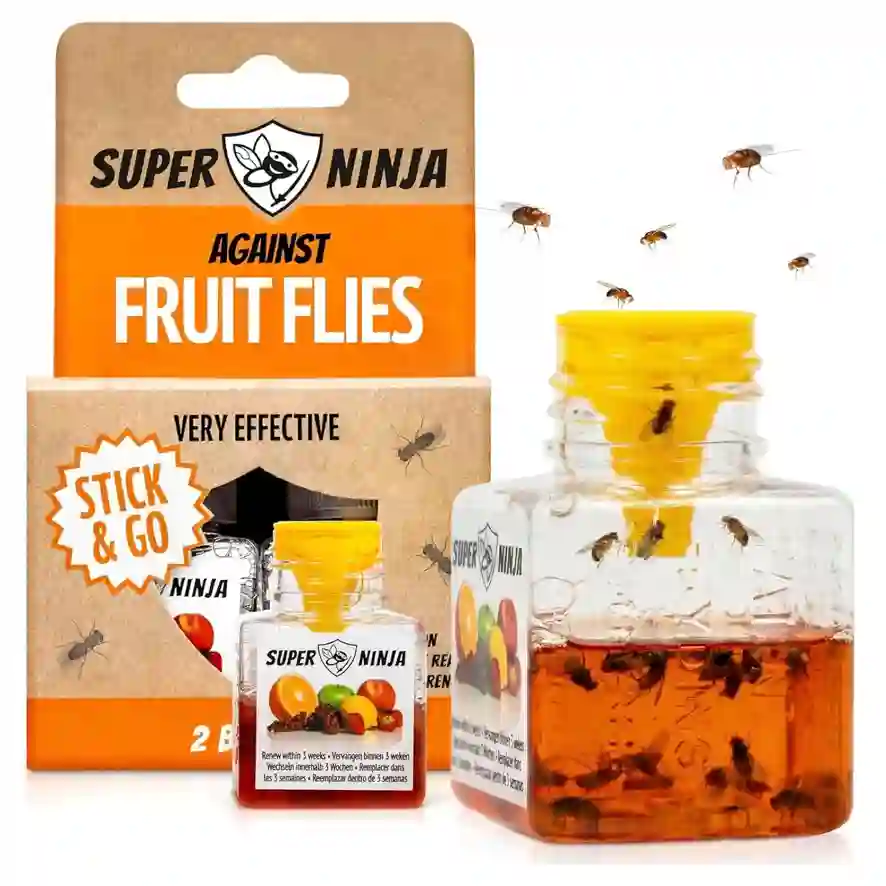
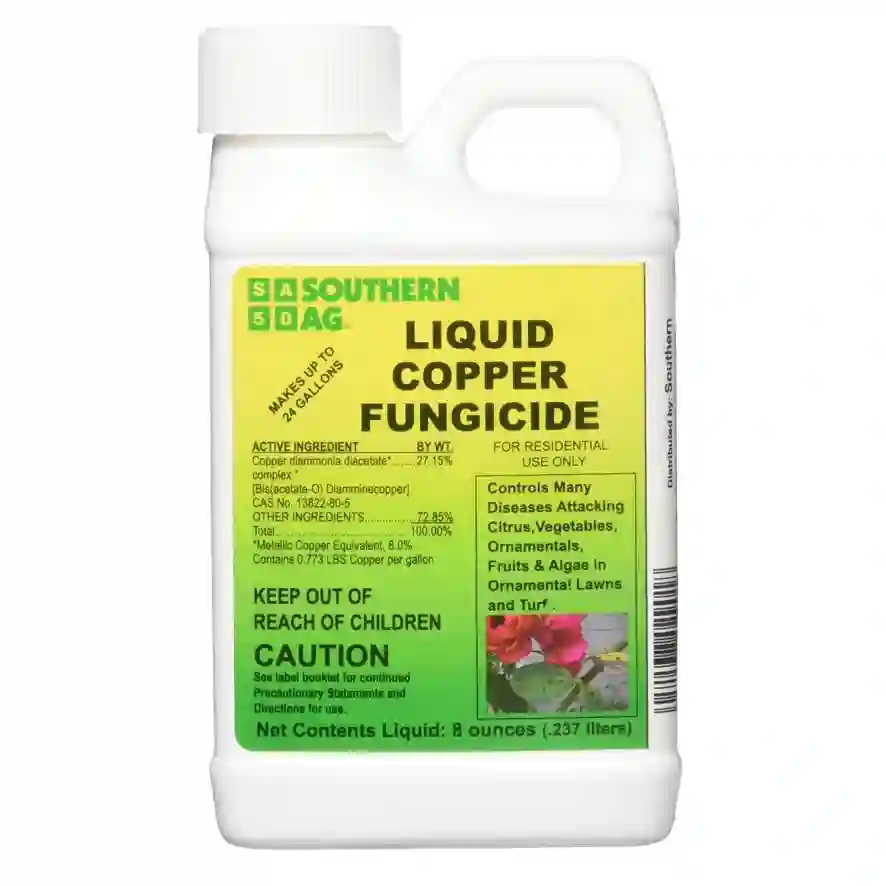


REPELLENT PLANTS

RECOMMENDATIONS
OTHER PESTS THAT MAY INTEREST YOU


DID YOU LIKE IT?
All this and much more, just a click away. TRY idMicrobe NOW!



Explore more tools
Services
Contact
Legal
©2023 by ZeriMar Laboratoire. All rights reserved.