


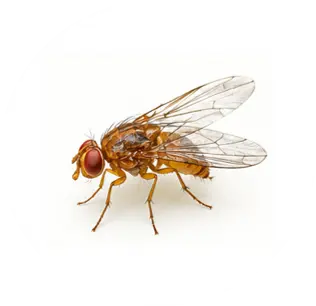
Fruit flies on plants: how to recognize and control them
How to identify fruit flies and protect your fruits
Fruit flies are small insects that mainly affect fruits, especially when they begin to ripen. Females lay their eggs on the fruits and, after hatching, the larvae penetrate inside and feed on the pulp. This damage causes softening, deterioration and rotting that can progress rapidly, causing the fruits to lose quality and eventually become unusable. Their presence may go unnoticed at first, so recognizing the first signs and acting as soon as possible is essential to prevent the infestation from increasing and causing greater losses.
How to recognize fruit flies?
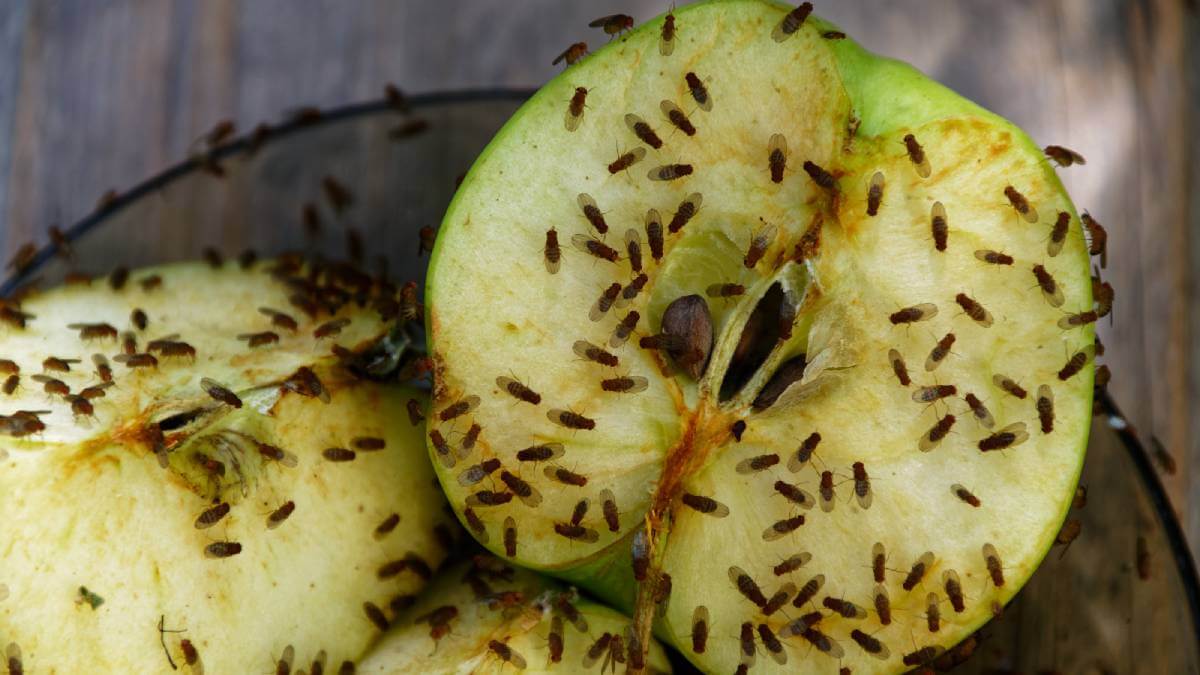
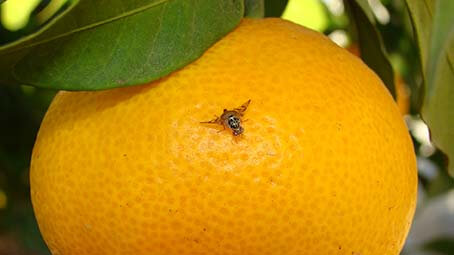
Fruit flies are small flies that usually appear around fruits, especially when they are ripe, damaged or deteriorating. Depending on the species, they may have yellowish or brown colors or different patterns on their body and wings. The main damage occurs in fruits, where some species lay their eggs and the larvae develop inside.
The main symptoms are:
• Presence of small flies around fruits.
• Small spots or punctures on the surface of the fruit.
• Soft or sunken areas around the puncture marks.
• Small holes in the skin of the fruit.
• Fruits that begin to deteriorate or rot around the affected areas.
• Small larvae inside the fruit.
• Galleries or areas of consumed tissue inside the fruit.
• Soft, wet or deteriorated pulp around the areas where the larvae develop.
• Fruits that may fall before reaching maturity.
• Rot that progresses rapidly when the fruit is affected.
• Loss of quality and usability of affected fruits.
Recommended treatments for fruit flies
For fruit flies, it is recommended to combine a broad-spectrum contact insecticide with specific fruit fly traps containing an attractant. The insecticide acts directly on adults present on the plant, while the traps attract and capture the flies, reducing the adult population and helping to limit reproduction. Attractant traps are particularly practical because they allow adults to be captured around the plant before they continue the infestation cycle. Placing them correctly and keeping them active throughout the period when the pest is present helps strengthen fruit protection.
Fruit flies should mainly be controlled at the adult stage, preventing them from continuing to reproduce and lay eggs in the fruits. Therefore, combining specific attractant traps with an insecticide allows the adult population to be targeted from different approaches and protects fruits against new damage. Traps are particularly useful because they continuously attract and capture flies during the period when the pest is present.
The main recommendations and treatments are:
• Remove affected fruits: removing fruits that show punctures, damage or signs of infestation helps eliminate potential breeding sites and reduces the appearance of new adults.
• Collect fallen fruits: leaving affected fruits on the ground should be avoided to prevent the pest from continuing its development and producing new generations.
• Attractant traps for fruit flies: these are the specific treatment for attracting and capturing adults, reducing their population and limiting reproduction. The attractant should correspond to the species being controlled. Placing them correctly and keeping them active throughout the entire period when the pest is present allows continuous capture and strengthens fruit protection.
• Broad-spectrum contact insecticide: this acts directly on adults present and rapidly reduces the population when there is a severe infestation. It is especially useful as a complement to traps, combining direct action on the insects with continuous capture of adults.
Products for treating fruit flies

Other common problems
Discover the most common problems and select the one that interests you.



Explore more tools
Services
Contact
Legal
©2023 por ZeriMar Laboratoire. Todos los derechos reservados.