


Gummosis in trees: how to recognize and treat it
How to recognize gummosis and distinguish it from other damage to the tree
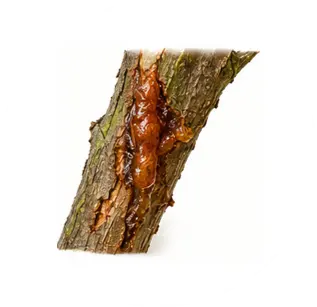
Gummosis is a common symptom of some diseases affecting trees and woody plants. It is characterized by the appearance of a gummy or resinous substance emerging from the trunk, branches or crown area of the plant, usually in areas affected by disease development. Its appearance may be accompanied by lesions, necrosis, cankers or progressive weakening of the tissues.
How to recognize gummosis in trees
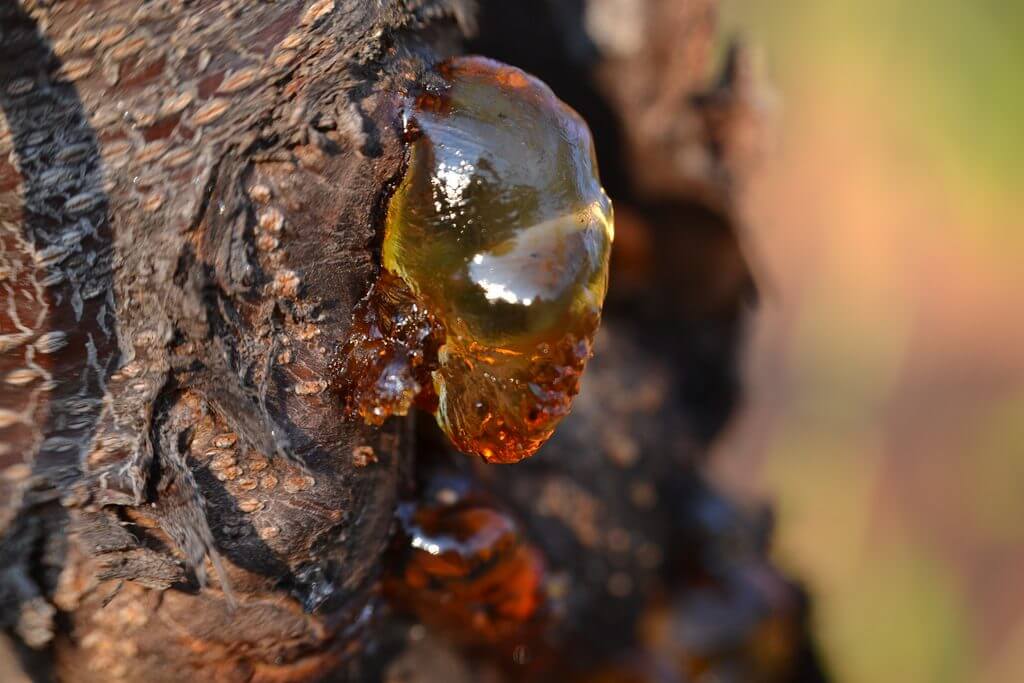

In vascular diseases, the infection affects the internal tissues responsible for transporting water and nutrients, potentially causing damage to the bark and progressive weakening of the branches. Gum usually appears around the affected areas and may be accompanied by other symptoms of deterioration.
The main symptoms are:
• Gum or resin emerging from the trunk, branches or area near the tree crown.
• Gum exudation that may appear at one or several points on the plant.
• Darkened bark around the areas where the gum appears.
• Cracks or lesions in the bark.
• Areas of bark that become sunken, deteriorate or begin to die.
• Branches that lose vigor and begin to weaken.
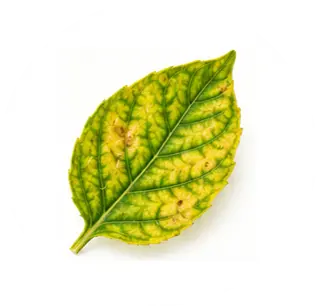
• Leaves on affected branches that may turn yellow, wilt or dry out.
• Progressive drying of branches.
• General decline of the tree as the disease progresses.
• In some cases, darkening or necrosis of the internal tissues when the bark is removed from the affected area.
Do not confuse with cankers
Cankers can also cause lesions in the bark and, in some cases, gum exudation. The main difference is that a canker appears as a localized and clearly defined lesion in the bark, whereas vascular diseases may also cause symptoms of weakening, wilting and drying in the parts located above the affected area.
Do not confuse with wood-boring insects and bark beetles
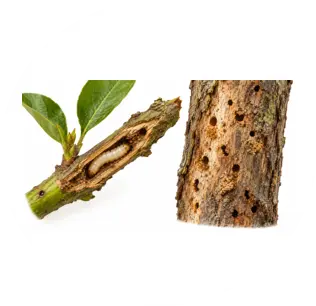
Insects that bore into wood can cause gum exudation as a response of the tree to the damage. In these cases, small holes, sawdust or boring residues and galleries beneath the bark usually also appear.
Do not confuse with wounds or mechanical damage
Wounds caused by pruning, impacts or damage to the bark can also cause gum to emerge. In these cases, the exudation is usually directly related to the area where the wound occurred and is not accompanied by progressive drying of the branches above the affected area.
How to treat gummosis
It is important to act on the problem from inside the plant and prevent humidity and stress conditions from favoring its progression. Good irrigation management, bark protection and a systemic treatment can help stop the development of the problem and protect new tissues.
The main recommendations and treatments are:
• Avoid wounds to the bark: wounds caused by pruning, tools, impacts or cultivation work facilitate the entry of microorganisms. Avoiding damage to the trunk and branches helps protect the tissues and reduce new infection sites.
• Carefully remove severely affected areas: when there are damaged areas of bark or clearly deteriorated tissues, removing the affected parts until healthy tissue is reached helps clean the area and facilitates recovery.
• Control irrigation: avoiding both excessive moisture and prolonged periods of drought promotes proper root function and reduces tree stress. Well-drained soil is particularly important when there are problems associated with soil fungi or oomycetes.
• Improve drainage: preventing water from remaining accumulated around the trunk and roots helps reduce conditions favorable to soil pathogens and protects the root system.
• Fosetyl-Al: it is a systemic treatment particularly indicated for acting against certain pathogens associated with vascular diseases and gummosis problems, especially those caused by oomycetes. Its ability to move throughout the plant allows it to act on the pathogen and protect the tissues, promoting tree recovery and helping to slow the progression of the disease.
Products for treating gummosis

Other common problems
Discover the most common problems and select the one that interests you.



Explore more tools
Services
Contact
Legal
©2023 por ZeriMar Laboratoire. Todos los derechos reservados.