

Leafminer Or Chard Fly
Pegomya Betae
Pathogen:
Type:
Insect
Risk:
HIGH

Acelga
Minadores


WHO CAUSES IT?
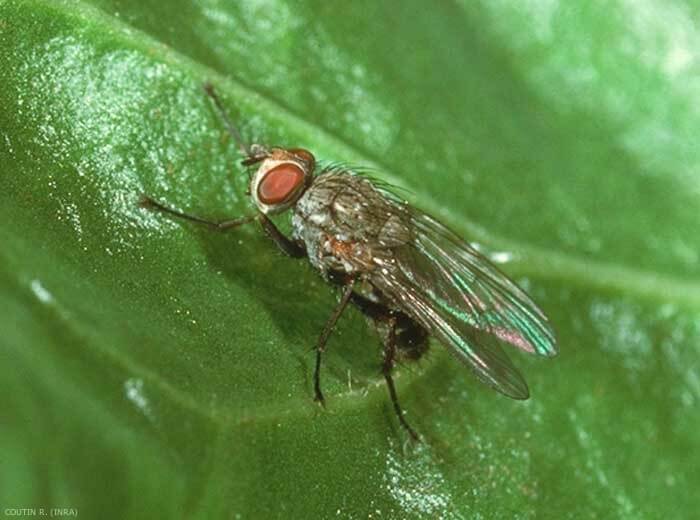
Pegomya betae, also known as the chard fly or chard miner, is a dipteran insect of the Anthomyiidae family. This pest is especially harmful to chard and beet crops. The adult female lays her eggs on the surface of the leaves. When the larvae hatch, they enter the leaf tissue and begin feeding between the upper and lower epidermis of the leaf, creating visible, serpentine mines. The larvae go through several molts before reaching maturity, at which point they emerge from the leaf and fall to the ground to pupate. The pupa, which develops in the soil, gives rise to a new adult that emerges to continue the cycle. This process can be repeated several times during the growing season, especially under favorable temperature and humidity conditions.
.png)
SYMPTOMS
In chard, Pegomya betae causes a disease that mainly affects the leaves, compromising both the quality and quantity of the plant's yield. The mines created by the larvae reduce the photosynthetic capacity of the leaves, weakening the plant and making it more susceptible to other diseases and adverse conditions.
• Presence of serpentine, whitish mines on the leaves.
• Withered or deformed leaves.
• Necrotic Taches where larvae have been feeding.
• Decrease in the general vigor of the plant.
• Reduction in plant growth and yield.
• Greater susceptibility to secondary infections.



TEMPERATURE AND HUMIDITY
15ºC - 25ºC
60% - 80%

TRANSMISSION ROUTES
Direct contact, gardening tools, wind, movements of contaminated soil, infested plants.
Do you want to remove this disease? Choose how you want to treat it.

TREATMENTS
Chemical treatments
• DELTAMETHRIN 2.5% [EW] P/V
• LAMBDA CYHALOTHRIN 10% [CS] P/V
• LAMBDA CYHALOTHRIN 10% [CS] P/V
Authorized treatments in organic farming
• LAMBDA CYHALOTHRIN 10% [CS] P/V
• LAMBDA CYHALOTHRIN 10% [CS] P/V
Biological control
-
Recommendations
• Carry out regular plant monitoring to detect the presence of eggs and larvae early.
• Use yellow sticky traps to capture adults and reduce the population.
• Implement a crop rotation, avoiding planting chard or beets in the same place for several consecutive seasons.
• Maintain field hygiene by eliminating infected plant remains to reduce inoculum sources.
• Apply specific insecticide treatments in case of severe infestations, following local recommendations and regulations.
• Encourage the presence of natural enemies such as parasitoid wasps and predators that can help control the pest population.
• Use soil covers to make it difficult for larvae to access the soil to pupate.
• Consider using trap crops to attract adult flies away from the main crop.
Sponsored link

Sponsored link
Sponsored link


Sponsored link
Sponsored link
Sponsored link
Sponsored link


Sponsored link
Sponsored link
Effective against all types of fungi

Sponsored link
Sponsored link


Sponsored link
Sponsored link

Sponsored link
Sponsored link


Sponsored link
*Recommended treatments are still recommendations according to authority databases and in no way replace the guidelines established according to the legislation of each country.
*Products shown are recommendations and not our own products. As Amazon Associates, we earn revenue from purchases of recommended products.

TREATMENTS
Homemade remedies
There are no home treatments
Natural allies
Chemical treatments
There are no treatments for this disease. Treatments are directed at the insect vectors that transmit it. See insect treatments.

RECOMMENDATIONS

REPELLENT PLANTS
EFFECTIVE PRODUCTS TO ELIMINATE THIS DISEASE
Sponsored link
Sponsored link
Sponsored link
Sponsored link
Sponsored link
Sponsored link
Sponsored link
Sponsored link
Sponsored link
Effective against all types of fungi
Sponsored link
Sponsored link
Sponsored link
Sponsored link
Sponsored link
Sponsored link
Sponsored link
*Recommended treatments are still recommendations according to authority databases and in no way replace the guidelines established according to the legislation of each country.
*Products shown are recommendations and not our own products. As Amazon Associates, we earn revenue from purchases of recommended products.

Enjoy idMicrobe TOTALLY FREE, with no trial periods.


